
01 / The challenge
Monitor a pump that production cannot do without.
WEIG's cardboard division produces gypsum plasterboard and folding boxboard, mainly from waste paper. Its machines run around the clock, seven days a week, under high speeds, extreme humidity and high operating temperatures.
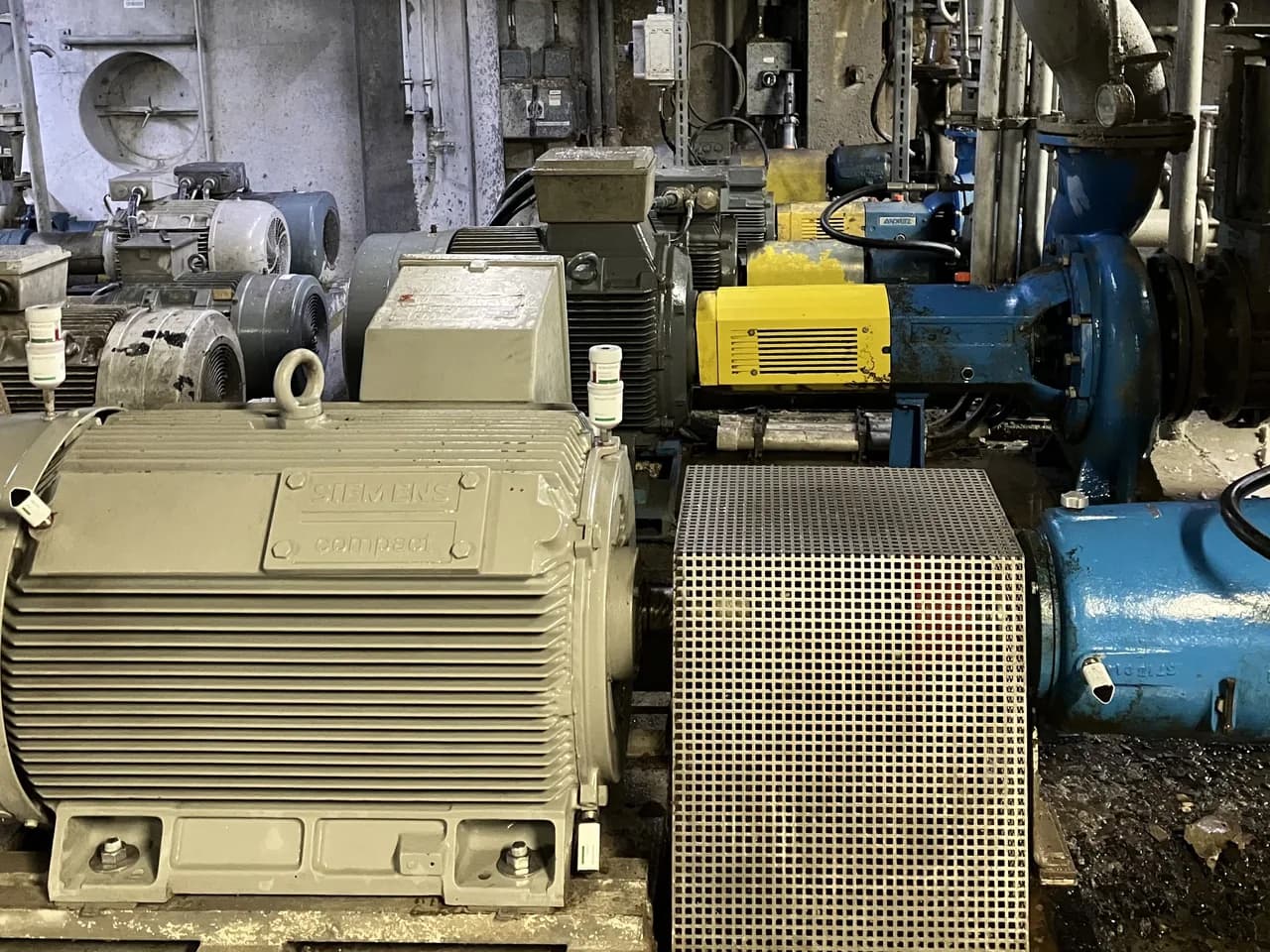
One centrifugal pump mixes pulp with water to form a paper-fibre pulp and conveys it onward. It runs continuously to keep the supply constant, and if it fails, the entire production process stops. High flow velocity in the suction line also puts it at risk of cavitation. The pump had not been monitored before, so the maintenance team looked for a predictive condition monitoring solution.
02 / The approach
Measure the motor and the pump separately.
Fit sensors to both units
Schaeffler recommended its OPTIME condition monitoring system of wireless sensors, a gateway and digital services built on Schaeffler's own algorithms. Four sensors went onto the pump set, two on the motor and two on the pump. Two OPTIME C1 lubricators were fitted to lubricate the motor.
Follow the warnings
After around three months of monitoring, the system raised warning messages. It recorded increased background noise on the motor, and bearing damage and cavitation on the pump. The maintenance team confirmed unusual behaviour on both units.
Diagnose each unit on its own
Insufficient lubrication turned out to be the cause of the motor noise. On the pump, raised characteristic values pointed to bearing damage, and analysis of the measurement data placed it on the inner ring of the A-side bearing.
03 / The documented outcome
The motor recovered, and the bearing damage was confirmed.
Controlled lubrication from an OPTIME C1 lubricator brought the motor-bearing characteristic values down to normal. On the pump, the inner-ring damage indicated by the measurement data was confirmed on the dismantled A-side bearing.
Since the corrective maintenance, Schaeffler reports no further rolling-bearing defect frequencies, and the characteristic values have stayed below the alarm thresholds.
04 / Applying the findings
Know which unit a warning is about.
On a motor-driven pump, one warning can hide separate problems. Lubricating a motor bearing and dealing with a damaged pump bearing are different jobs, with different parts, skills and stoppage time. Measuring the motor and the pump separately lets the maintenance team plan the right work for each unit.
When considering condition monitoring or automatic lubrication, send NATCOM the pump and motor details, operating duty, symptoms, current measurement locations and available trends. Agree what each warning should lead the team to check.