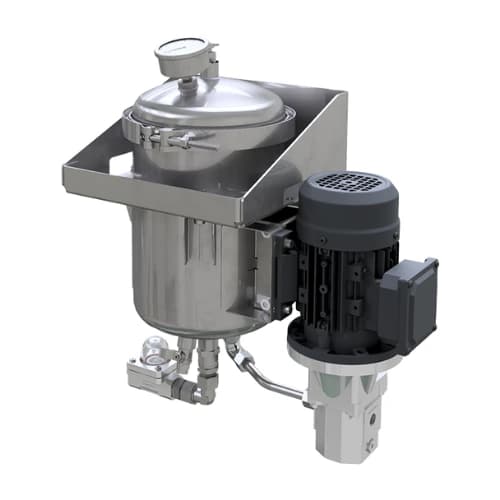
On-site fuel polishing
A temporary offline unit treats the diesel already in the tank. NATCOM sizes the setup around the fuel volume, contamination, access and required turnaround.

NATCOM tests stored diesel, removes water and particles with a treatment loop selected for the tank, then verifies the result. On-site service across Egypt and Saudi Arabia.
On-site fuel cleaning
Diesel fuel polishing is a controlled recirculation process. Fuel is drawn from the tank, passed through selected water-removal and particulate filters, then returned. It targets the contamination that can block filters, damage fuel-system parts or compromise a standby run.
That does not make every diesel problem a filtration problem. Fuel whose chemistry has degraded may need separate testing or replacement. Heavy material stuck to the tank floor may need physical cleaning. NATCOM establishes the condition first, then chooses the response.
The goal is a measured fuel condition at the point of use, not a generic number of passes through a filter. Our guide to fuel polishing, tank cleaning and replacement explains what each option addresses and what to agree before choosing the work.
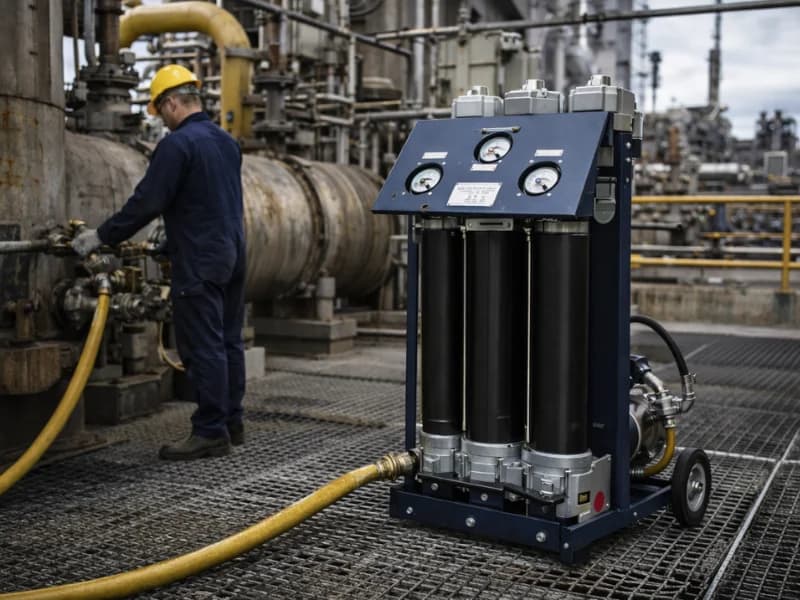
A sample is more useful than an assumption. These signs tell you where to start, not what to buy.
Free or suspended water can corrode fuel-system parts, load filters and create conditions for microbial growth.
Short or uneven filter life can point to particles, rust, sediment or material being drawn from the tank.
Contaminated fuel can restrict flow and accelerate wear in pumps and injectors, affecting starting and loaded operation.
A short generator test confirms that the engine starts. It does not measure the condition of the full stored-fuel volume.
How NATCOM handles it
The same measurements are used before and after treatment, so the service ends with evidence.
Record tank volume, fuel type and age, turnover, access points, engine duty, previous problems and site constraints.
Take representative samples and measure particle cleanliness and water. Add microbial or fuel-property testing when the evidence calls for it.
Select the flow rate, filter media and water-removal method, then circulate the fuel through a separate treatment loop.
Sample again from an agreed point, compare the same measurements and set the next inspection or monitoring action.
Matched to the fuel system
NATCOM can scope field service, rental equipment, a fixed system or bulk-transfer filtration. The baseline and operating duty decide which route makes sense.
A temporary offline unit treats the diesel already in the tank. NATCOM sizes the setup around the fuel volume, contamination, access and required turnaround.
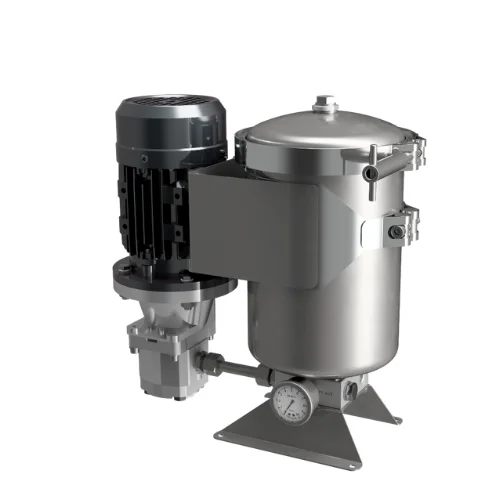
A fixed unit can circulate stored diesel on a planned schedule or continuously where fuel readiness needs ongoing control.
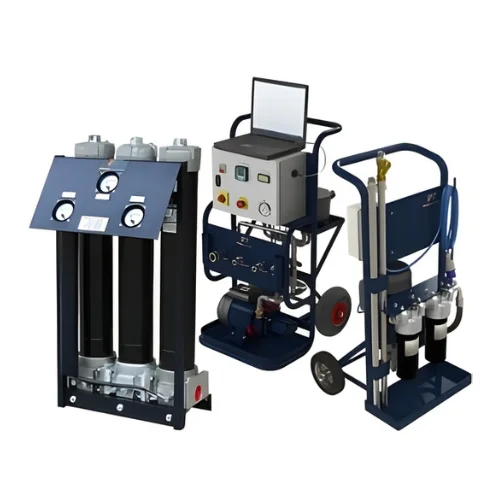
Staged particulate and water-removal equipment can protect fuel while it moves between storage, dispensing and the point of use.
Documented data-centre case
Before planned transformer work, a UK data centre tested diesel serving two 12,000-litre standby-generator tanks. The fuel recorded an ISO 4406 code of 23/23/22 and 3,831 ppm water.
A mobile offline Delta-Xero unit treated the fuel. Six days later, the case records an ISO 4406 code of 15/13/10 and 18 ppm water, allowing the planned maintenance to proceed.
The figures come from the before-and-after laboratory tables in the published Delta-Xero case.
Read the Case BreakdownWhere the service fits
The risk changes with the duty. Standby fuel can sit for long periods; working equipment exposes contamination through filter use, injector wear and lost availability. For working engines, see the measured crane trial in our guide to diesel fuel filtration, filter life and engine performance.
Data centres, hospitals, utilities and facilities that depend on stored diesel during a power loss.
Industrial tanks, day tanks and transfer systems where water and sediment can collect between deliveries.
Ports, mines, quarries and construction fleets facing early fuel-filter changes or injector problems.
Engines, burners and process equipment where fuel cleanliness affects reliable production.
Regional delivery
NATCOM uses the same inspect, sample, treat and verify method in both markets. The equipment and scope change with the site.
Cairo office
NATCOM supports diesel sampling, fuel polishing and filtration scopes for industrial, commercial and mission-critical facilities across Egypt.
Al Khobar office
NATCOM supports Saudi generator, bulk-storage, fleet and industrial fuel projects with equipment and field scopes selected for the local site.
These guides help facility teams in Egypt prepare the evidence for a fuel assessment, whether the concern is a recurring fault or diesel kept for standby duty.
Diesel fuel polishing is an on-site cleaning process. Fuel is drawn from a tank, passed through selected particulate and water-removal media, then returned through a separate loop. Sampling before and after shows whether the work reached the agreed target.
Fuel filtration describes the equipment and removal process. Fuel polishing usually means circulating stored fuel through that equipment as a managed service, often for several passes, with a defined starting condition and a verified result.
It can remove free and suspended water when the system uses the right separation or absorption media. The water level should be measured before and after because the result depends on the form and amount of water present.
No. Fuel polishing treats fuel as it circulates through an external loop. Heavy sludge, adhered deposits or material in parts of the tank that the flow cannot reach may require physical tank cleaning as a separate scope.
Filtration can remove suspended microbial material, while water removal makes the tank less supportive of further growth. Confirmed microbial contamination may also require testing, an approved treatment and attention to the tank itself. Filtration alone should not be treated as sterilisation.
There is no useful fixed duration. Tank volume, starting condition, target, flow rate, filter loading, access and the number of turnovers all affect the plan. NATCOM sizes the job after reviewing those inputs.
Often, yes. Offline polishing is designed to draw from and return fuel to the tank through a separate loop. Site safety rules, tank access, engine demand and the contamination found still need to be checked before work begins.
Yes. NATCOM scopes diesel fuel testing, polishing and filtration projects from its teams in Al Khobar and Cairo. Each job is configured for the tank, fuel, equipment and operating constraints at that site.
Send the tank count and volume, fuel type and age, last delivery, equipment duty, filter history, symptoms, previous test results and site access details. NATCOM will define what to test and how to scope the treatment.
Serving sites across Egypt and Saudi Arabia.