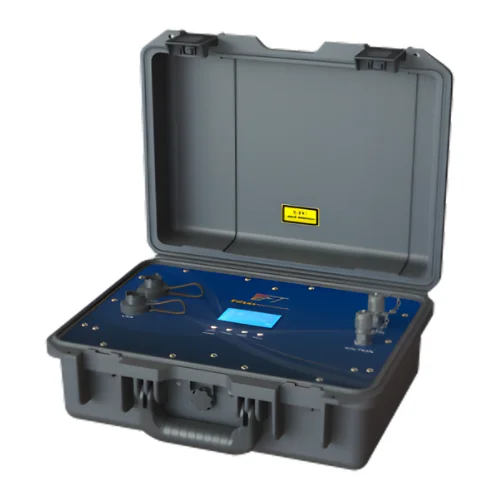
Measure and verify
On-site particle measurement establishes the starting cleanliness, follows the cleanup and confirms the result with the same reporting method.

NATCOM measures particle and water contamination, selects the filtration setup for your hydraulic system and verifies the result after treatment. On-site service across Egypt and Saudi Arabia.
Hydraulic oil care
Solid particles and water can interfere with close-clearance hydraulic components, but a symptom alone does not define the cleanup. NATCOM starts with the oil grade, reservoir, system duty and a representative sample.
The result sets the filtration method and the target. The existing oil can then circulate through a temporary external loop, often called offline filtration, with particle and water measurements repeated after treatment.
If testing points to degraded oil chemistry or varnish, filtration alone may not solve the problem.
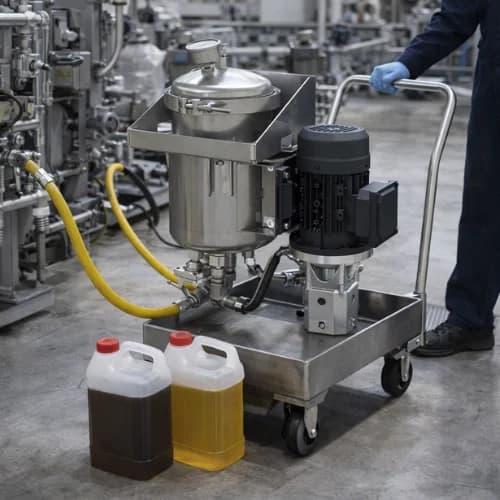
These signs justify sampling. The particle and water results determine whether filtration is the right response.
Particles, water and deposits can all affect close-clearance valves. The oil result helps separate those causes before treatment.
Pumps, valves and spools failures and wear indicate legitimate problems to be acted on.
Short filter life can point to continued ingress, contamination already held in the system or a filter setup that does not suit the duty.
Visible haze, free water or a high measured water level needs a compatible removal method and a check for the source of ingress.
A high or rising cleanliness code calls for a representative sample and a review of where particles are entering the system.
How NATCOM handles it
The starting condition sets the target and the equipment. A follow-up sample shows what changed.
Record the oil grade, reservoir volume, viscosity, temperature, connection points, operating duty and equipment requirements.
Take a representative sample and establish the ISO 4406 cleanliness code and water level. Add oil-health tests when needed.
Select the flow, filter media and water-removal method, then circulate the oil outside the main hydraulic circuit where the site allows it.
Sample again from an agreed point and compare the same measurements with the target set before treatment.
Matched to the system
Oil type, viscosity, reservoir volume, contamination, connection points and the required result all affect the filtration setup. When water is the main problem, method selection, moisture targets and verification need a water-specific treatment plan.
On-site particle measurement establishes the starting cleanliness, follows the cleanup and confirms the result with the same reporting method.
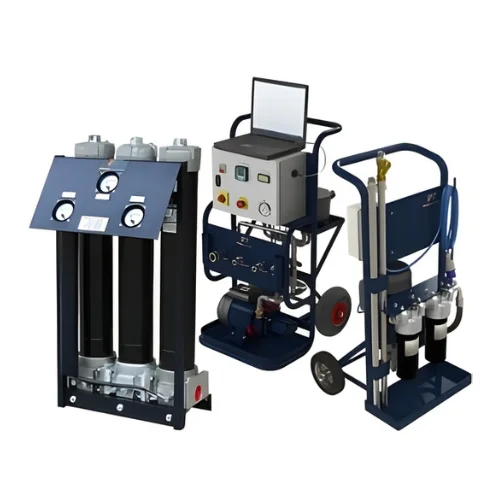
Portable offline equipment removes solid contamination, free and entrained water from hydraulic oil.
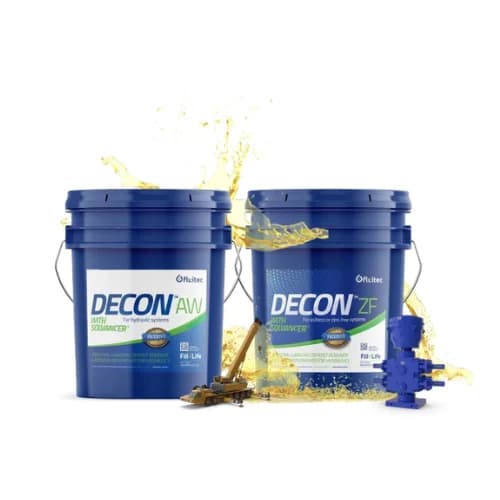
Varnish can accumalate overtime in tight clearance components, causing valves sticking - slowing or halting the operattion.
Hydraulic oil case study
At Commonwealth Steel, PT Kelmer treated about 900 litres of ISO VG 32 hydraulic oil using two HIPPO filter pots in parallel on a portable external loop. The oil improved from ISO 21/19/16 and 800 ppm water to ISO 13/12/8 and 50 ppm after a two-day cleanup.
Filtertechnik, a NATCOM technology partner, documents the treatment and reported results.
Read the full case studyChoose the right response
Similar hydraulic symptoms can come from different oil problems. The test result separates the work filtration can do from the work it cannot. If the cause is unclear, start with NATCOM's oil analysis services. For sticky valves and deposit evidence, read the hydraulic oil varnish case review.
Use particle filtration
Set the target from the hydraulic equipment requirement and the measured ISO 4406 code.
Use a suitable water-removal method
Confirm the water condition and oil compatibility before selecting the equipment.
Test before deciding
Oxidation, viscosity change or depleted additives may require another treatment or an oil change.
Use a varnish-specific plan
Conventional particle filtration does not necessarily remove soluble varnish from the system.
Where the service fits
NATCOM confirms the oil, access points and required condition before selecting an offline filtration or water-removal setup.
Press and forming systems where oil cleanliness affects pumps, valves and close-clearance controls.
Central and machine-mounted reservoirs that need a defined particle and water target.
Control systems where a measured oil condition is needed before contamination is blamed for erratic response.
Pumps, valves and manifolds served by oil that can be treated through a suitable external connection.
Regional delivery
NATCOM uses the same measure, filter and verify method in both markets. Each job is scoped for the hydraulic system and site conditions.
We provide solid-particle filtration, water removal, varnish removal and oil sampling to the clients of ExxonMobil, as their sole service partner as well as directly to our wide range of clients.
NATCOM scopes Saudi hydraulic oil filtration and water-removal projects from Al Khobar. The team confirms the oil, reservoir, treatment target, access and equipment setup before mobilization.
Hydraulic oil filtration removes solid contamination by circulating the fluid through selected filter media. A managed service starts with a measured oil condition, sets a target, treats the existing oil through a suitable loop and checks the oil again afterward.
It can when the setup includes media or equipment suited to the form of water present. Free and entrained water can be treated in compatible oil, but the starting water condition and the oil must be checked before selecting the method.
In some applications, yes. A separate offline loop may treat the reservoir while the main system operates. NATCOM checks the connection points, oil temperature, flow, site safety rules and equipment-manufacturer requirements before proposing that arrangement.
The starting particle result and the hydraulic equipment requirement are used to agree an ISO 4406 target. If water is also present, a separate water target is set in parts per million or another suitable unit. The same sampling point and method should be used to verify the result.
Sometimes. Particle count, water level, oil chemistry and the machine requirement determine whether filtration, another treatment or replacement makes sense. NATCOM measures the condition before recommending the work.
No. Conventional filtration targets particles and, when configured for it, water. Soluble varnish and deposits need separate testing and a varnish-specific treatment plan.
Yes. NATCOM scopes hydraulic oil filtration and water-removal projects through its offices in Cairo and Al Khobar. The oil, system, target and site conditions determine the field plan.
Share the oil grade, reservoir volume, latest particle and water results, target cleanliness, symptoms and available connection points. NATCOM will define the measurement and filtration scope.