
01 / The challenge
Turn a pump warning into a maintenance decision.
A deep-well pump at a sugar refinery had completed the learning period of its Artesis Motor Condition Monitor, or MCM. Soon afterwards, the system raised an alarm in a frequency band associated with cavitation. Its fault trend was rising.
The next step was to connect that indication with the condition of the pump itself. The warning pointed the maintenance team towards a specific investigation: inspect the internal surfaces for cavitation damage and compare what they found with the monitoring result.
02 / The approach
Follow the indication through to inspection.
Use the warning to direct the investigation
MCM raised an alarm in a frequency band associated with cavitation just after its learning period. The displayed trend showed the fault level increasing, giving the team a specific condition to investigate.
Check the pump's physical condition
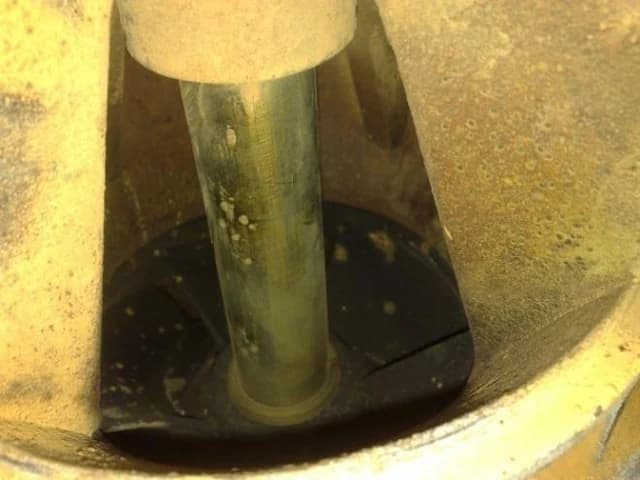
The maintenance team dismantled the pump and inspected it for cavitation damage. Small pits on the pump blade matched the suspected condition, providing physical confirmation of the monitoring indication.
Check the response after maintenance
Following maintenance, MCM stopped warning. The team could compare the initial indication with the inspection finding and the subsequent monitoring response, completing the sequence from detection to follow-up.
03 / The documented outcome
Blade pitting confirmed the diagnosis.
Dismantling exposed small pits on the pump blade. Artesis records these as cavitation damage and includes photographs of the dismantled assembly and the affected surfaces. This finding connected the alarm with physical damage inside the pump.
MCM stopped warning after maintenance. The documented result combines an inspection finding with a change in the monitor's response, giving the maintenance team a practical way to follow the condition through the work.
04 / Applying the findings
Plan both the investigation and the follow-up.
For another motor-driven pump, the useful question is how a warning will lead to an informed maintenance decision. Record the operating condition when the warning appears, review the trend and identify the inspection needed to check the suspected fault. Keep the inspection findings with the monitoring record so the reason for the work remains clear.
When considering motor current signature analysis, send NATCOM the pump and motor details, drive arrangement, operating symptoms and available alarm history. Agree what to check after maintenance as part of the assessment. Comparing the follow-up response with the original warning and the physical finding makes the monitoring information more useful to the people maintaining the asset.