A motor has passed its insulation test, but the team still has an unexplained operating problem. Maintenance can obtain measurements while it runs, or wait for an outage and test it stopped. Which option will answer the question before another repair is authorized?
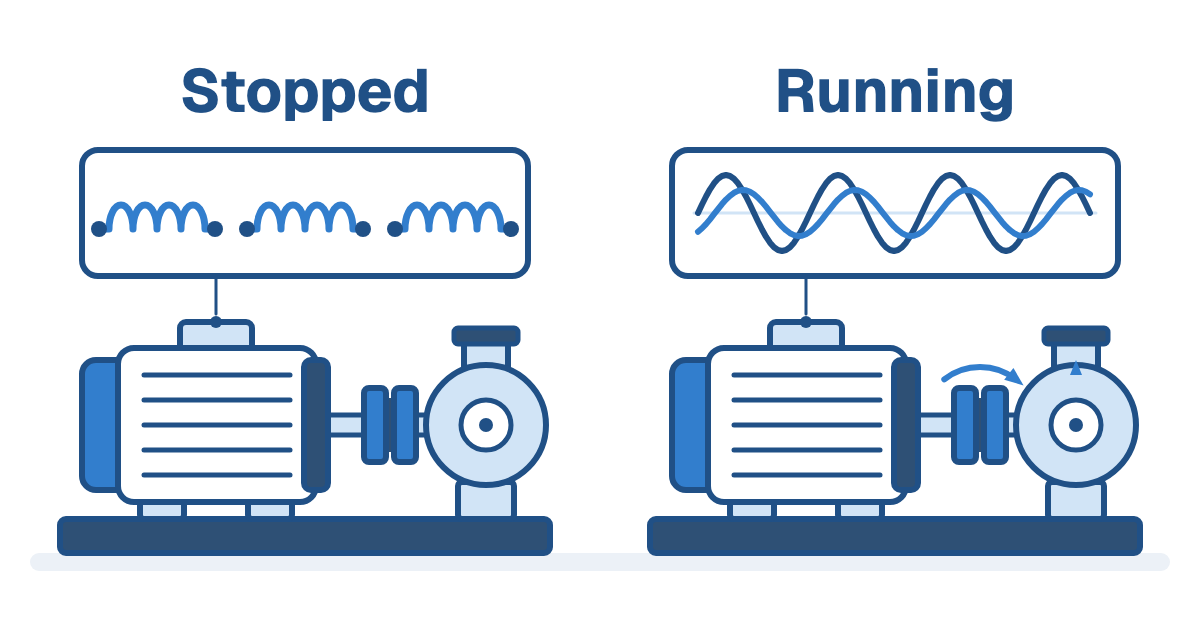
Offline and online motor testing examine different conditions. Offline tests investigate an isolated motor and its circuit. Online tests measure electrical behavior while the motor is energized and working. The useful choice depends on the suspected problem, the measurements already available and the evidence still missing. Some investigations need both.
Start with the question the test needs to answer
A request to "test the motor" leaves the scope open. Is the concern moisture in the insulation, an unequal connection resistance, a winding problem, a rotor defect or the electrical supply? Is the symptom present at every load, or only during a particular part of production? Write that question down before choosing the equipment.
The distinction matters when arranging an outage. Stopping the motor creates an opportunity for measurements that cannot be made in the same way while it runs. It also removes the operating conditions that may help explain the complaint. A plan should identify what evidence is needed in each state and how the findings will be compared.
What stopped and running tests can investigate
Offline testing is also called static testing. The motor is de-energized and isolated under the applicable site procedure. Selected instruments apply test signals to investigate electrical properties. Depending on the method and motor, measurements can include insulation resistance, phase resistance and inductance, a property related to the winding's magnetic response.
Online testing is also called dynamic testing. It records voltage and current while the motor is energized. Analysis can investigate supply quality, loading, differences between phases and patterns associated with motor faults. Here, "online" describes the operating state. It does not mean internet access, and it does not necessarily mean a permanently installed monitor.
| Question | Useful stopped-test evidence | Useful running-test evidence |
|---|---|---|
| Insulation condition | Ground-insulation measurements and their history. | Operating context; it does not replace a ground-insulation test. |
| Supply and connections | Phase resistance in the circuit included by the test point. | Voltage and current balance, distortion and behavior under load. |
| Windings and rotor | Resistance, inductance and appropriate rotor-position measurements. | Electrical patterns that support investigation of winding or rotor anomalies. |
| An intermittent operating complaint | Condition checks during an available outage. | Measurements taken when the reported operating condition is present. |
These are investigation areas, not a universal test menu. Motor construction, the drive, the test arrangement and operating conditions affect which methods are appropriate. Qualified personnel should define access and isolation requirements before measurements are scheduled.
A reassuring result has a specific scope
PdMA's Fault Zone Analysis groups electrical investigations into supply quality, the power circuit, ground insulation, stator, rotor and air gap. The stator is the stationary winding assembly; the rotor is the rotating assembly; the air gap is the space between them. A test directed at one area may leave another unanswered.
For example, satisfactory insulation resistance to ground does not exclude a fault between winding turns that has not reached ground. Equally, a winding measurement does not describe the quality of the incoming supply during production. The practical lesson is to record what each result examined before treating it as a conclusion about the complete machine.
PdMA's method papers are historical sources. Their explanation of complementary evidence is useful here; current acceptance criteria must come from the applicable equipment, test method and engineering review. An old paper's alarm number should not become a site-wide limit.
Include the circuit and the measurement location
A motor receives power through cables, connections and switching equipment. Testing from a control panel can include parts of that path. Testing closer to the motor changes the portion examined. An abnormal result therefore needs a defined measurement location before the team can decide which component deserves attention.
In a laboratory exercise described by PdMA in 2003, investigators inserted a high-resistance connection and compared stopped and running measurements taken on different sides of it. The results changed with the position of the test point. That demonstration explains why the test report needs to identify the circuit examined, as well as the instrument and reading.
Ask the testing team to show how the results support their conclusion about location. That can help distinguish a motor concern from a connection concern before work is directed at the motor itself.
One motor case shows why follow-up mattered
A historical PdMA paper describes an unnamed industrial account with a 3,500 hp induction motor. Running electrical analysis raised a rotor concern while vibration testing initially reported a healthy motor. The customer continued to monitor the conflicting indications.
The electrical trend developed, and the motor was removed in May 2004. A stopped Rotor Influence Check, which examines how inductance changes with rotor position, also indicated an anomaly. Workshop disassembly then found 22 of the motor's 51 rotor bars broken or cracked.
The useful lesson is the sequence: an operating indication, a trend, a complementary stopped test and physical confirmation. This account does not establish that vibration cannot detect rotor problems or that every electrical warning requires immediate removal. It shows why the disagreement needed investigation.
Plan the investigation around the operating history
Bring the last repair, winding work, drive changes and recent process changes into the review. Record the speed and load associated with each operating measurement. A result taken under different conditions may still be useful, but the difference needs to be visible to the person interpreting the trend.
Where the operating complaint is unresolved, discuss which running measurements would be useful before the next planned outage. During that outage, the stopped test scope can address the remaining questions. The need to stop sooner, continue operating or change the plan remains a site engineering decision based on the evidence and the asset's importance.
After corrective work, compare relevant measurements under documented conditions. Retain the repair findings with the test history. A changed alarm or a successful restart is useful information, but the follow-up should address the original complaint and whether the improvement holds in service.
What to include in a motor-testing request
A useful enquiry gives the testing team enough context to propose the measurements and explain their purpose. Send what is already available and identify missing records explicitly.
- Motor nameplate, motor type and the equipment it drives.
- Supply and drive arrangement, including any variable-speed operation.
- The symptom, when it occurs, and associated speed, load or process condition.
- Previous electrical and vibration results, test locations, and repair history.
- Available outage windows and the decision the investigation needs to support.
Ask for a report that connects the findings to that decision, identifies unresolved questions and sets out the proposed verification. NATCOM can review the available evidence with you and discuss a suitable scope for stopped and running tests. Explore the existing guide to electrical-signal monitoring for the operating-measurement side of the assessment.

Frequently asked questions
Offline testing examines a de-energized motor and the connected circuit using selected electrical measurements. Online testing measures voltage and current while the motor is energized and operating. Each observes different conditions, so choose the tests around the fault being investigated.
No. A ground-insulation test addresses one part of motor condition. It does not establish that the supply, connections, winding turns, rotor and driven equipment are all healthy. Interpret it with the other measurements and operating history relevant to the problem.
Running measurements provide evidence about the supply and behavior under load. They do not provide every measurement available on an isolated motor. Where the concern spans both operating behavior and internal electrical condition, a combined test plan may be appropriate.
Not necessarily. Here, online means testing while the motor is energized. A portable assessment can take operating measurements during a visit; a permanently installed system can follow changes over time. The measurement purpose and coverage matter as well as how often data is collected.
Send the nameplate, driven equipment, supply or drive arrangement, symptom history, operating conditions and previous results. Include recent repairs and available outage windows. These details help define which tests are useful and what site arrangements qualified personnel need to assess.