The pump is vibrating, a warning has appeared, and bearing replacement is on the work list. Before ordering the part, establish what the evidence actually identifies. Where is the change measured? What changed in operation or maintenance? Has anyone checked whether the finding belongs to the motor, the pump or the connection between them?
High pump vibration warrants investigation. The useful next step is to connect the symptom to a specific component and suspected cause, then decide which measurement or inspection can confirm it. Bearing damage, alignment, lubrication and pump operating conditions lead to different work. A general alarm cannot choose that work on its own.
That distinction matters when a pump returns from maintenance with the original concern unresolved. The team has used a maintenance window and replaced a part, but still needs an explanation for the warning. Planning the investigation and verification together helps make the repair decision accountable.
Start with the location and the history
Write down the measurement location precisely. A result described as "pump vibration" may come from a motor bearing housing, the pump housing or another point on the assembly. Keep the location, measurement direction, units and method with the result so the next person can understand and repeat the check.
Add operating speed, duty and available flow or pressure information. Then place the change beside the maintenance history. Did it appear after an overhaul, a coupling adjustment, a bearing change or a change in operating conditions? This is an investigation record, not a rule that any one event proves a particular fault.
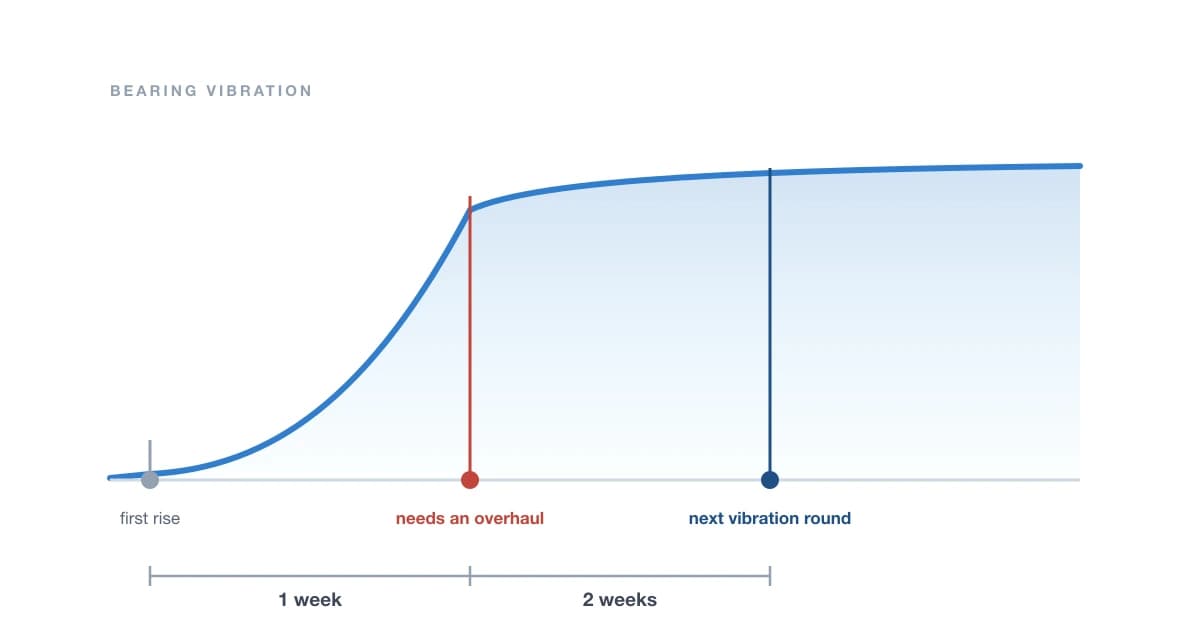
Ask the analyst to explain what supports the proposed diagnosis. A vibration spectrum shows the frequencies present in a measurement; a trend shows how a result changes over time. These answer different questions from a single overall number. Keep the underlying findings available instead of reducing the record to a coloured status or a photograph of an alarm.
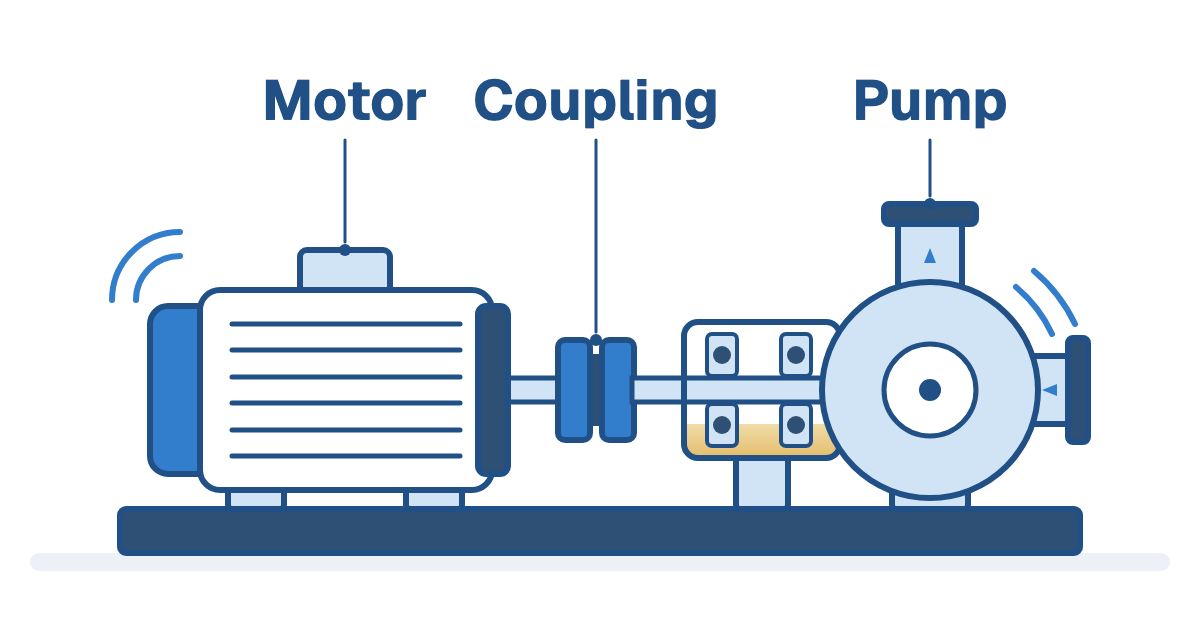
Separate the motor, coupling and pump
Use the following questions to prepare the investigation. They identify evidence to request; they are not a fault chart that turns a symptom into a diagnosis.
| Area | Question to resolve |
|---|---|
| Motor | Does the evidence concern lubrication, bearing damage or a separate motor condition? |
| Coupling and supports | What checks support or rule out alignment and attachment concerns, especially after maintenance? |
| Pump | Is the suspected finding in a bearing, another pump component or the fluid-handling condition? |
| Operating context | Under which speed and duty does the finding appear, and how does that compare with earlier records? |
More than one finding may exist on the same set. Resolving one should not automatically close the others. The maintenance record should say which observation each action is intended to address.
One pump set needed different actions
Schaeffler's published WEIG cardboard-plant account makes this distinction concrete. Sensors covered both a centrifugal pump and its motor. The investigation reported insufficient motor lubrication, damage on a pump bearing's inner ring and cavitation, the formation and collapse of vapour bubbles in the pumped liquid.
Controlled lubrication returned the reported motor-bearing indicators to normal. Inspection of the removed pump bearing confirmed the inner-ring damage indicated by the analysis. Lubrication and bearing work addressed different findings. The account does not say that adding lubricant repaired the damaged pump bearing or explain the remedy for cavitation.
Schaeffler and its partner KSA Kubben & Steinemer supported WEIG. The account reports values below alarms after corrective maintenance, but gives no numerical vibration results or follow-up duration. Read the documented pump and motor findings for the case details.
Follow a warning through to confirmation
Artesis' historical case collection provides separate examples of pump investigations prompted by electrical-signal monitoring. This method analyses voltage and current at the electrical panel. Its warnings are not vibration measurements, but the cases show why confirmation matters before choosing maintenance.
At an anonymous sugar refinery, a deep-well pump warning led the maintenance team to dismantle the pump. Pitting on a blade supported the cavitation diagnosis. Artesis reports that the warning stopped after maintenance; it does not describe the repair or establish a lasting cure. The sugar-refinery cavitation investigation follows that sequence.
In a different account, a feedwater-pump bearing warning was checked, the bearing was replaced and the alarm stopped. Another pump developed a misalignment indication after an overhaul; Artesis reports that laser alignment returned the monitored level to normal. These are separate vendor accounts, not competing diagnoses of one machine or a guarantee for another installation.
The practical lesson is to state the confirmation step. If alignment is suspected, obtain alignment evidence. If bearing damage is suspected, connect the finding to the relevant bearing and retain inspection evidence when work is performed. If cavitation is suspected, investigate the pump and its operating conditions rather than treating the warning as a bearing order.
Decide how the repair will be checked
Define the verification before the equipment is opened. Record the starting findings, the work proposed and the follow-up measurements that will show whether each finding has changed. Repeat checks at comparable locations and operating conditions, and record any differences that limit the comparison.
Keep the removed-component findings and completed work with the measurement history. A lower reading after repair is useful, but the follow-up should establish whether the improvement holds across the relevant operating duty. An unexplained remaining warning needs its own investigation.
Prepare the next investigation
Share the pump and motor details, recent maintenance, operating duty, measurement locations and available trends with NATCOM. These records help define the next assessment and the evidence needed to support corrective work. Review the vibration-monitoring options and, where the question warrants it, electrical-signal monitoring. Choose the method around the fault being investigated and the verification it needs to support.

Frequently asked questions
No. A pump investigation may find bearing damage, alignment or support problems, lubrication concerns, or an issue with the pumped liquid and operating conditions. Locate the finding on the motor or pump and use supporting measurements or inspection to test the suspected cause before selecting a repair.
Correcting insufficient lubrication may help where that condition is established and the equipment's lubrication requirements are followed. It does not repair damaged bearing metal. Schaeffler's WEIG account documented separate motor-lubrication and pump-bearing findings, which needed different maintenance actions.
Compare the remaining finding with the original diagnosis, then review the replacement work, alignment, supports, operating conditions and other component findings. Use comparable measurement locations and conditions. A remaining alarm needs investigation; it does not by itself identify another bearing to replace.
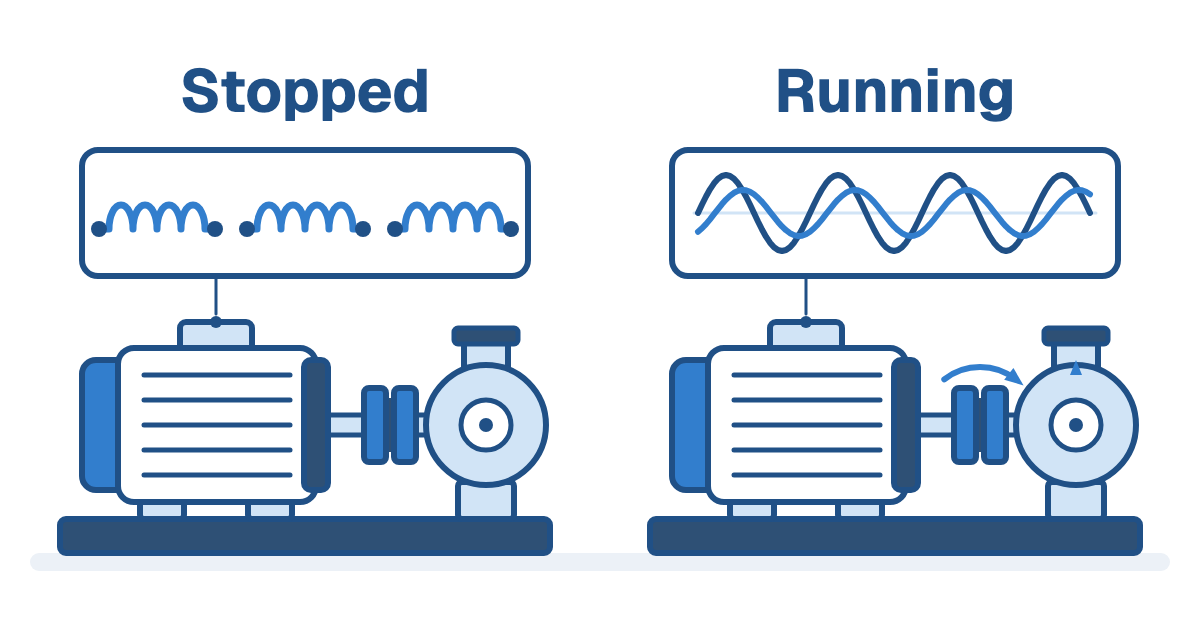
Electrical-signal monitoring uses motor voltage and current measurements to identify changes that may concern the motor or driven equipment. Artesis documents pump investigations prompted by this method. These are different measurements from vibration, and an indication still needs appropriate confirmation before it becomes a repair instruction.
A single vibration value cannot clear every pump for service. Assessment depends on the machine, measurement method, operating conditions, trend and applicable equipment criteria. The responsible site team must judge operation under its procedures; one improved reading does not establish a lasting repair.