
01 / The challenge
Bearing temperatures rose before the planned oil change.
A petrochemical plant in Qatar began experiencing high bearing temperatures on a Mitsubishi compressor. Investigation found membrane patch colorimetry, or MPC, readings above 30. MPC is an oil test used to assess varnish potential by measuring the colour of material collected on a membrane patch.
The case described varnish potential as stable, but the level remained elevated and the machine was showing an operating symptom. Stability in the oil trend therefore did not resolve the concern about bearing temperature. The next planned oil change was still 12 months away, and the plant wanted to avoid an unexpected shutdown.
The decision was to treat the existing oil system and monitor its response. That created a way to address the deposits while retaining the scheduled maintenance plan, rather than relying on the next oil change to deal with the immediate problem.
02 / The approach
Combine varnish removal with deposit treatment.
Connect the varnish-removal unit
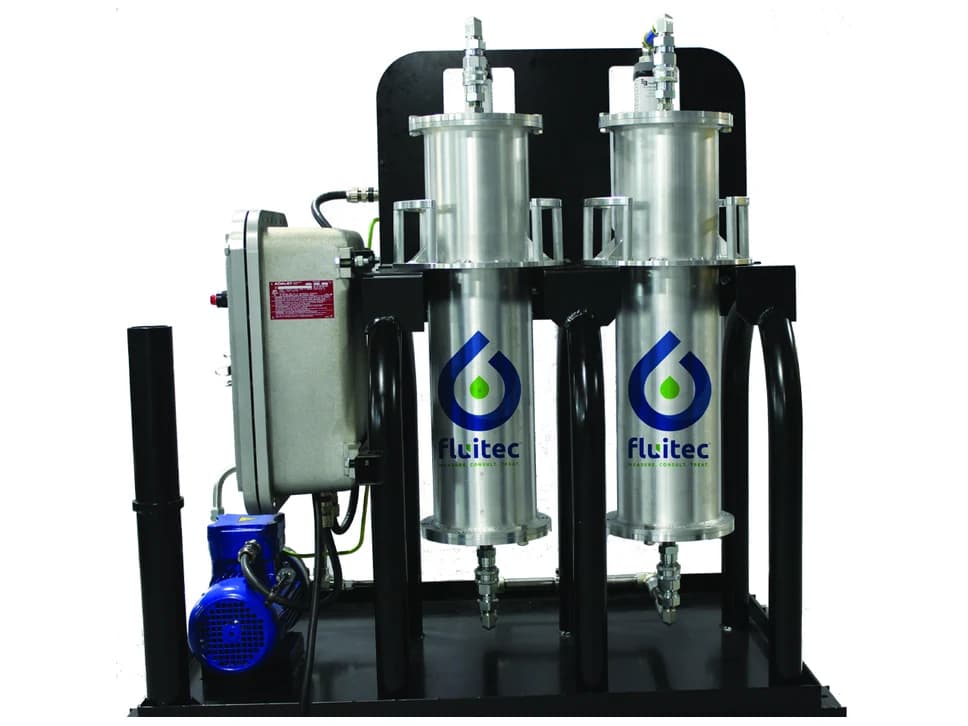
A Fluitec VITA ESP III unit was connected to the compressor system reservoir. ESP refers to the Electrophysical Separation Process used by the treatment equipment. The case identifies the unit as part of the response to the elevated varnish potential.
Treat the deposits in the oil system
DECON™ was added at a 3% treat rate to help remove deposits in this compressor application. That concentration describes the documented project. Another oil system requires its own lubricant assessment, compatibility review and treatment specification.
Follow oil results and machine behaviour
The response was assessed through repeat MPC measurements and bearing-temperature observations. Following both kept the treatment connected to the original operating problem. A better oil result had to be considered alongside what the compressor was doing.
03 / The documented outcome
MPC fell below 5 within four days.
MPC values fell from above 30 to below 5 within four days of treatment. They remained under 5 over the following months before the oil change. The case also reports that bearing temperatures stabilized and the system was free of varnish.
The improvement addressed the operating concern behind the treatment. The team could follow the oil's varnish potential alongside stable bearing temperatures while keeping the existing charge in service ahead of its planned change.
04 / Applying the findings
Treat the measured problem behind hot bearings.
For a compressor with rising bearing temperatures, bring the temperature history together with operating conditions and oil-analysis trends. The investigation should consider lubrication, loading, cooling and mechanical condition as well as deposits. This case supports checking varnish potential where the evidence points to it; it does not make varnish the explanation for every hot bearing.
The treatment choice follows that diagnosis. Agree which measurements will establish the starting condition, what a successful response should look like and how often to check it. Use the equipment and lubricant requirements to interpret the results. The values in this case describe one plant's response and should not become a universal acceptance limit.
Our guide to oil filtration versus varnish removal explains why the distinction matters for hot bearings. NATCOM's turbine and compressor oil varnish service connects treatment selection with oil analysis and machine observations.