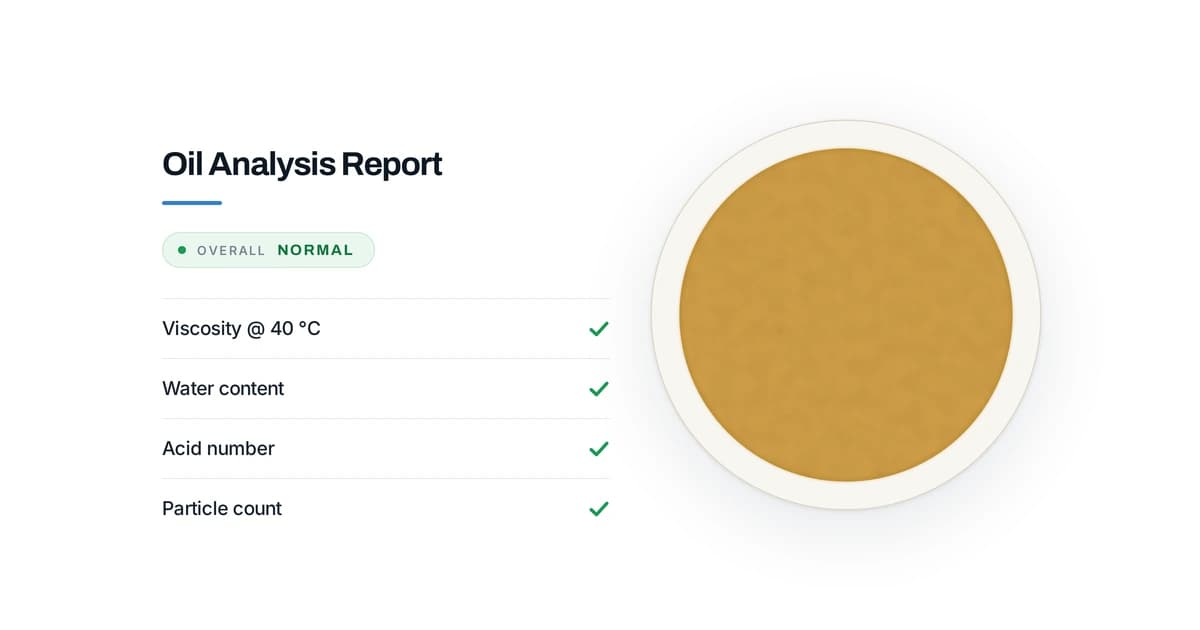
The compressor's oil has been filtered, but a bearing still runs hot. The maintenance team has a cleaner particle count and the same operating concern. Before specifying a finer filter or buying replacement oil, ask whether the treatment addressed the condition responsible for the temperature.
Oil filtration and varnish removal can serve different purposes. Particle filtration captures contaminants within the selected system's capabilities. Varnish treatment addresses oil-degradation products and deposits through an appropriate removal or deposit-control mechanism. Some equipment combines both functions. The useful comparison is what the treatment does and how the plant will verify it.
Compare what each treatment actually removes
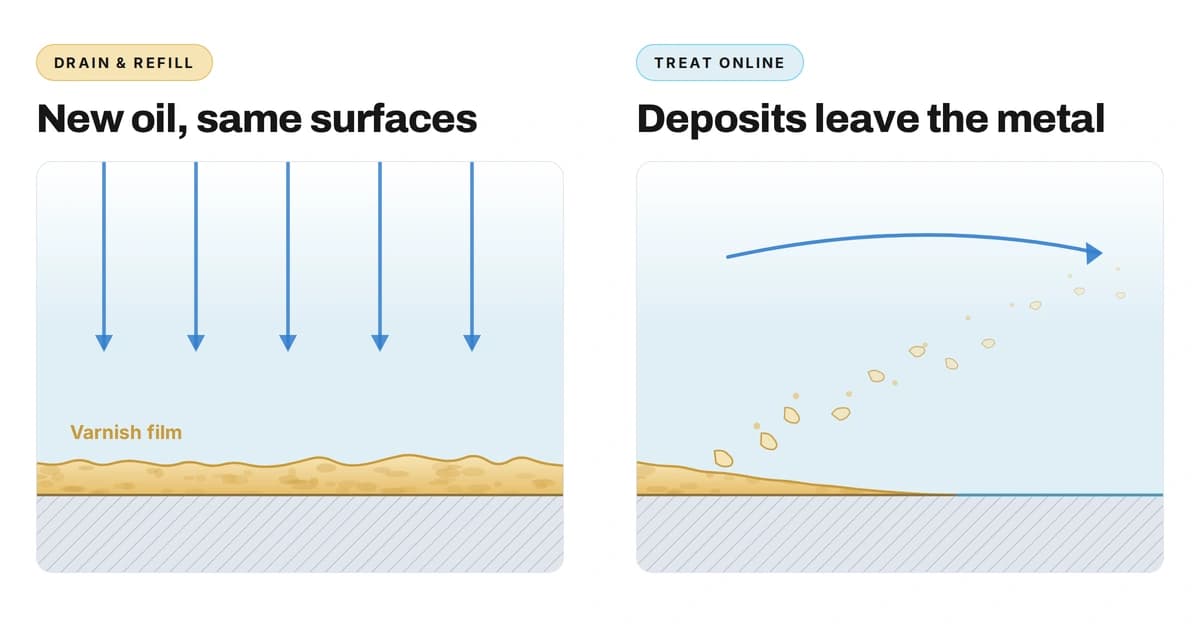
Varnish is a deposit associated with lubricant degradation. Its source material can exist in different forms, and a treatment must reach the form causing trouble. Distinguish material suspended in the oil, material dissolved in it, and deposits already attached to machine surfaces.
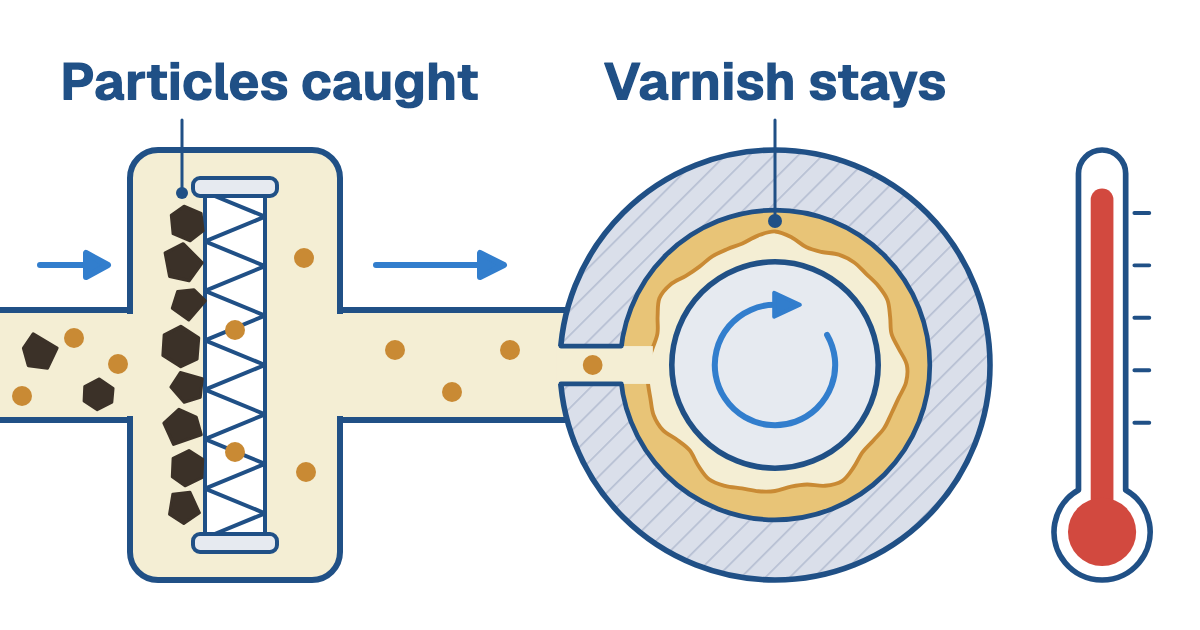
- Suspended particles are separate pieces carried through the oil, including dirt, wear debris and some degradation material. Suitable particle filters capture them as the oil passes through. Performance depends on the media and operating conditions, not the micron number alone.
- Dissolved degradation products are held in the oil at molecular level. A finer mechanical sieve does not remove them as though they were larger particles. Selected removal media can bind these compounds. The media must be qualified for the oil formulation and condition.
- Deposits attached to bearings or other surfaces are outside the flowing sample. A qualified deposit-control treatment can improve the oil's ability to dissolve this material. Dissolving a deposit back into the oil and physically removing material from the circuit are different actions.
A system may combine these functions. Ask which media or chemistry performs each job and how the result will be verified. A better particle count supports particle cleanup, but it does not directly measure a bearing deposit or establish the oil's remaining antioxidant protection.
Investigate the hot bearing before choosing treatment
Varnish is one possible explanation for an elevated bearing temperature. Review lubrication supply, cooling performance, operating duty and mechanical findings too. Compare the temperature with the equipment's established behavior and requirements. Oil treatment must not become a reason to ignore an alarm, defer a required inspection or continue operation outside approved limits.
Deposits can act as an insulating layer and make heat transfer more difficult. That provides a reason to investigate varnish where the oil and machine evidence agree. A hot bearing alone still cannot establish that such a layer is present.
Build a common timeline of temperatures, load changes, oil additions, filter work and laboratory results. Record when the symptom began and which interventions changed it. This helps distinguish an improvement associated with treatment from one that followed a change in operating conditions.
Where the oil and method are suitable, Membrane Patch Colorimetry, or MPC, measures the color of insoluble material collected on a membrane. The laboratory reports a color-difference value, ΔE, which supports a varnish-potential trend. The number is not deposit thickness or a percentage of varnish. Our guide to what an oil report says about varnish explains how to read it with other tests and machine evidence.
A compressor case combined removal and deposit treatment
At an anonymous petrochemical plant in Qatar, a Mitsubishi compressor developed high bearing temperatures while its next scheduled oil change was still twelve months away. The reported MPC level was above 30. The source described varnish potential as stable, but that flat trend did not resolve the bearing-temperature concern. The plant needed to address the condition ahead of its maintenance window.
The treatment combined a Fluitec VITA ESP III unit on the compressor's oil reservoir with DECON™ at a 3% treat rate. ESP media removes selected degradation products from the oil. DECON™ helps dissolve deposits back into the oil by improving its capacity to hold them. The combination addressed both removal and deposit treatment in this application.
Fluitec, a NATCOM technology partner, reports that MPC fell from above 30 to below 5 within four days and remained below 5 during subsequent months. Bearing temperatures stabilized. The compressor oil varnish treatment case study presents the intervention and outcome. Its MPC readings and 3% dose describe that application; they are not universal limits or a treatment instruction for another compressor.
Match each proposed action to a measured problem
If the lubricant no longer meets its requirements, a cleaner sample alone does not restore suitability. Review replacement or other qualified action against the full condition evidence. The oil's identity, formulation, service history and equipment requirements matter before adding any treatment chemistry. Compatibility and authorization should be settled for the proposed application.
NATCOM's varnish assessment and removal service explains that process. The related oil filtration service covers contamination cleanup. A proposal may include both, but it should state what each part is expected to change and how that change will be checked.
Verify the operating result as well as the oil result
Agree the baseline, sampling procedure and follow-up period before work begins. Trend the relevant oil measurements with bearing temperatures and comparable operating conditions. Record other changes during treatment so the team can judge the evidence fairly. One improved sample should prompt follow-up, rather than close the investigation automatically.
If the laboratory result improves but the bearing symptom remains, reopen the diagnosis. The plant's objective is a justified maintenance decision and controlled machine condition. An attractive oil result is useful only within that wider evidence. The same discipline should apply whether the proposal is filtration, deposit treatment or replacement.

Frequently asked questions
Particle filtration removes material that the selected filter can capture. Varnish treatment addresses degradation products and deposits through a method qualified for the oil and application. Some systems combine particle and varnish-removal media, so compare the mechanism and verified result rather than the equipment label alone.
Some specialized filtration media remove varnish-forming degradation products, and particle filters can capture suitable suspended material. A conventional particle filter does not remove dissolved material simply by having a finer micron rating. Existing deposits may also need a qualified dissolution or cleaning treatment. Compare the actual mechanism and application, not the word filtration alone.
No. A particle count does not directly measure deposits on a bearing or establish the full chemical condition of the oil. Review suitable varnish-related tests, operating trends and inspection evidence alongside cleanliness measurements.
No. Bearing temperature is a symptom with several possible causes. The investigation should include lubrication supply, cooling, operating conditions and mechanical findings as well as oil and deposit evidence. Follow the equipment's alarm and protection requirements.
The 3% figure describes one documented treatment. It is not a general dose recommendation. Oil identity, condition, compatibility, equipment requirements and the treatment objective need application-specific assessment before a formulation or dose is selected.