
01 / The challenge
Fresh oil became dirty again within 19 days.
Macrete Ireland Ltd operated a Bonus 300 kW wind turbine to supply electricity to its precast concrete factory in Northern Ireland. Its three-stage helical gearbox had been in service for about ten years and received regular servicing. During the last two oil changes, the team had noticed heavy discoloration in both the oil and the gearbox interior.
The maintenance routine already included flushing before refilling with new mineral gear oil. Yet fresh oil soon became dirty again. On 5 September 2023, the gearbox was drained, flushed and refilled. When the turbine stopped for filtration installation on 24 September, only 19 days later, the oil and internal surfaces were visibly dirty.
That sequence gave the team a practical reason to assess ongoing oil cleanup. Replacing the oil had renewed the charge, but it had not kept the gearbox clean through the following weeks.
02 / The approach
Add a filtration loop and compare the same oil over time.
Install a separate circulation loop
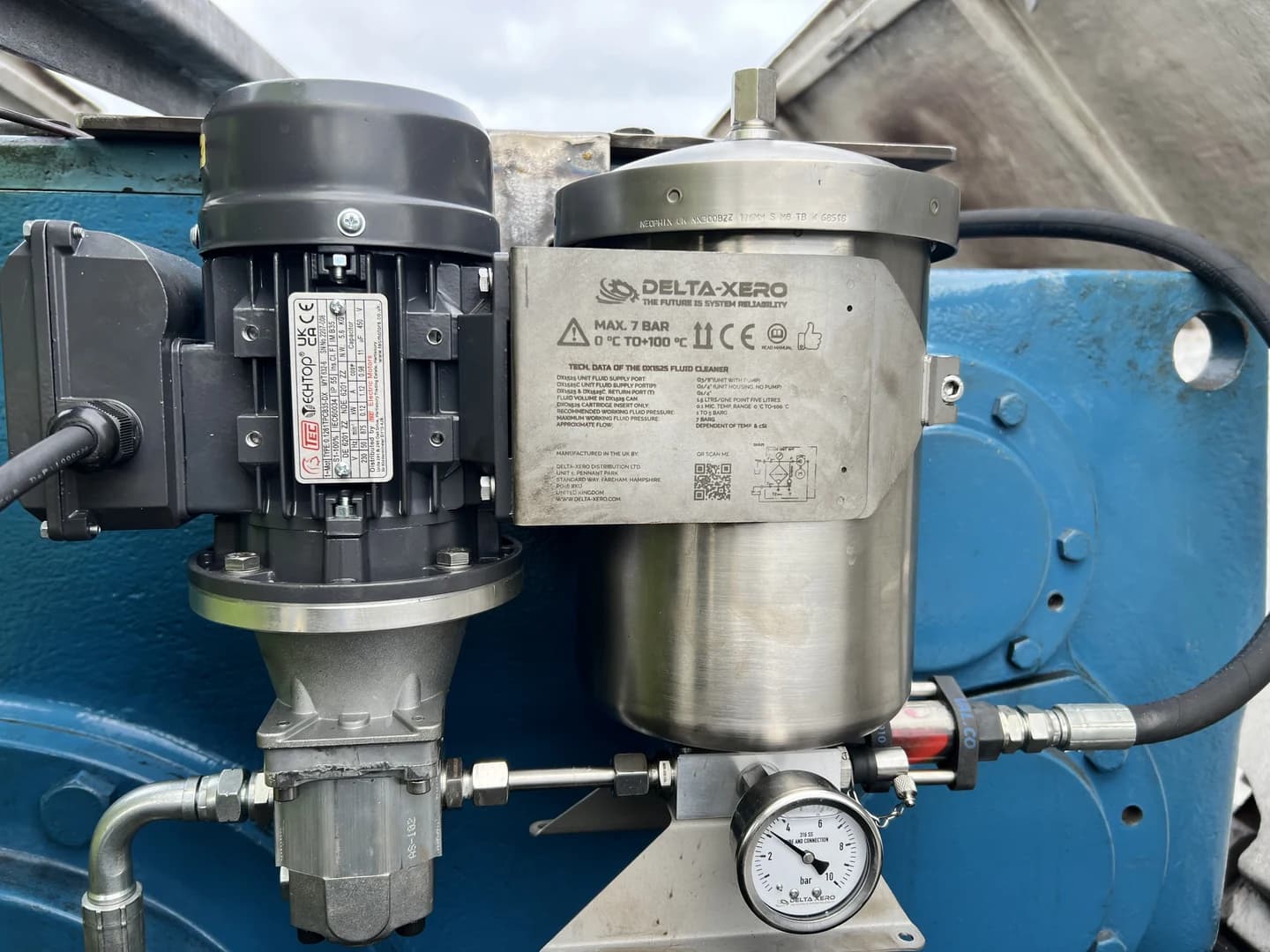
Macrete fitted a Delta-Xero DX1525-SV offline filtration system. Offline means that a separate loop circulates oil through the treatment unit, alongside the gearbox's lubrication arrangement. The source photograph shows the installed unit and its connections.
Record the condition at installation
Technicians took an oil sample when the system was commissioned. That sample documented the condition of the replacement oil after 19 days without the new filtration system. The gearbox interior was photographed as well.
Return after 51 days of filtering
A second sample allowed comparison with the installation sample. The evidence included oil-bottle photographs, 0.45 µm membrane patches and microscope images of collected material. The 0.45 µm figure describes the test membrane, not an achieved oil-cleanliness rating.
03 / The documented outcome
The oil and patch photographs showed less contamination.
The first oil sample appeared dark and opaque. The comparison sample after 51 days of filtering appeared clear and amber. Its membrane patch was visibly cleaner, while the microscope images showed less of the metallic debris seen in the initial sample.
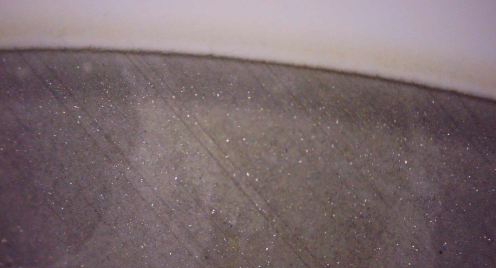
Installation sample, 19 days after the oil change and before filtration.

The same oil after 51 days of filtration.
The photographs show the cleanup achieved while treating the existing oil charge. For this gearbox, replacing the oil had not kept visible contamination under control; adding filtration changed that picture. Laboratory trends remain necessary to assess whether the oil is suitable for continued service.
04 / Applying the findings
Investigate why contamination returns after replacement.
For another gearbox, start with the interval between an oil change and the returning symptom. Keep the oil product, grade, drain and refill dates, sampling location and operating history together. A dark sample should trigger investigation into contamination and lubricant condition; its colour alone does not select the treatment.
A filtration specification also needs the actual oil temperature and viscosity, reservoir volume, available connections and agreed cleanliness target. Choose the measurements before starting treatment, then repeat them consistently. That provides a stronger basis for deciding whether cleanup is working and whether the oil remains suitable for service.
Our guide to gearbox oil that turns black after a change explains the investigation. Explore gearbox oil filtration for equipment selection and oil analysis for the measurements behind the decision.