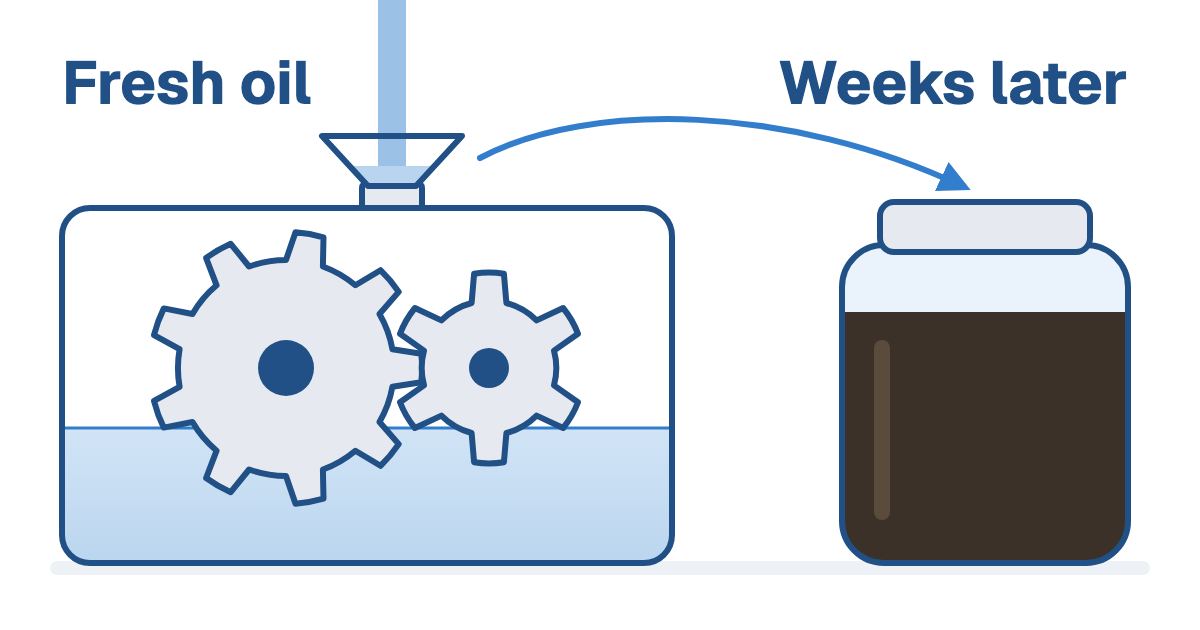
The gearbox has been drained, flushed and refilled. The maintenance job is closed. A few weeks later, the new oil looks black again. Buying another charge may feel like the obvious response, but the first question is what made the replacement oil dirty so quickly.
New oil enters a used machine. Material left inside, contamination entering during operation and changes in the lubricant can all affect its appearance. Industrial gearbox oil that turns black soon after a change needs an explanation before the plant repeats the purchase. Color starts that investigation; it cannot identify the cause or decide whether the oil needs replacing.
Separate the oil's appearance from its condition
Compare the sample with the correct unused oil. Record the product, grade, refill date, running hours and any top-ups. Different formulations have different starting colors, and an undocumented top-up makes a visual comparison harder to interpret. A photograph is useful for showing a change, but it cannot measure how much useful service remains.
Ask the laboratory which tests will distinguish contamination from deterioration for that lubricant. Particle and wear-debris examination address material circulating through the gearbox. Viscosity, water and appropriate degradation tests answer other questions. Read the results against previous samples and the equipment requirements, rather than letting one acceptable number clear the entire oil charge.
Keep the machine evidence beside the oil results. Note unusual noise, temperature changes, vibration findings and material found during inspection. An oil sample can help investigate wear; it does not replace a mechanical assessment when the gearbox gives reason for concern. Follow the site's alarm and operating procedures while the cause is investigated.
Why new gear oil can turn dark
Several different processes can produce a similar-looking bottle. Use the maintenance history and analysis to distinguish them. The time since replacement is useful context, but a short interval does not identify the source by itself.
- Old oil and deposits may remain after draining. A fresh charge can pick up material already inside the system. Review what the flush reached and what inspection found, rather than assuming that a completed flushing job means every surface is clean.
- New contamination may enter during filling or through the operating machine. Check transfer equipment, containers, breathers and seals. If the entry route remains open, replacing the oil leaves the next charge exposed to the same problem.
- Wear can generate debris inside the gearbox. Particle examination and suitable wear-debris tests help investigate that material. Read them with vibration, temperature and inspection findings; removing debris does not repair the component producing it.
- The oil itself can change chemically. Oxidation, the oil's reaction with oxygen, and some additive reactions can change its color. Ask for formulation-appropriate degradation testing alongside viscosity and contamination results. Darkening alone does not prove that the lubricant has failed.
A wind-turbine gearbox was dirty again in 19 days
Macrete Ireland Ltd experienced this pattern in the three-stage helical gearbox of a 300 kW wind turbine. The gearbox had been in service for about ten years. Staff had noticed rapid discoloration after previous oil changes, despite flushing before refilling.
On 5 September 2023, the gearbox was drained, flushed and filled with new mineral gear oil. When a Delta-Xero DX1525-SV offline filtration system was installed on 24 September, both the oil and gearbox interior already looked dirty. Only 19 days had passed. A commissioning sample captured that starting condition.
After 51 days of filtration, the comparison sample was visibly clearer. Membrane-patch and microscope photographs also showed reduced contamination and metallic debris. The evidence demonstrates cleanup in this gearbox. Continued oil suitability still needs laboratory trends alongside the visual change. The full account appears in the wind-turbine gearbox oil cleanup case study documented by Delta-Xero, a NATCOM technology partner.
Where offline gearbox filtration fits
Offline filtration, also called kidney-loop filtration, circulates oil through a separate treatment loop. It draws oil from the system, passes it through the selected treatment media and returns it. This provides a route for ongoing cleanup alongside the gearbox's main lubrication arrangement when the contamination is removable and the lubricant remains suitable for continued use.
Specify the job before choosing the unit. Gear oil viscosity, meaning its resistance to flow, changes with temperature and affects equipment selection. Reservoir volume, available connections, operating temperatures and the contaminant to be removed also matter. A unit selected for a thinner oil or a smaller reservoir should not be assumed suitable for another gearbox.
Review the existing filtration arrangement as part of that assessment. A filter rating describes the element's performance under specified conditions. It does not prove the oil in this machine meets its cleanliness requirement. NATCOM's gearbox oil filtration service covers the information needed to select and verify a treatment approach.
Agree what will count as a successful result
Before treatment, record a baseline and agree acceptance criteria for the actual gearbox and oil. Define the sampling point, method and operating conditions so subsequent results are comparable. Record any oil additions, filter changes or maintenance during the observation period. Otherwise, a change in the numbers may be difficult to explain.
Verify both the initial cleanup and whether control holds during operation. A clear bottle after treatment is encouraging; a sustained trend gives the maintenance team more useful evidence. Keep investigating continuing wear or ingress if contamination returns. Filtration should have a measured purpose, rather than becoming another routine that nobody checks.

Frequently asked questions
Possible causes include contamination remaining after maintenance, continuing ingress, wear debris and changes in the lubricant. Color alone cannot identify the cause. Compare the current sample with the new oil and earlier results, then investigate the gearbox, handling process and operating conditions.
No. Color does not establish whether the oil is suitable for service. The decision needs appropriate analysis of lubricant condition and contamination, machine evidence and the equipment's requirements. Filtration may suit removable contamination, while unsuitable oil or an unresolved mechanical problem needs a different response.
It circulates oil through a separate treatment loop, independent of the gearbox's main lubrication flow. Selection depends on the oil, viscosity at operating temperature, reservoir volume, contamination, connections and required result. A separate loop does not replace the machine's lubrication or protection systems.
No. Improved appearance can support evidence of cleanup, but it does not establish lubricant life or mechanical health. Follow comparable oil-analysis results together with wear, temperature, vibration and inspection findings appropriate to the gearbox.