A plant can have a vibration route, a growing sensor network and a critical machine that still needs a different kind of measurement. The practical question is which arrangement will capture useful evidence when that machine is running, and who will act on it.
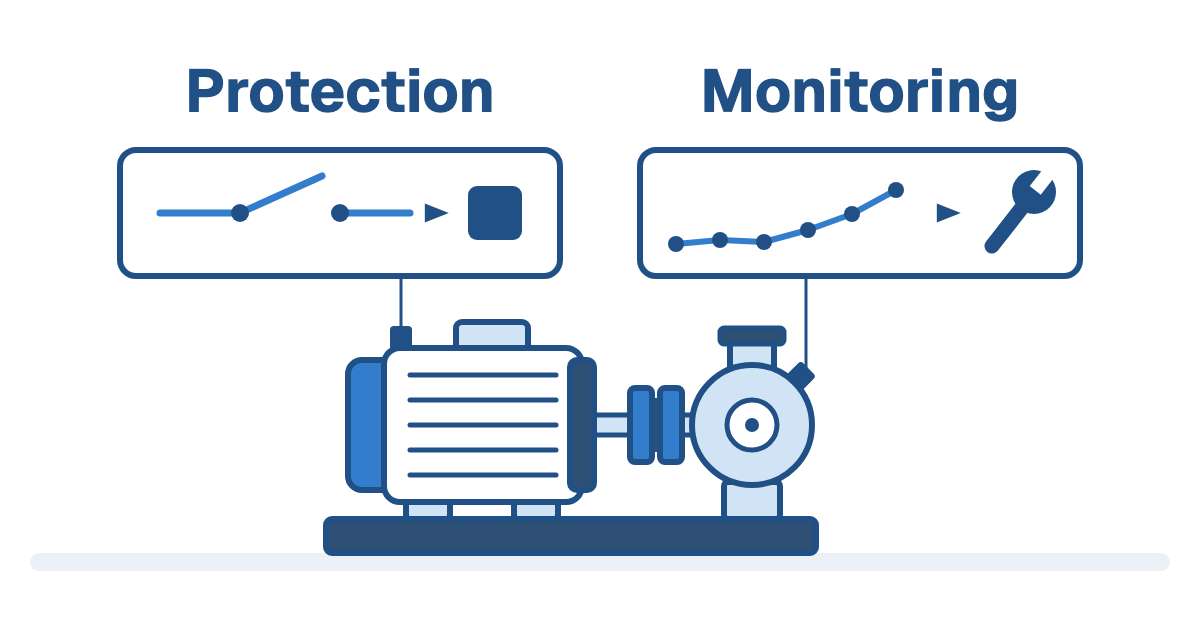
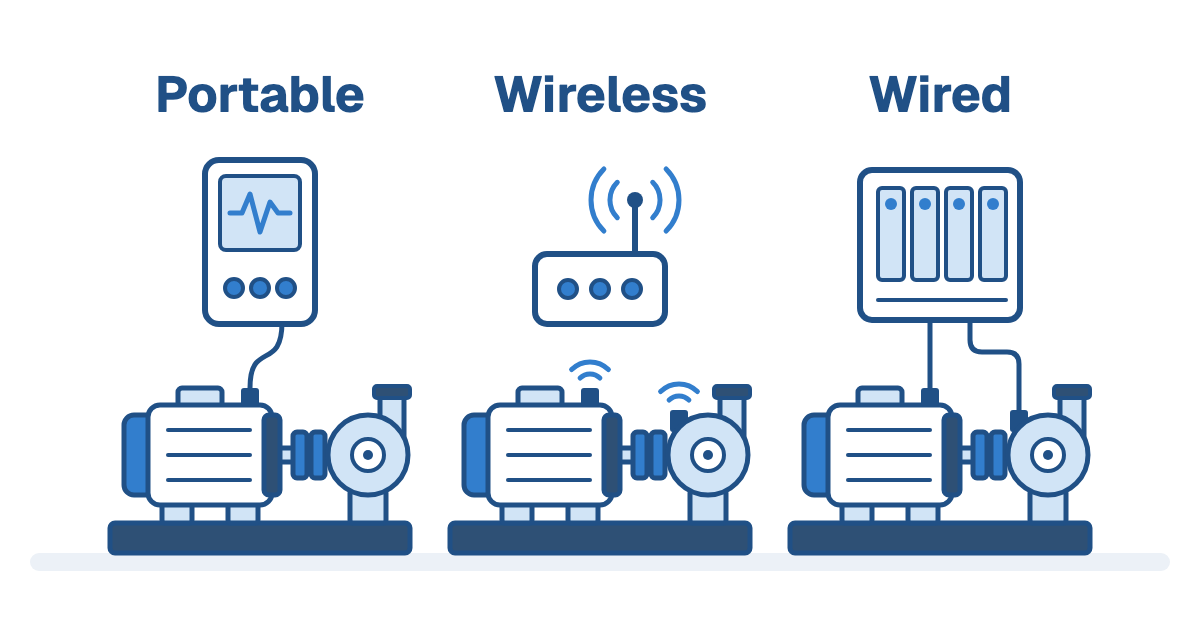
Portable vibration analysis suits repeatable planned measurements and focused investigations. Wireless sensors can broaden coverage between visits. Wired monitoring can support permanent or temporary acquisition where the required signals and machine behaviour justify it. These categories describe how data reaches the team. They do not, on their own, define diagnostic detail or machinery protection.
Start with the asset and the maintenance decision. If the requirement is to follow a developing bearing finding, compare coverage and the ability to obtain diagnostic data. If it is to capture a startup event, specify the event and the required measurements. If it is automatic shutdown, write a separate protection requirement. A single purchase label cannot answer all three.
Choose the collection interval around the duty
A route measurement records the machine during a visit. Ask whether the machine usually runs at a comparable speed and load when the technician arrives. Also ask what happens between rounds. Short operating cycles, changes after maintenance and a newly developing fault can make the existing schedule a poor match for the question.
Sensor presence does not prove uninterrupted recording. Schaeffler's September 2025 OPTIME brochure states six indicator measurements per day and a time waveform every 24 hours in its sensor specification. A time waveform is the vibration signal recorded over time; it lets an analyst investigate detail beyond a summary value. Those intervals describe the documented product configuration, not every wireless system.
The same brochure describes separate operating modes for machines with different running durations. Check the proposed mode against the actual duty. A sensor on an intermittently running machine needs a collection arrangement that obtains measurements during useful operation. Discuss the gap between routine vibration rounds before choosing the next hardware layer.
Ask for the signals the investigation needs
An overall vibration trend can show a change without identifying its cause. Ask whether the proposed system supplies the waveform, frequency spectrum and speed reference needed for the asset. A spectrum separates the signal by frequency. The speed reference connects those frequencies to machine rotation.
For a coupled set, specify which components need coverage. A motor sensor does not automatically establish the condition of every pump bearing. Include measurement locations and directions in the scope, then decide which data must be collected together. Do not assume that a larger sensor count compensates for an unsuitable location or missing operating information.
Twave's published paper-mill example used temporary T8-L monitoring with accelerometers and a static load input. The investigation identified misalignment and structural looseness. Precision alignment and bolt tightening followed. This is useful evidence that a temporary wired investigation can answer a specific repair question; permanent installation was not the only useful arrangement.
Plan access, communications and ownership
Portable collection needs suitable access and a repeatable route. Wireless equipment needs an assessed communications arrangement, a gateway where required, and a plan for battery and sensor condition. Wired equipment needs sensor installation, cable routes, power and the interfaces required by the site. Put those responsibilities in the proposed scope rather than discovering them after ordering.
For remote analysis, establish which records an analyst can see and what happens when communications fail. Check whether the site needs local data access, remote access or both. Data collection, transfer and review are separate responsibilities. A reading can exist at the machine while the maintenance team has no usable notification.
Name the person who reviews warnings and the team that confirms the suspected defect. Decide how an unresolved finding moves into maintenance planning. More frequent readings are useful only when the information reaches someone who can investigate and authorize the next action.
Use a mixed programme when the machines justify it
Schaeffler's WEIG account illustrates component coverage. Four OPTIME sensors covered the motor and pump. The source distinguished insufficient motor lubrication from pump-bearing inner-ring damage, which inspection confirmed. Controlled lubrication addressed the motor finding; the damaged pump bearing required separate maintenance.
Schaeffler and its partner KSA Kubben & Steinemer supported that published account. It is one installation, without numerical vibration results or a stated follow-up duration. It does not establish a universal sensor layout or promise that a wireless system finds every defect. The pump and motor case shows why each finding needs its own response.
Build the selection sheet around each machine group, its duty, required evidence, collection arrangement and responsible reviewer. Keep portable investigation available where a warning needs additional measurements. Share that sheet and the existing trends with NATCOM to compare vibration-monitoring options against the work the programme must support.

Frequently asked questions
A permanently mounted wireless sensor can measure at configured intervals. Schaeffler's documented OPTIME specification lists six indicator measurements per day and a waveform every 24 hours. Confirm the actual collection mode and duty before describing any proposed system as continuous recording.
They may change the collection workload, but a warning may still need a focused investigation with additional measurements. Select the combination around the machine, the required data and the team that interprets it.
Consider it when the required sensors, simultaneous measurements, transient capture or permanent data acquisition justify the installation. Define those requirements first and verify the proposed system against them.
The number depends on the components, bearing locations and diagnostic questions. The four sensors in Schaeffler's WEIG case are a documented arrangement for that account, not a standard layout for all pump sets.
Do not infer shutdown capability from online monitoring. Machinery protection needs its own defined measurements, response requirements and verified system responsibilities.