The oil filters have been changed, yet they block again. A control valve is becoming less responsive, or the oil-analysis trend shows a growing varnish concern. Repeating the last cleanup may bring temporary improvement, but the next maintenance decision needs to address what is still circulating and why it keeps forming.
Continuous oil conditioning can support turbine varnish control by repeatedly treating oil through a separate circuit. With suitable equipment and serviceable oil, that circuit can remove fine contaminants and varnish-forming degradation products while the main lubrication system operates. NATCOM assesses where this approach fits, selects the treatment for the actual fluid and checks its progress against oil and machine evidence.
Varnish starts before a visible deposit
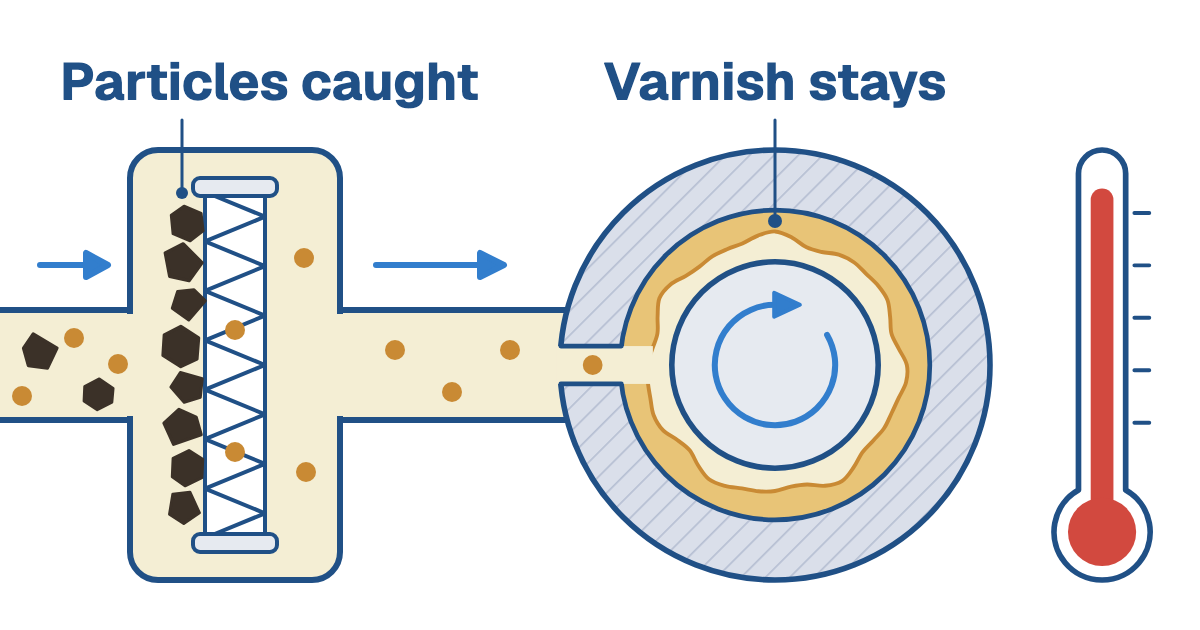
As oil degrades, some of the resulting material can remain dissolved in the fluid. When the oil can no longer hold it in solution, material can come out of solution, gather into larger particles and form deposits. What a sample contains therefore depends on more than the dirt visible in the bottle.
This matters when selecting treatment. A filter's particle rating describes only part of the job. A varnish-control proposal also needs to address the degradation products present in the oil and any deposits already affecting the system. Our guide to filtration and varnish removal explains that distinction in more detail.
Continuous conditioning gives the system a continuing route for removing material from the circulating oil. It still needs to be paired with an investigation of the cause. If abnormal heating or contamination keeps damaging the oil, a cleaner sample alone does not settle the problem.
A separate circuit keeps treatment working alongside lubrication
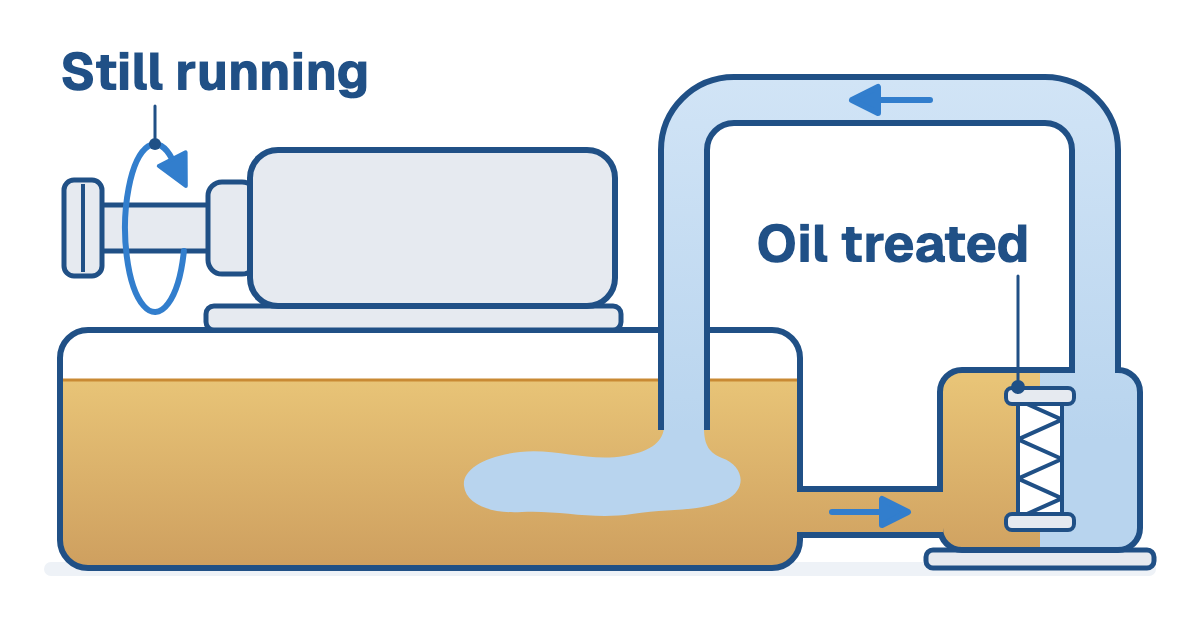
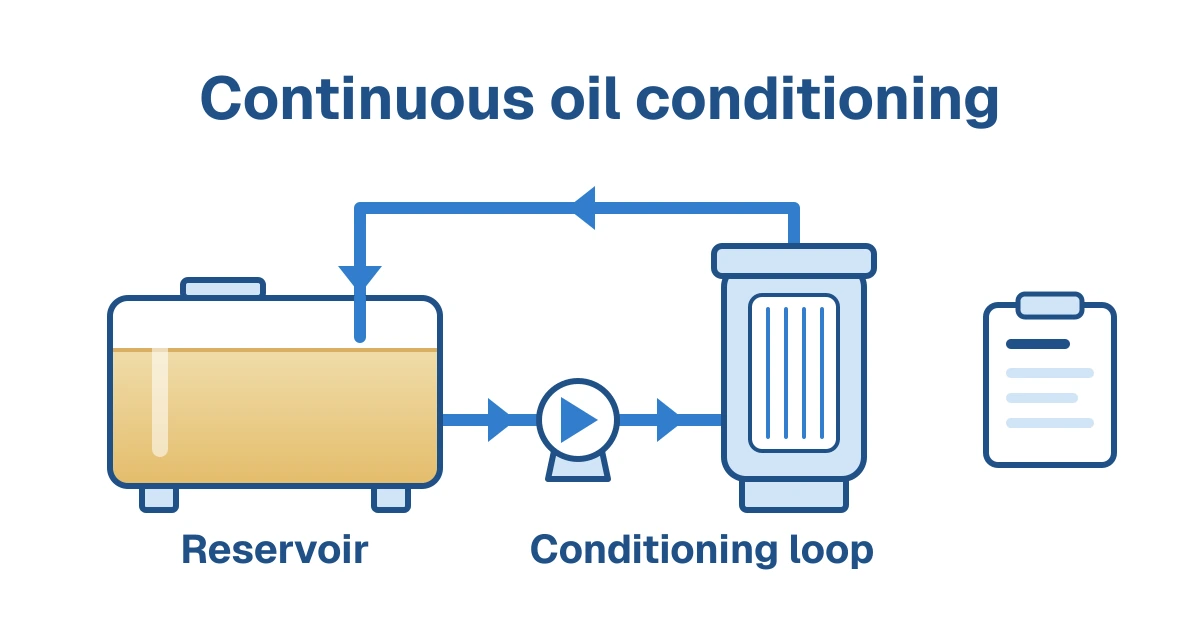
An offline conditioning unit draws oil from the reservoir with its own pump, passes it through treatment media and returns it to the reservoir. This arrangement is often called a kidney loop. Here, offline describes a circuit separate from the machine's main oil supply. It does not necessarily mean that the machine is stopped.
The same oil passes through the conditioning circuit repeatedly. The unit supplements the main system's filters and needs an appropriate connection arrangement, flow and maintenance plan. Whether it can be installed or serviced while the machine runs depends on the available connections and the site's operating requirements.
Reservoir volume is only one selection input. Oil viscosity, operating temperature, pressure and contamination load also matter. Delta-Xero's equipment literature shows that flow changes with viscosity, pressure and temperature. A headline tank capacity or a flow figure quoted for a different oil cannot define the right unit for the job.
Where Delta-Xero fits
Delta-Xero, a NATCOM technology partner, offers cartridge-based conditioning for fine particles, water and oxidation products such as sludge and resin. Its current cartridge overview describes media designed to capture these contaminants.
Delta-Xero also describes its technology as treating both soluble and insoluble varnish in its technical FAQ. Those terms distinguish material dissolved in the oil from material that has come out of solution. For a particular system, the proposal must connect that capability to the lubricant, the type of contamination and the required treatment result.
That makes Delta-Xero an option to assess where fine contamination and varnish-forming material need continuing removal. The choice should follow the oil evidence. It should not rest on a micron rating alone or on the assumption that every deposit problem needs the same equipment.
Separate initial recovery from continuing control
An oil system with a heavily contaminated reservoir or established deposits may need more work at the outset than a continuing conditioning loop can provide on its own. The scope may include correcting a heating fault, cleaning the tank or planning a suitable system-cleaning step before ongoing control begins.
These are separate decisions. Initial recovery addresses the condition already present. Continuing conditioning helps manage material that remains in circulation or forms during service. The treatment plan should say what each stage is intended to achieve and how the site will judge completion.
Oil suitability remains part of that decision. Removing contaminants does not establish that viscosity, antioxidant reserve and other required lubricant properties are satisfactory. Where degradation or depleted protection limits continued use, the oil needs further assessment before a filtration result is treated as permission to retain it.
Follow the oil, the cartridge and the machine
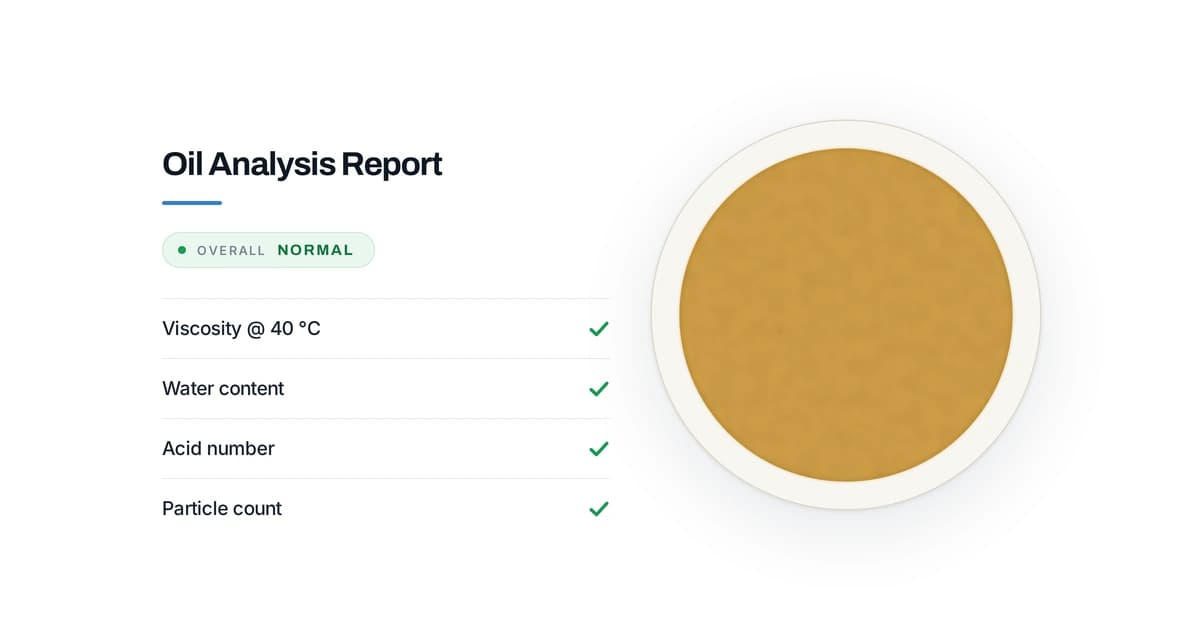
Agree the starting condition and acceptance criteria before treatment. For turbine oil, membrane patch colorimetry, or MPC, measures the colour of insoluble material extracted onto a test membrane and helps track varnish potential. Read that trend with relevant particle, water and wider oil-condition results. Our guide to reading turbine-oil varnish results explains why the tests answer different questions.
Keep the original operating symptom in the review too. If the concern was valve response or bearing temperature, follow that behaviour under comparable operating conditions. An improved laboratory result and a resolved machine symptom need their own evidence.
The conditioning unit also needs attention. Delta-Xero advises assessing cartridge condition through differential-pressure trends, meaning the pressure difference across the cartridge, alongside flow stability, oil-analysis results and inspection. That pressure difference alone is insufficient because relief or bypass operation can change what the reading tells you. Cartridge service therefore belongs in the treatment plan from the beginning.
A first improved sample is useful progress. Continued control needs a trend. Agree sampling points, follow-up timing and the findings that will trigger a cartridge change, further investigation or a review of the treatment scope.
Start with the system and the evidence
NATCOM can help assess a varnish-control approach around the oil's condition and the way the machine operates. That assessment connects the reason for treatment to equipment selection, installation constraints and verification.
Send the lubricant product and grade, reservoir volume, normal operating temperatures, recent analysis and the symptoms that prompted the enquiry. Include previous oil changes, cleaning or treatment, and any known restrictions on connecting a conditioning unit. An oil-analysis review can identify the evidence still needed before the scope is selected.
The aim is a defined program for keeping suitable oil in service, with a clear record of what is being removed, what is improving and what still needs attention.

Frequently asked questions
Yes, when the selected treatment addresses the degradation products present and the oil remains suitable for service. The program should also address the cause of degradation and track both oil condition and the relevant machine symptoms.
Offline refers to a separate treatment circuit. A suitable unit can operate alongside the main lubrication system. Installation and servicing access must be assessed for the actual system before deciding whether a shutdown is needed.
No. A particle rating alone does not establish how treatment handles dissolved degradation products or existing deposits. Select the treatment using the lubricant, contamination evidence, operating conditions and intended result.
No. Continued use depends on the oil's overall condition and the equipment's requirements. Removing contamination does not by itself establish that viscosity, antioxidant reserve and other required properties are satisfactory.
Delta-Xero advises using differential-pressure trends, the pressure difference across the cartridge, with flow stability, oil-analysis results and inspection. A pressure reading alone is insufficient. Agree the service criteria for the selected equipment and contamination load.