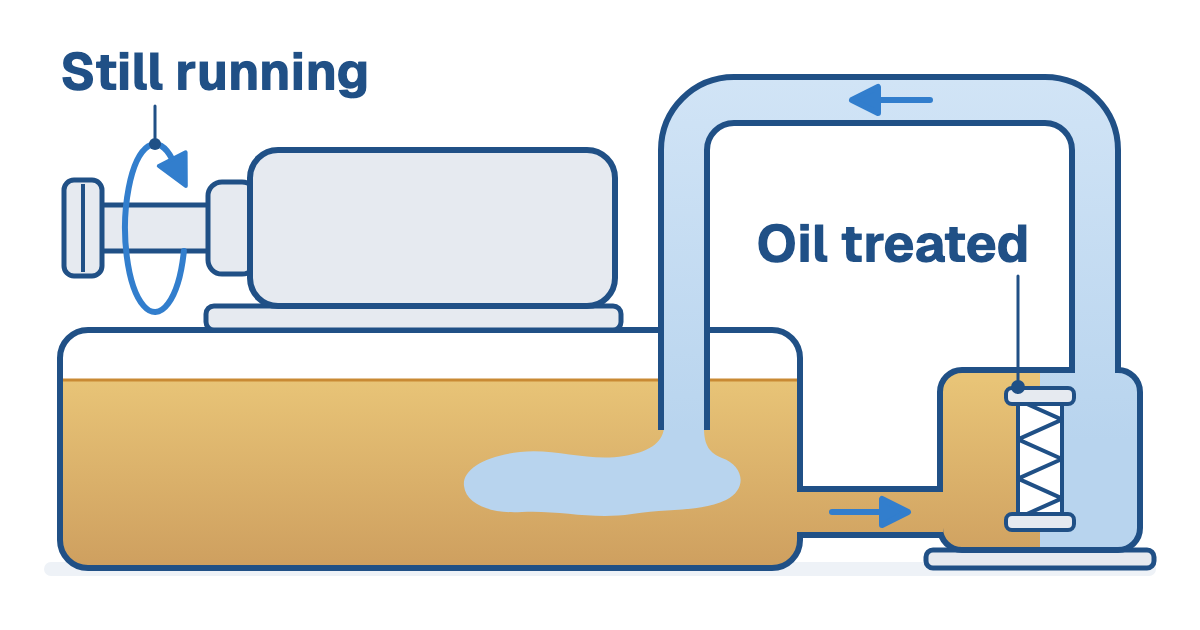
Yes. In suitable systems, you can save the existing oil and address oil-related shutdown risks while the machine keeps running. Online oil treatment can remove contamination, control varnish and restore depleted antioxidant protection. The useful question is which condition is threatening operation and which treatment will correct it.
A rising bearing temperature, a sticking control valve or deteriorating oil results can quickly turn into a plan to stop, drain, flush and refill. That plan consumes more than replacement oil. It needs production access, maintenance time and waste handling. Before accepting those costs, establish whether the oil can be recovered in service. There are documented industrial applications where it can, including a fertilizer plant in Egypt.
Treat the oil while the machine keeps running
Many treatment systems circulate oil through a separate cleaning circuit and return it to the reservoir. The machine continues to receive its normal lubrication supply while part of the oil passes through the treatment unit. You may hear this called a kidney loop, side stream or offline filtration. Here, "offline" describes the separate circuit, not a stopped machine.
Other treatments blend into the reservoir and work as the oil circulates. Deposit-control chemistry can help dissolve varnish from internal surfaces. Antioxidant replenishment can restore the oil's protection against oxidation when the lubricant remains a suitable candidate for continued service. These approaches preserve oil that still has useful life, rather than automatically replacing the entire charge.
This matters when production cannot easily release the asset. An in-service option gives engineering and operations a specific recovery plan to assess before an oil-related problem forces their hand.
Identify what is putting operation at risk
Start with the machine symptom and the oil history together. Is the valve response deteriorating? Are temperatures increasing under comparable load? Did water appear after a cooler problem? Has the oil been topped up, mixed or treated before? This timeline helps explain what changed and what a proposed intervention needs to achieve.
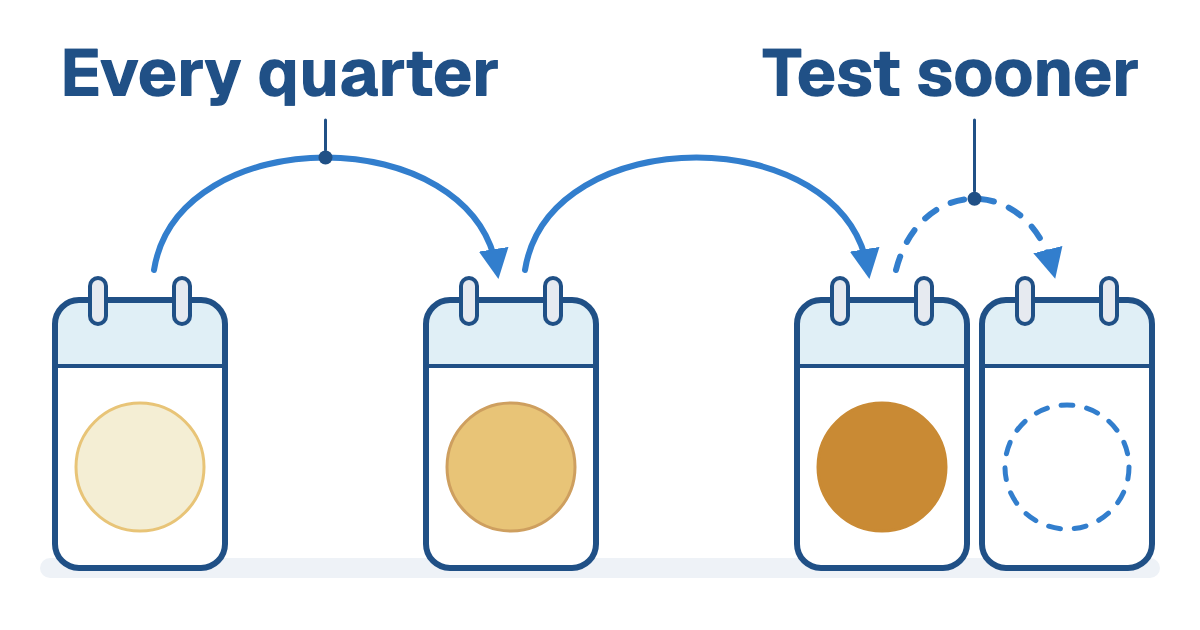
Review particle cleanliness, water, viscosity and other relevant oil properties. Where varnish or oxidation is suspected, add suitable Membrane Patch Colorimetry, or MPC, and RULER® antioxidant testing. MPC supports a varnish-potential trend; RULER® tracks remaining antioxidants against a reference oil. Our article on whether routine oil analysis is enough explains why the test menu matters.
Oil treatment addresses oil-related causes. Mechanical damage, inadequate lubrication supply and other equipment faults require their own corrective work, and the machine's operating and protection limits still apply. Establishing the cause makes the recovery proposal stronger and gives operations a reason to act on it.
Choose the treatment that keeps useful oil in service
Different problems need different treatment mechanisms. Specify the result required before selecting a unit or additive, and check whether more than one intervention is needed.
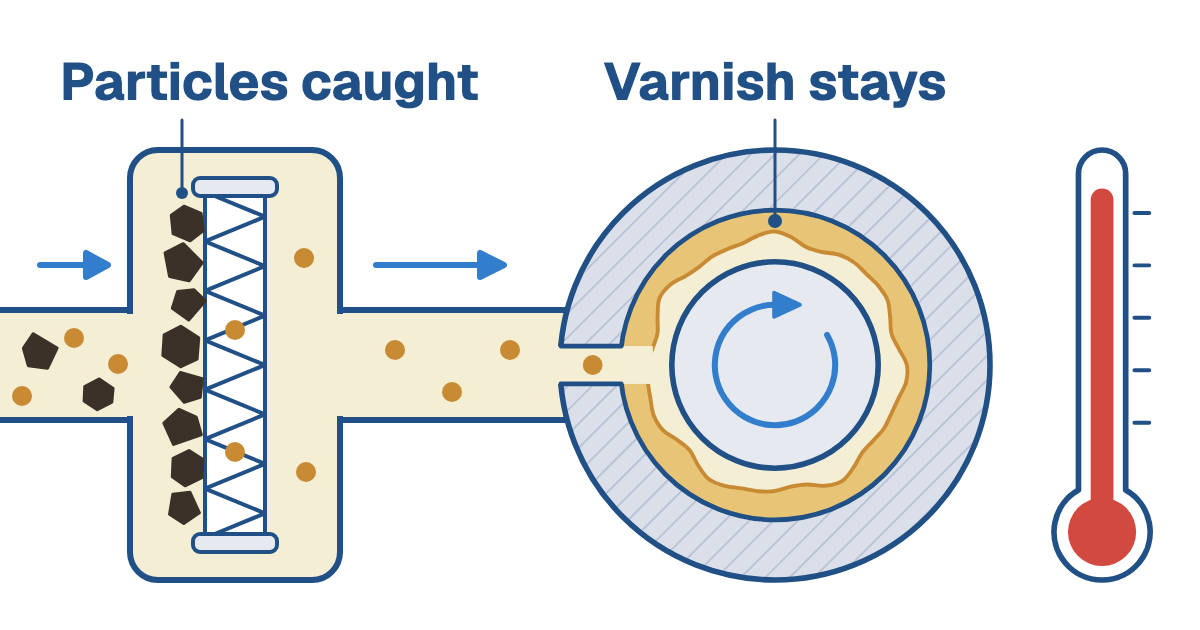
- For particle contamination, select oil filtration for the viscosity, contamination load and required cleanliness. A separate circuit can clean the reservoir while the main system operates. Check treatment flow at operating viscosity, not just the unit's maximum rated capacity.
- For water contamination, select water-removal media or oil dehydration appropriate to the oil and water condition. Find and correct the entry point too, so treatment does not become a permanent response to an unresolved leak.
- For varnish, address the degradation products in the oil and deposits on machine surfaces. A plan may combine specialized removal media with chemistry that dissolves existing deposits back into the circulating oil.
- For depleted antioxidants, assess replenishment while the oil's other properties still support reuse. A particle filter does not replace these additives. Formulation and compatibility testing establish an appropriate oil-life extension treatment.
Fluitec's DECON™ AO combines deposit control with antioxidant replenishment for suitable applications. It illustrates why filtration and varnish treatment need to be compared by what they do, rather than treated as interchangeable proposals.
An Egyptian plant treated the oil while production continued
At an anonymous Egyptian fertilizer plant, varnish caused a steam-turbine governor valve to respond sluggishly. The turbine drove a compressor train central to nitric acid production. Erratic valve response triggered repeated trips, making oil condition a production concern.
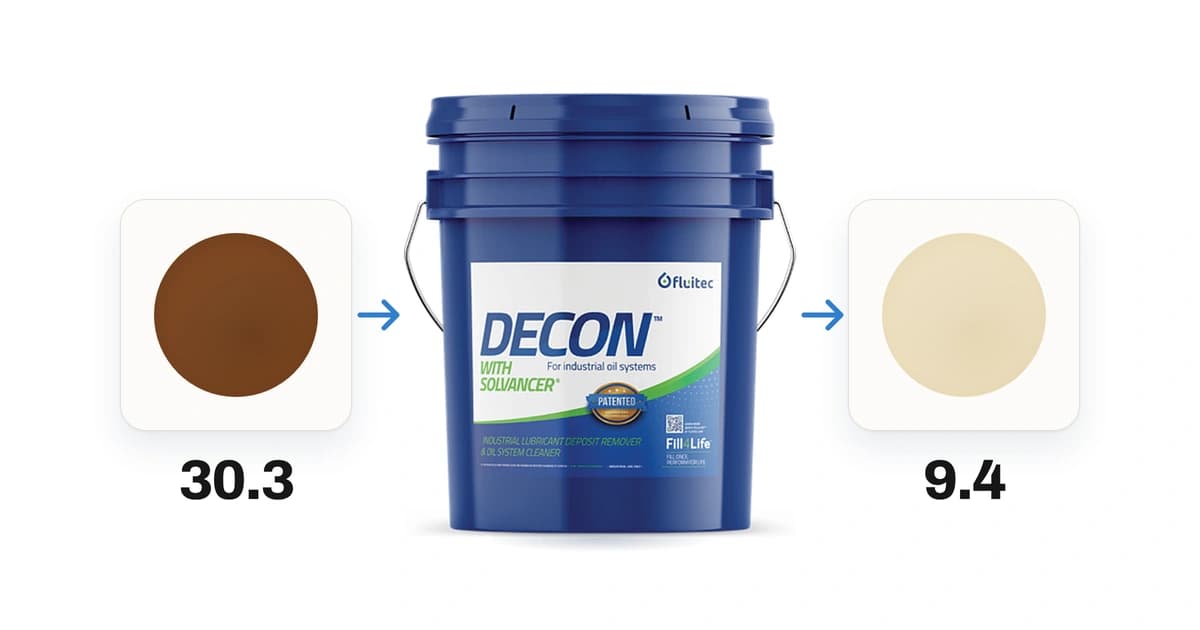
NATCOM recommended DECON™. The plant added it directly to the reservoir while the train remained in service, without an oil change, flush or additional hardware. Fluitec, a NATCOM technology partner, documented an MPC reduction from 30.3 to 9.4 ΔE and improved governor-valve response.
The existing oil stayed in service and the treatment addressed the operating problem. Read the governor-valve treatment account for the application details.
Give operations a practical plan for treatment and verification
Confirm reservoir access, connection points, isolation, flow, temperature and available power before mobilizing equipment. Distinguish installation from treatment: a unit designed to run continuously still needs a suitable connection procedure. Existing service connections can make in-service work straightforward; a system modification may need its own planned access window.
Agree the oil-condition targets and operating symptoms to track. Record the baseline, sample consistently and follow the trend through treatment. Pair laboratory results with the relevant valve response, temperature or other machine measurement. One improved sample is useful progress; sustained oil and operating trends show whether the intervention is achieving its purpose.
Build that evidence into the maintenance decision. Keeping usable oil, recovering machine performance and avoiding an oil-related interruption are concrete outcomes that engineering and operations can assess together.

Frequently asked questions
Yes. Suitable oil can be treated while the machine operates to remove contamination, manage varnish or restore depleted antioxidant protection. The treatment must address the cause of the oil-related operating problem. An assessment of oil trends and machine condition establishes which approach fits your system.
No. Offline filtration usually means a separate treatment circuit that draws oil from the reservoir and returns it after cleaning. It can operate while the main machine runs. Whether the initial connection requires a stop depends on the system's existing access points, isolation arrangements and installation procedure.
Yes. Suitable varnish-removal equipment and deposit-control treatments can work with the existing oil in service. In an Egyptian fertilizer application, NATCOM recommended DECON™ treatment while the compressor train remained running, with no oil change or flush. Selection depends on the oil formulation, condition and system requirements.
Particle filtration removes captured contaminants; it does not replenish antioxidants. Oil-life extension can include an application-specific antioxidant replenishment treatment when the remaining oil properties support continued service. Products such as DECON™ AO combine antioxidant replenishment with deposit control, following assessment and compatibility testing.
Prepare the equipment and oil details, reservoir volume, laboratory trends, operating symptoms, alarm history and maintenance already attempted. Include reservoir connection and isolation details. This allows the assessment to cover both the treatment mechanism and how it can be installed and monitored while the machine operates.