The filters have been changed again. A water drain has produced more than expected. Someone proposes polishing the diesel; someone else wants the tank cleaned; procurement asks whether replacing the fuel would settle it. Before booking the job, establish which part of the system needs attention.
Fuel polishing removes particles and water with a treatment system selected for the fuel and contamination. Tank cleaning addresses accumulated material and water that the proposed circulation cannot adequately reach or remove. Replacement becomes a question when the fuel itself is unsuitable for the intended duty. These actions can belong in the same job. Choosing one without checking the other two can leave the cause in place.
Start with the fuel, the tank and the operating history
A blocked filter tells you something is reaching the filter. It does not identify every contaminant or prove that all the diesel must be discarded. Ask what changed before the problem appeared. Was there a delivery, a long storage period, water ingress or a disturbance of the tank?
Plan sampling around the question. The fuel feeding the equipment and material at a tank's low point can tell different parts of the story. Record where and when each sample was taken, the fuel grade, recent deliveries and any treatment already performed. Agree the locations and tests with the fuel specialist before comparing results.
Particle and water measurements help define a polishing job. Suspected microbial contamination or deterioration of the fuel requires an appropriate test scope as well. A clean particle count cannot establish every property needed for the engine to use that fuel. Our article on standby-generator fuel contamination explains why a successful start also leaves that question open.
When fuel polishing fits
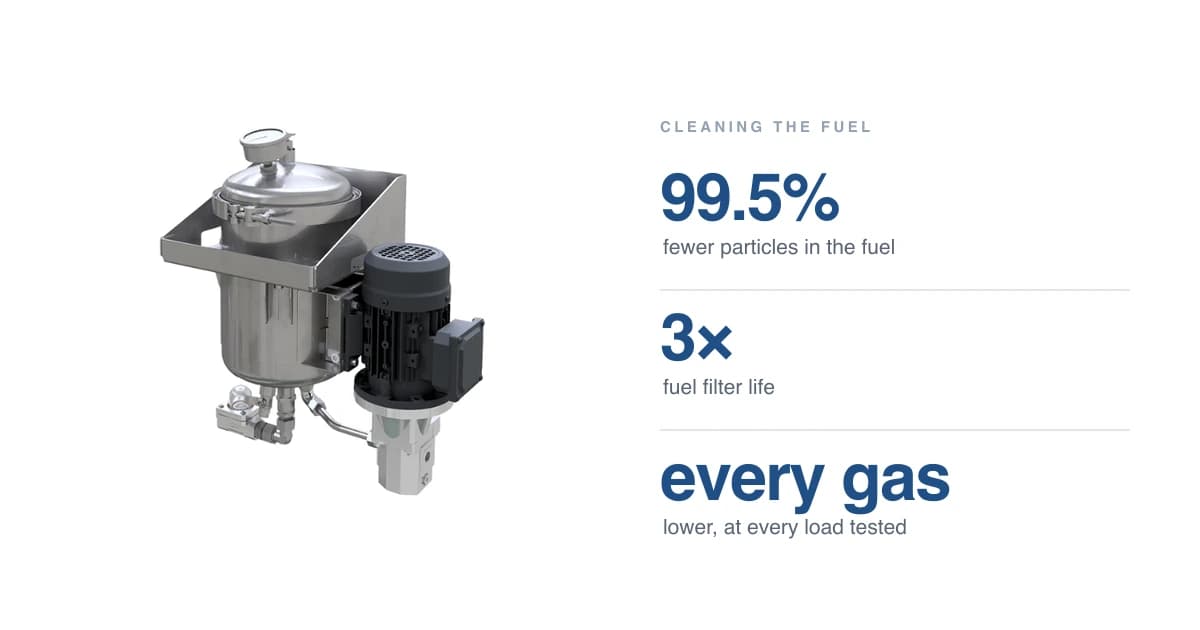
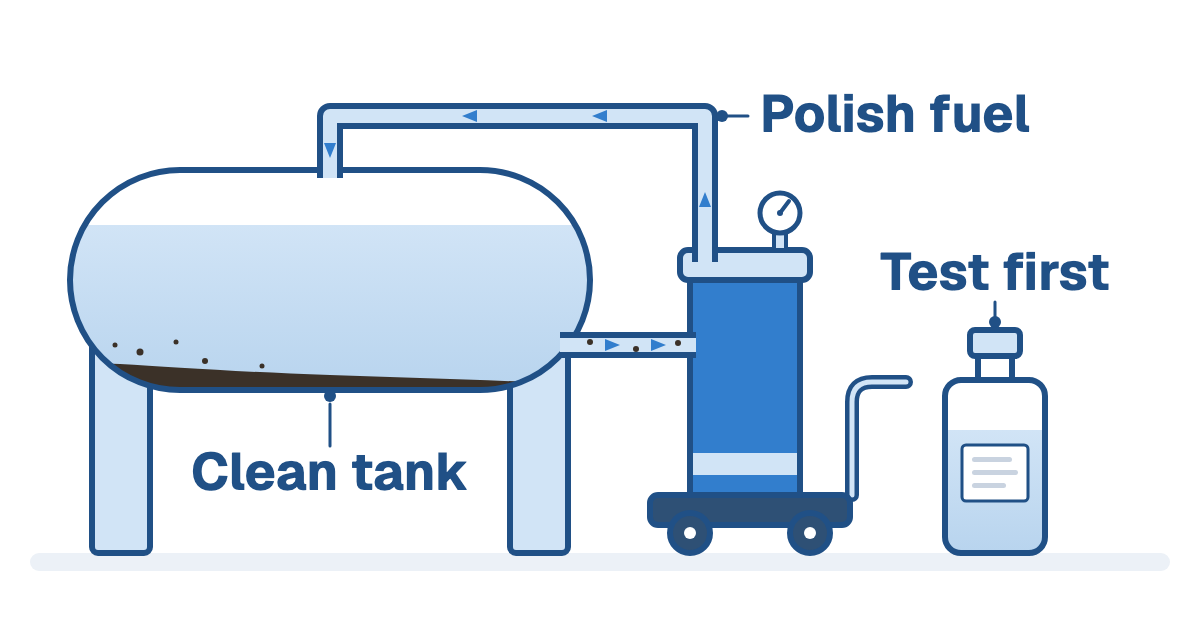
Polishing is a useful option when removable contamination is the problem and the fuel remains suitable for recovery. A separate circulation loop draws diesel through selected treatment stages and returns it to the tank. The chosen media must address the actual particles and water present; a pump and a fine particle rating do not describe the whole job.
Ask how the intake and return positions will reach the contaminated fuel, how removed water and used elements will be handled, and which measurements will show progress. A clean sample taken immediately after the unit demonstrates its outlet condition. The acceptance plan must also establish the condition of the fuel the equipment will receive.
Filtertechnik, a NATCOM technology partner, documents a field workflow that combines portable particle and water-condition testing, polishing, retesting and retained reporting data. Its PDT-2 system accepts different filter inserts for particle and water duties. That is the useful buying lesson: specify the complete treatment and verification process. The workflow report provides no measured customer before-and-after result, so it does not establish a promised cleanup time.
When the tank needs cleaning as well
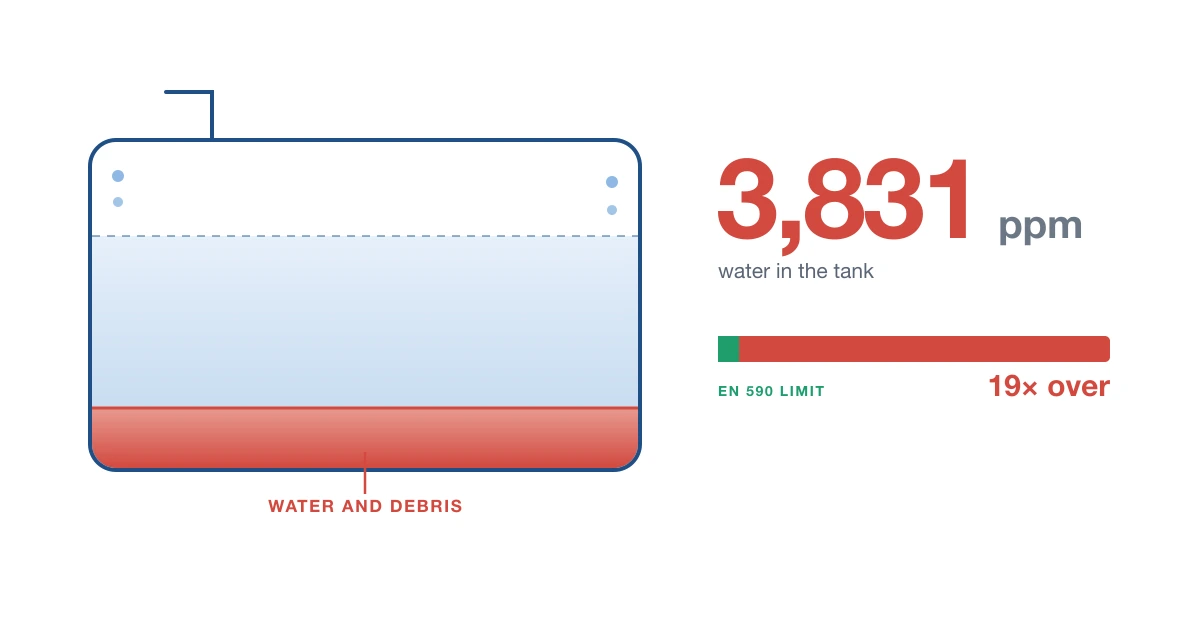
Polishing can only remove contamination that reaches the treatment system. If accumulated sludge, settled water or deposits remain outside the effective circulation, running the unit longer may leave a reservoir of contamination in place. The proposed scope needs to explain how that material will be reached and removed.
Ask the contractor to distinguish routine recirculation from work that removes accumulated tank material. Depending on the tank and findings, a cleanup may combine targeted extraction, filtration and separate tank-cleaning work. The words "fuel polishing" or "tank cleaning" on a quotation do not establish what happens at the tank floor.
Also address the route by which contamination enters. Check the condition of fill points, seals, vents and transfer equipment as part of the investigation. Cleaning the tank and returning it to the same unresolved water-entry problem makes another cleanup more likely. Plan the work around the site's fuel supply and backup arrangements; do not assume every tank can remain available throughout.
What a truck trial reveals about recurring contamination
A Delta-Xero trial reported by PT Tsar International offers a useful example. In December 2021, a truck in Indonesia started with diesel at ISO 4406 cleanliness code 19/18/17. The three numbers describe particle counts above defined sizes; lower numbers mean cleaner fuel. The trial report recorded 13/12/7 after 64 filtration hours.
The readings between those endpoints matter. At eight filtration hours, the code rose to 20/20/20. The report attributed that rise to rough-road movement stirring dirt in the tank. At 20 filtration hours, the code reached 24/23/22 after 137 litres of diesel were added. The record does not isolate how much of that second increase came with the delivery and how much came from disturbed residue.
This was one working truck, with movement and refuelling during the trial. Its endpoint is not a cleanup-time estimate for a stationary storage tank. It does show why an assessment should consider tank residue and fuel handling alongside the filter unit. New fuel and an earlier clean reading do not establish the condition after the next disturbance.
When replacement needs to be considered
Age alone is a weak basis for deciding to discard a tank of diesel. Equally, making fuel look clearer does not establish that it meets the specification for its intended use. Ask the fuel supplier or laboratory which properties need checking given its identity, storage history and symptoms.
Fuel polishing addresses removable contamination. It should not be specified as a way to reverse chemical deterioration or correct the wrong fuel grade. If the assessment finds the fuel unsuitable beyond what the proposed treatment can correct, the supplier and site team need to decide on an appropriate recovery route or replacement.
Keep the tank condition in that decision. Replacing fuel does not remove residue left behind or repair a route for water to enter. A replacement scope should state how the tank will be prepared, how the incoming fuel will be checked and what will be verified before returning the system to its intended duty.
Agree what completion means before work starts
Request a scope that answers these questions:
- What evidence supports polishing, tank cleaning, replacement or a combination?
- Which contamination will each treatment stage remove, and what remains outside its scope?
- How will the work reach accumulated material and address continuing contamination?
- Where will baseline and follow-up samples come from, and which methods and acceptance criteria apply?
- What follow-up will check whether the improvement holds after normal circulation, a delivery or another relevant operating event?
Judge the result against the fuel specification and equipment requirements agreed for the site. Review comparable follow-up results; a single passing sample is a snapshot. The maintenance decision needs enough evidence to show that the fuel condition is suitable and that an unresolved source is not immediately undoing the work.
For a fuel-condition review, send NATCOM the tank size and arrangement, fuel grade, storage and delivery history, filter symptoms and available test reports. The diesel fuel polishing service is the next step for defining the assessment and treatment scope. Establish what needs to be removed, where it is, and how the result will be checked before choosing the equipment.
Frequently asked questions
Fuel polishing circulates fuel through treatment stages selected to remove particles and water. Tank cleaning addresses accumulated material and water in the tank, including contamination that the proposed circulation cannot adequately reach. A job may need both. Ask the supplier to state what will be removed from the fuel and what will be removed from the tank.
No. Recoverability depends on the fuel's condition and the contamination present. Removing particles and water does not establish that all required fuel properties are acceptable. Suspect stability, chemical deterioration or the wrong grade requires laboratory and fuel-supplier assessment before deciding on recovery or replacement.
Check the tank for accumulated water, debris and sediment, and include their removal where needed before refilling. Replacement fuel does not remove residue already in the tank or correct water ingress. Agree how the tank, incoming fuel and final condition will be checked.
Agree sampling points, test methods and acceptance criteria before treatment. Compare the baseline and follow-up results for the fuel the equipment will receive, then review enough comparable measurements to assess whether the improvement holds. A fixed number of tank passes or one clean outlet sample does not establish the condition of the whole system.