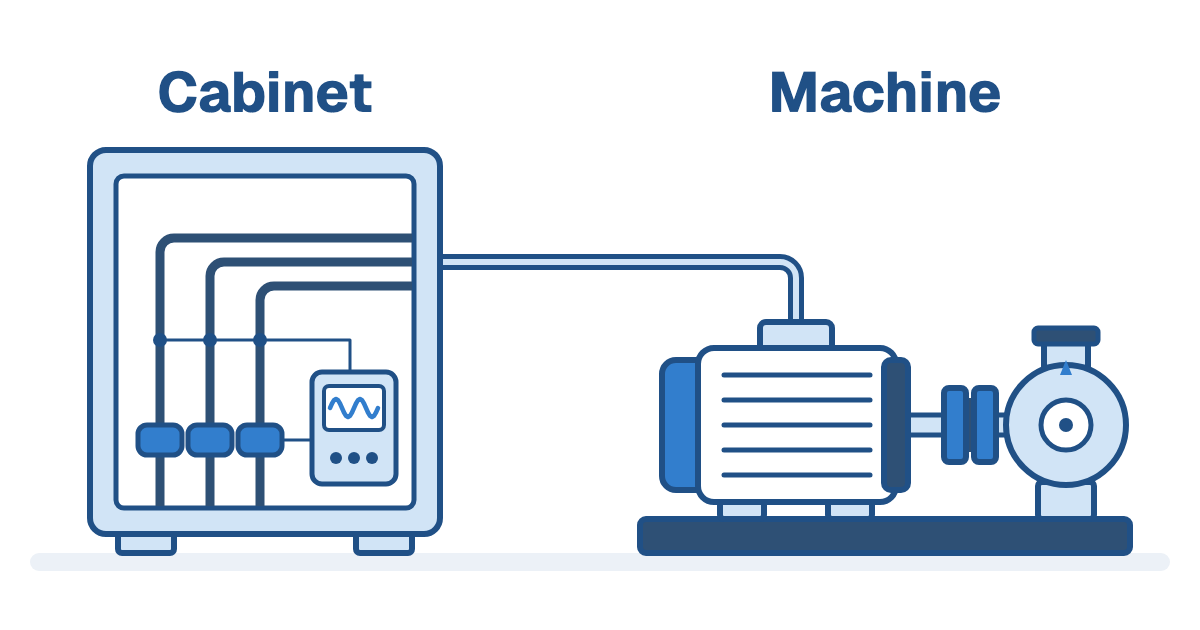
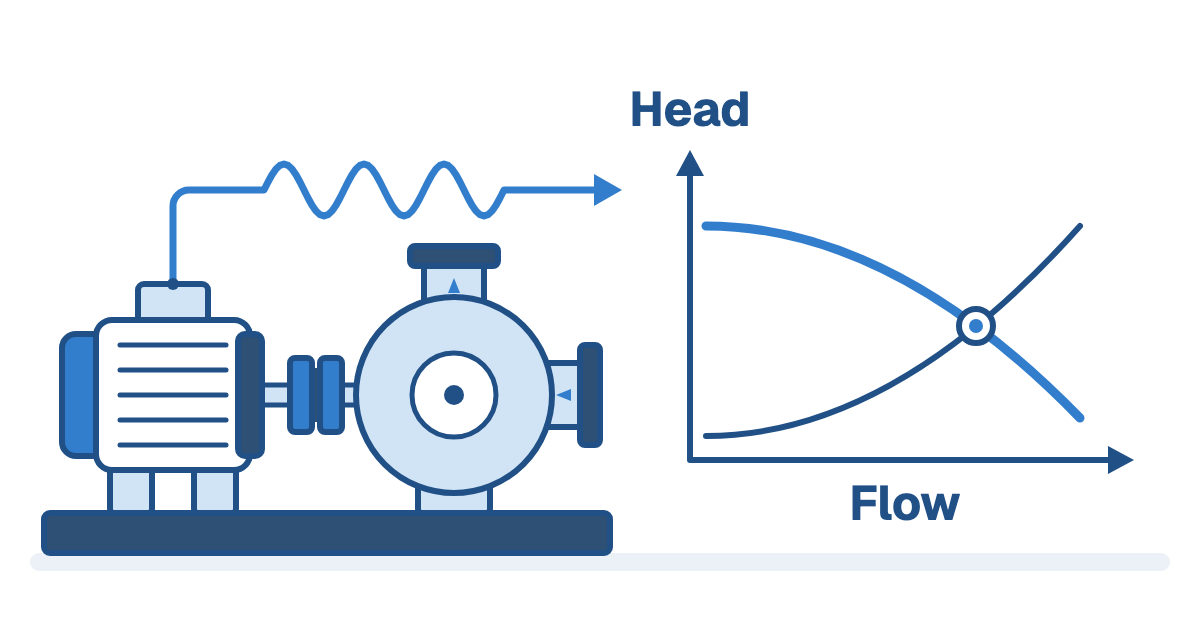
A pump keeps the process supplied, but the electricity record offers little explanation of its performance. Is it delivering the required duty efficiently? Has the duty changed? Would a different operating approach help? Pump performance monitoring from electrical signals can make these questions more visible.
The method uses motor voltage and current to support calculated flow, head and operating-performance views. These are estimates derived through a model. Use them with pump information and appropriate field measurements before diagnosing damage or approving a replacement.
The critical distinction is between observing present operation, identifying a possible improvement and measuring the result after a change. A projected saving belongs to the proposal until the plant has verified it.
Start with the duty the process needs
Identify the pump, its curve, impeller configuration, motor, transmission and drive. Add the liquid, operating speed and process requirement. Flow is the amount of liquid delivered over time. Head describes the energy imparted to the liquid per unit weight, commonly expressed as a height.
The pump's duty point relates flow and head under the operating conditions. The best-efficiency point is the point of highest pump efficiency on the relevant curve. That reference helps frame the investigation, but it does not by itself specify the right plant operating decision.
Record available flow and pressure measurements with speed, valve arrangement and operating hours. The US Department of Energy's pumping-system sourcebook treats the pump as part of a system. A useful assessment therefore asks what the process needs and how the installed system meets it.
Separate input measurements from calculated performance
Artesis' current pump-monitoring page describes e-MCM calculations of flow and head using voltage and current data. It also describes incorporating existing flow or pressure sensors. Label each value by its origin when reviewing the dashboard.
Electrical input power, estimated flow and a field flowmeter result are different evidence. A model can help follow the operating pattern and point to a question worth checking. Agreement with a reference measurement needs a documented comparison in the relevant operating range.
Ask which pump data the model uses, which operating states were covered and what reference measurements are available. Clarify whether an efficiency view concerns the pump alone or includes motor, drive and transmission losses. Comparing results with different boundaries can give the wrong explanation for a change.
What the Tüprag presentation actually demonstrates
Artesis' vendor-published Tüprag gold-mine presentation examines one process-water pump. It describes a historical operating record, calculated duty and efficiency views, a comparison with an on-site flow sensor and a proposed alternative pump.
The useful finding is that operating history can expose a mismatch between the observed duty and the pump's efficient operating region. In this account, the vendor describes frequent low-flow, high-head operation and uses that pattern to build an engineering proposal.
The presentation does not document installing the proposed replacement or measuring energy use afterwards. Its financial and energy figures are projections. Check a proposal's assumptions against your own duty and energy records before approving a purchase.
The monitoring screens include cavitation and temperature-risk indications. The record supplies no inspection or teardown confirming those faults. Treat the indications as investigation prompts. This vendor account illustrates a way to investigate pump duty; assess your own operating record before applying its conclusions.
Compare the model with the field
Choose the operating range and reference instruments before the comparison. Keep dates, sampling periods, speed and process state with the data. A comparison at one duty does not demonstrate performance throughout the pump's full range.
When values disagree, review the setup before selecting an explanation. The pump curve, configuration, electrical measurement point and reference-instrument condition all belong in the record. Do not automatically attribute the difference to a failing pump or to a faulty model.
If the concern includes noise or vibration, combine the performance view with a machine investigation. Our guide to high pump vibration before bearing replacement explains why the motor, coupling, pump and operating conditions need separate consideration.
Build the improvement case without claiming the result
Use the operating record to evaluate a defined scenario. The proposal should state the required duty, equipment configuration, assumed hours, energy basis and changes needed to meet the process requirement. Keep its assumptions visible.
Compare an equipment replacement with relevant operating or system changes where technically appropriate. A pump selected against the wrong duty may reproduce the original problem. The decision needs engineering review of the system, installation scope and operating constraints.
Agree how to verify the selected change. Compare before and after operation over a suitable period and account for differences in duty. Lower electrical consumption during lower production does not establish an efficiency improvement. A projected payback becomes an achieved result only when the underlying change and its economics have been checked.
Bring the data that supports a decision
For a pump and motor electrical-monitoring discussion, share the pump curve, motor and drive details, recurring symptoms and available operating history. Include flow, pressure and energy records with their measurement origins.
This allows the discussion to focus on what monitoring can clarify, what the field must confirm and whether the proposed change deserves further engineering work. The objective is a defensible pump decision, followed by a check of the result.

Frequently asked questions
Artesis describes calculating flow and head from voltage and current. Treat those values as model-derived estimates and compare them with suitable pump information and field measurements.
No. Record the origin of each value. A model estimate and an instrument measurement need a documented comparison in the relevant operating range before their agreement can support a decision.
The vendor presentation describes operating history and a proposed replacement with projected economics. It does not document installing that replacement or measuring post-change energy use.
No. A monitoring indication needs investigation and appropriate confirmation. The Tüprag presentation does not provide an inspection or teardown confirming cavitation damage.
Provide the pump curve and configuration, motor and drive details, operating speed and duty, liquid information and available flow, pressure and energy records. Identify measured and estimated values separately.