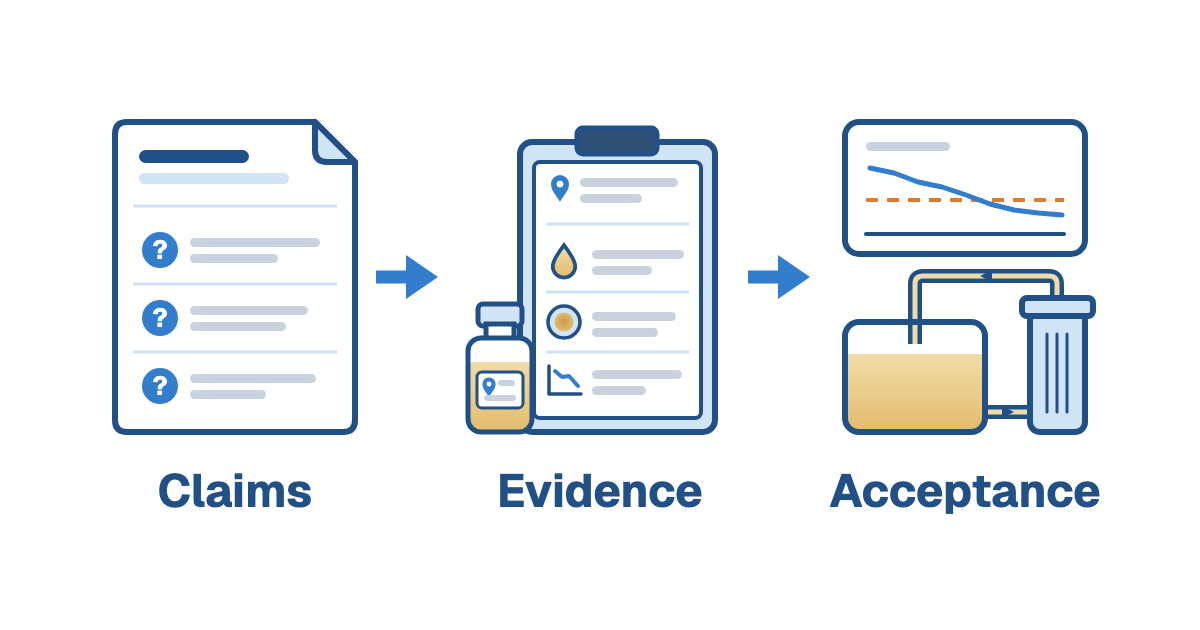
A varnish-removal proposal by a specific supplier promises ion-exchange chemistry management, permanent removal and longer oil life without adding solvency chemicals. Sounds convincing and superior, doesn’t it?
Before taking this claim for granted, ask what each claim means, and verify the correctness and accuracy of that claim. for your oil, your equipment and the result you need to achieve.
Misleading claims often begin with a valid description of a process, but they often end with false claims that lack evidence.
Example #1: a provider may suggest that another solution requires a solvent to effectively remove varnish.
Example #2: a provider may suggest that a more superior solution can result in accelerated oil degradation.
Example #3: a provider may say their solution extends oil life by 2-3x based on an antioxidant-test result or an improvement in MPC figures.
The facts of the matter are: a solution that doesn't establish scientific evidence or provide tangible case studies can dramatically affect your machine health and performance. Your engineering team should be advised to request the evidence before deciding if this solution is viable.
Refuting false technical claims:
Solvency chemicals:
Claim: A supplier of varnish removal tools that promotes ion exchange resin for removing varnish from turbine and hydraulic oils claims indirectly that another technology provider who promotes “ESP – Electrophysical Separation” for varnish removal uses expensive solvency chemicals as a necessary element of its solution to make ESP varnish removal effective.
Ion Exchange is just one way to remove dissolved degradation products from oil. This technology was once used up until 15 years ago then it was superseded by ESP due to its superior varnish removal performance. ESP removes dissolved and suspended degradation products from oil.
A solvency enhancer such as Fluitec’ DECON™ (also known as Mobil Solvancer™, promoted world-wide by ExxonMobil) has a different role: it improves the oil's ability to dissolve deposits by a factor of 300 times (30,000%) and keep these harmful degradation products in solution. It can be used as a standalone solution or combined with ESP according to the condition being treated. In some cases, it is the only solution (such as shear stress varnish).
Fluitec's Electrophysical Separation Process, or ESP, captures degradation products in the filter media. Its published explanation treats DECON™ and antioxidant replenishment as additional options. Describing all Fluitec varnish treatment as dependent on an added solvency chemical would therefore misrepresent the available approaches. ESP and Solvency Enhancer functions are different and completely separated. The claim that the use of solvency enhancer is a necessary element of the ESP varnish removal technology is therefore false and is designed to put the purchaser under the impression that ESP is less effective and more expensive which is contrary to the facts. Fluitec explains the ESP filtration mechanism.
Which product is supposed to damage the oil?
Another claim made by a suppler can suggest that “avoiding “aftermarket” additives prevents accelerated base-oil degradation”. This false claim generalizes what happens in some additives uses. Although this may be true in some cases, it is far from being true in this case. Ask which formulation, at which concentration, in which oil, produced that result. A generic category label cannot substitute for those details.
ExxonMobil's published data describes Mobil Solvancer as an oil-soluble cleaner blended from Group V lubricant base stock and compatible with most Group I to IV lubricants. It states that the product does not adversely affect oxidation stability and several other oil properties. ExxonMobil also confirms that this separate Mobil-branded product was developed from Fluitec's DECON™ technology. These are product-specific statements that a blanket allegation about harmful solvency chemicals needs to address. Mobil product data and technical FAQ describe the application and limitations.
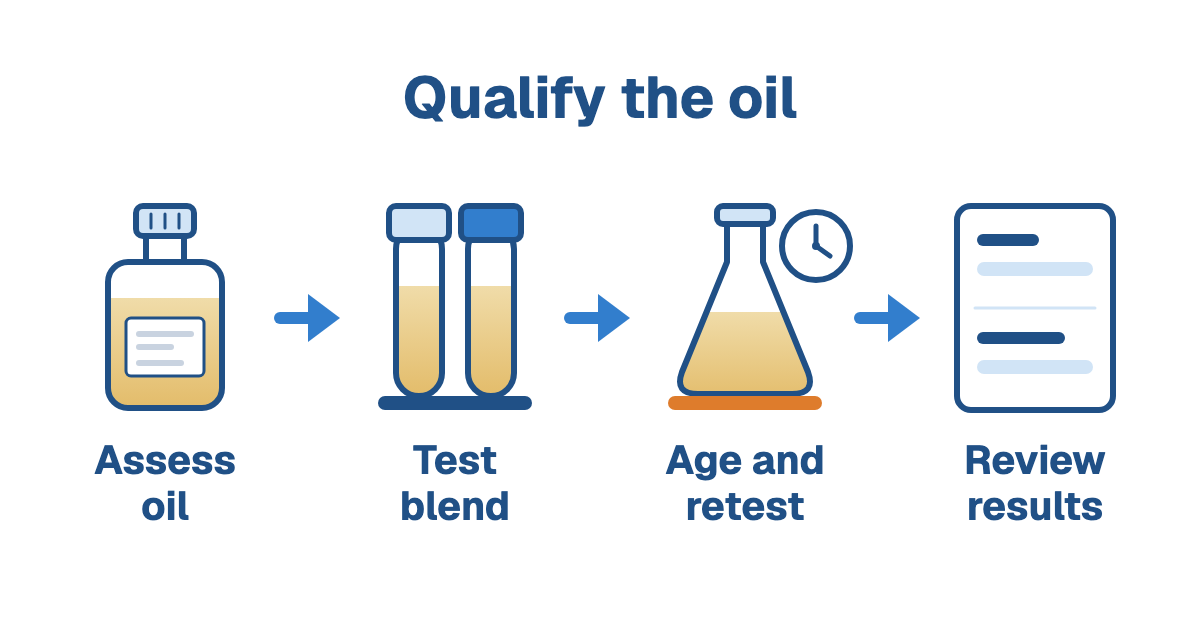
Keep solvency enhancement separate from antioxidant replenishment, which replaces consumed protective additives. A cleaner does not automatically replenish antioxidants, and a warning about additive top-ups does not establish that every deposit-dissolving treatment is unsuitable. Demand qualification of the actual proposed blend and any applicable equipment manufacturer requirements. Our guide to qualification before antioxidant replenishment covers that separate decision.
In making these claims, the the supplier ignores completely the fact that all major equipment OEMs (Siemens-Energy, MAN Turbo, Solar Turbines, etc.) tested, approved, and recommended DECON product range (DECON, DECON AO, DECON HD, DECON AW) as well as ESP varnish removal technology. Additionally, the supplier completely ignores the fact that more than 1000 oil & gas production sites, refineries, power plants, chemical and fertilizer plants around the globe depend on ESP varnish removal technology and / or DECON to keep their critical production assets (turbines, compressors, hydraulic control systems, gearboxes, etc.) running smoothly at all times. More than one thousand success stories have been completed world-wide documenting achieved success and benefits.
What is permanent about "permanent removal"?
A supplier may claim that their solution “Ion-Exchange” provides a permanent removal of varnish!
Material captured in a filter can leave the system when that filter element is replaced. That is a different proposition from guaranteeing that an operating lubricant will never generate new degradation products. Continuous chemistry management depends on an appropriate treatment rate, available media capacity and the required maintenance.
Ask the supplier these questions: What happens as the resin becomes exhausted? how that condition is detected and what protection remains if treatment is disconnected? Have the supplier explain their initial cleanup program and its ongoing replacement criteria. A permanent-removal claim should not leave the buyer guessing whether continued operation and repeated element changes are conditions of the promised result.
Which result supports each claimed benefit?
Membrane patch colorimetry, or MPC, is useful for following changes in extracted insoluble color bodies. ASTM D7843 describes it as a condition-monitoring trend tool. A falling MPC result does not directly measure every dissolved contaminant or establish that deposits have disappeared from bearings and valves. ASTM D7843 defines the method's scope.
Match the evidence to the promise. Deposit removal calls for relevant inspection or repeatable machine evidence. Improved demulsibility, the ability of oil to separate from water, needs water-separation results. Improved electrical resistivity needs actual resistivity measurements. A graph cannot establish a benefit when the underlying results were never measured.
Longer oil or additive life needs a meaningful history. The RULER antioxidant test measures selected antioxidants; ASTM D6971 explains that it does not establish overall oil stability on its own. Request a trend with operating exposure, oil additions, treatment events and the criteria used to decide when the oil needs replacement. ASTM D6971 explains the limitation.
Give a reported result credit for what it demonstrates. An improved MPC trend is useful evidence. It cannot stand in for every other advertised benefit. The turbine-oil report guide explains why the selected tests matter.
Which flow actually passes through the treatment media?
A skid may circulate oil through a particulate filter at one rate while passing a smaller flow through its ion-exchange resin. Compare the treatment path relevant to the claim. The larger pump or particulate-filtration figure cannot establish the resin's treatment throughput.
Request the guaranteed flow for the offered build at your electrical frequency, oil viscosity and temperature. For a 50 Hz installation, ask the manufacturer to confirm which published figures apply. Keep maximum, normal and minimum operating flows distinct. If a proposal quotes reservoir exchanges per day, have the supplier show the calculation using the applicable flow and actual oil volume.
What does the promise to restore "normal" actually guarantee?
A promise to return MPC to normal under a prescribed program has a specific scope. It does not automatically guarantee complete deposit removal, restored water separation or a stated extension of oil life. Ask the supplier to define normal numerically for your application and explain why that limit is suitable.
Put the completion time, sampling method, verification period and required element changes beside the target. Clarify how long analysis and interpretation remain included and what happens if the agreed result is not achieved. The written acceptance schedule should make clear which outcomes the supplier commits to deliver and which remain possible benefits.
Give every bidder the same evidence request
Start with the oil identity, reservoir volume, operating conditions, symptom history and earlier analysis. Ask each supplier to explain the proposed treatment against that same information, then attach a source, applicable conditions and acceptance method to each material claim. Our guide to comparing filtration quotations covers the wider scope discussion.
This comparison may support filtration alone, a qualified solvency treatment or a combined approach. The proposal earns its technical standing by showing why the selected method fits the problem and how you will verify the result. Bring those questions to a varnish-treatment assessment before committing to a particular process.
Frequently asked questions
No. Filtration can capture oil-degradation products using selected media. A solvency treatment may be proposed separately to dissolve deposits or improve deposit control. Ask what the actual oil and system need, and what each proposed treatment contributes.
No universal conclusion follows from that label. Evaluate the specified formulation, oil, concentration and operating conditions. Require product-specific compatibility and performance evidence for either a safety claim or a degradation allegation.
No. Membrane patch colorimetry measures extracted insoluble color bodies in an oil sample. Combine the trend with evidence relevant to the claimed outcome, such as component inspection, repeatable bearing temperatures or valve behaviour.
Define the oil and equipment, numeric acceptance limits, test methods, completion time, operating and maintenance conditions, verification period and remedy if targets are missed. State which benefits are actually guaranteed and distinguish resin-treatment flow from total skid flow.