The turbine-oil report shows depleted antioxidants, and a replacement charge is being discussed. Replenishment may offer another route if the oil is still suitable for service. The question is whether the proposed treatment restores useful protection without creating a different lubricant problem.
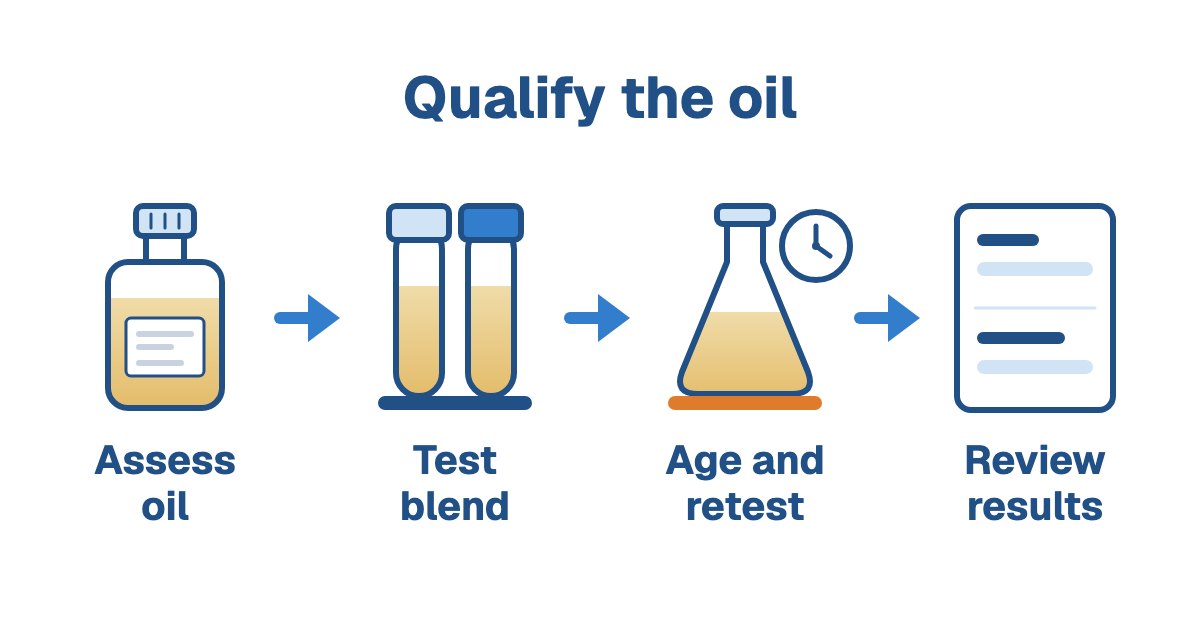
Turbine-oil antioxidant replenishment qualification should assess the actual in-service oil, test its blend with the proposed treatment, examine performance after aging and produce an application-specific acceptance decision. A low antioxidant result starts that assessment. It does not, by itself, qualify the oil or establish a dose.
Separate antioxidant depletion from damage to the oil
Antioxidants slow the oil's reaction with oxygen and are consumed during service. Their depletion can limit the life of an otherwise serviceable turbine or compressor lubricant. Fluitec's technical paper on oil-life extension describes this as the opportunity for replenishment: restore the depleted protection while the base oil remains healthy.
The same paper excludes oils whose base oil is significantly damaged. Fluitec's Boost AO brochure also identifies degradation products, mixed formulations and contamination as reasons an oil may not qualify. The technical paper also explains why replenishing other additives needs separate care. Treating the antioxidant deficit cannot be assumed to correct unsuitable viscosity, contamination, poor water separation or every other functional problem in the charge.
Start with the full history and an appropriate test panel. Confirm the lubricant product and grade, charge age, reservoir identity, oil additions and any previous treatment. Record mixed-oil history if known. A sample described only as turbine oil leaves important questions unanswered before the qualification work begins.
Ask for the qualification sequence, not only a before-and-after antioxidant value
Fluitec's Boost AO qualification document sets out a clear sequence. The supplier assesses the used oil, blends it with the proposed treatment, conducts aging and compatibility work, then repeats the oil analysis before issuing an acceptance report. That sequence tests a proposal for a particular oil rather than assuming that an additive brochure settles suitability.
The published process lists the same core tests before treatment and after aging. The comparison therefore asks two questions: whether the antioxidant system responds, and whether the treated oil retains the other properties needed for its intended service. An immediate improvement is useful, but it is only part of the evidence.
Swipe across the table to read all columns.
| Property or test | What the qualification needs to establish | Why an antioxidant result is insufficient |
|---|---|---|
| Antioxidants, measured with RULER | The response of the active antioxidant system against an appropriate reference. | A stronger antioxidant signal does not demonstrate that every other fluid property remains suitable. |
| Oxidation stability, including RPVOT where applicable | How the oil responds to the specified oxidation test before and after treatment and aging. | Laboratory test time is not a direct forecast of remaining operating hours. |
| Varnish potential, including MPC | How the measured deposit tendency changes within the wider oil and machine assessment. | Restoring antioxidants does not establish that existing deposits have been removed. |
| Viscosity and chemical condition | Whether flow-related properties and chemical indicators remain suitable, using the selected methods. | The base oil's condition and chemical changes need their own evidence. |
| Water separation, foam and other relevant functions | Whether treatment preserves the fluid functions required by the application. | A blend can look acceptable while a performance property still needs investigation. |
RULER measures active antioxidant content. RPVOT is an accelerated oxidation test. MPC, or Membrane Patch Colorimetry, measures the colour of material collected on a membrane as part of a varnish investigation. They answer different questions. Our MPC and RULER testing guide explains how they fit into routine monitoring; qualification uses those results to assess a specific intervention.
Make the word compatible carry a defined test scope
Two clear-looking samples do not establish that a proposed blend will perform appropriately. Ask which compatibility tests were run, the blend conditions and the properties assessed. A report needs to show the scope behind its conclusion, including any further testing needed for the lubricant and application.
Fluitec's published process references ASTM D7155 for compatibility work. That reference should appear with the actual tests and results. It does not mean that a standards body has approved a treatment for every turbine. The assessment still needs to address the proposed fluid combination and the performance required in the particular machine.
Fluitec also provides an illustrative qualification report. It compares untreated and treated oil across clarity, sediment, water, antioxidant response, varnish potential, water separation, foam, viscosity, acidity and oxidation stability. Its value to a buyer is the breadth of the comparison. The specimen's customer details, numerical results and treatment instructions are not an approval for another plant.
Keep deposit control in the decision
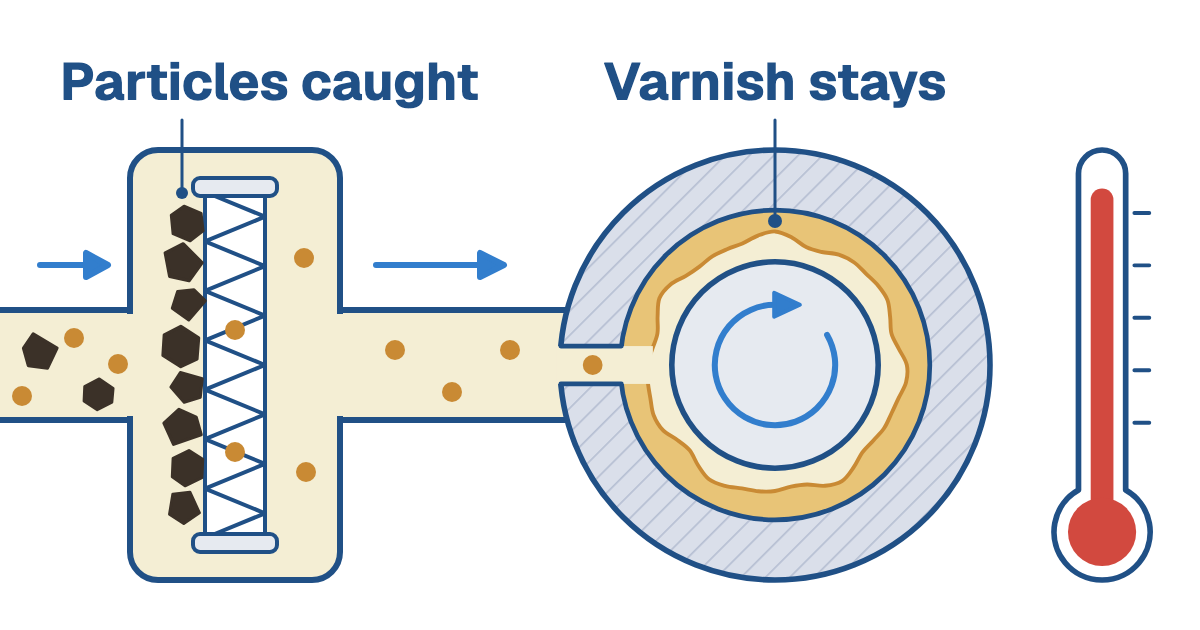
Antioxidant depletion and existing varnish can occur together. A replenishment proposal must state whether the oil needs deposit treatment or contaminant removal as well, and how those measures fit together. A cleaner particle count or a higher antioxidant reading does not by itself establish that a hot bearing or sticking valve has recovered.
The distinction between oil filtration and varnish removal matters here. Identify the measured fluid deficit and the observed machine problem separately, then agree what will demonstrate improvement in each. Otherwise the proposal can report a successful laboratory change while leaving the operating symptom unexplained.
A power plant qualified replenishment after addressing varnish
A Fluitec case published in 2020 describes an anonymous US nuclear power plant whose turbine oil had been filled in 2006. By 2017, depleted antioxidants had brought the plant to an oil-replacement decision. The oil also showed high varnish potential.
Fluitec evaluated the oil and reported that its base oil remained healthy. The plant first used ESP varnish-removal technology. The source records MPC falling from the high thirties to 3 within weeks. As the antioxidants depleted further, the plant completed qualification testing and then used Boost AO to replenish them.
The report states that the existing charge remained in use and that subsequent samples, described as years later, showed healthy antioxidant levels. It does not provide the full qualification report or a dated sequence of those later results. The case supports the order of decisions: assess the fluid, address varnish, qualify the replenishment and monitor continued service. It does not supply a treatment rate or a guaranteed extension for another oil.
Fluitec, a NATCOM technology partner, documents this account. The important result for a plant considering replenishment is that the team preserved a serviceable charge through a qualified treatment program. It was not simply a response to one low test value.
Know what an acceptance report should resolve
Before agreeing the work, make sure the proposed acceptance record identifies the oil and reservoir, the treatment formulation assessed and the test conditions. It should state what passed, any limitations, the application-specific recommendation and the follow-up measurements. The site team can then review a defined technical proposal rather than a generic promise of longer oil life.
- Confirm the sample represents the charge being considered, including relevant top-ups, mixing and earlier treatment.
- Review used-oil, blend and post-aging results together, including any adverse changes outside the antioxidant measurements.
- Record how the proposed work fits the equipment and lubricant requirements and who accepts the site's operating plan.
- Agree the post-treatment reference results, subsequent sampling plan and the findings that will trigger another review.
Supplier qualification and site acceptance have different roles. A test report supports the fluid decision. It does not, by itself, establish OEM endorsement, alter a warranty or authorise work on an operating machine. Resolve those requirements for the actual application before treatment. No dose or addition method should be copied from a different customer's result.
Continued service needs continued evidence
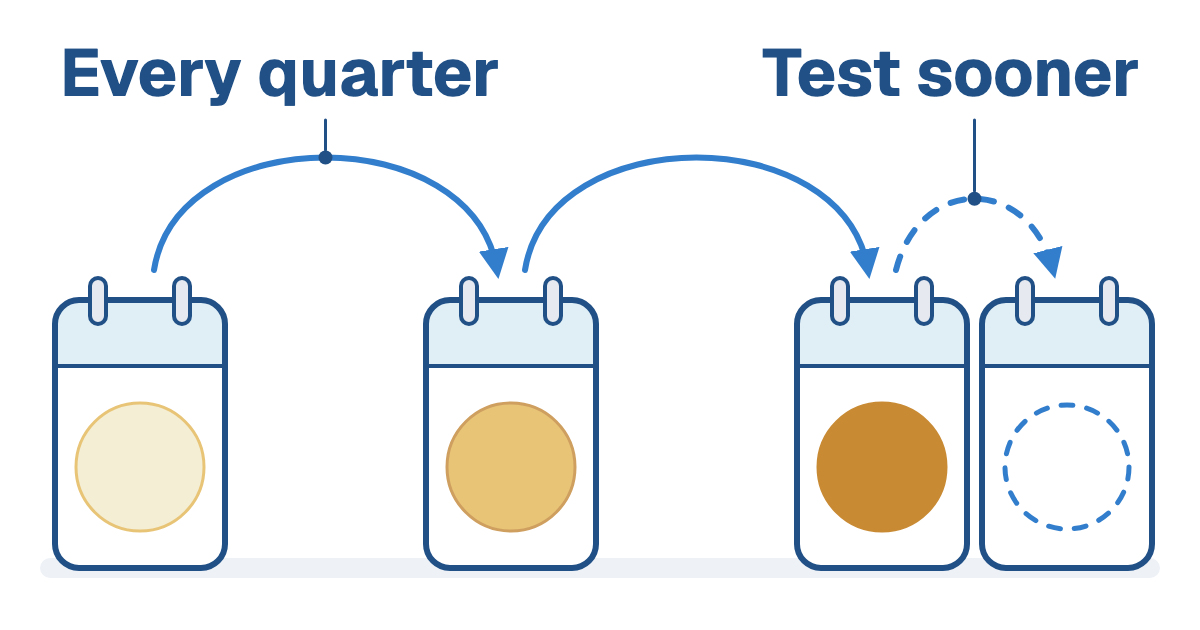
After an accepted treatment, establish the agreed post-treatment reference and keep monitoring the oil and the machine. Record the intervention and subsequent additions so the laboratory can interpret future changes. Follow the properties that governed the qualification alongside relevant bearing temperatures, valve behaviour and other operating evidence.
A one-off increase in antioxidants is not the end of the assessment. The objective is a lubricant that continues to perform in its actual system. If the wider oil condition does not support replenishment, the review should identify what treatment, further testing or replacement planning is justified instead.

Frequently asked questions
Replenishment can be considered when antioxidant depletion limits an otherwise suitable oil. The actual in-service charge and proposed treatment need condition assessment, compatibility and performance testing, an application-specific recommendation and follow-up monitoring.
No. RULER measures active antioxidant content. Qualification also needs to consider the base oil, contamination, varnish potential and relevant performance properties. A single low result cannot establish the treatment formulation or dose.
The document lists RULER, MPC, demulsibility, foam, viscosity, TAN, RPVOT and FTIR before treatment and after aging. It describes used-oil assessment, blending, aging and compatibility work, and an acceptance report. The final scope must suit the actual lubricant and application.
No. Compatibility testing establishes results within a defined test scope. It does not itself establish OEM endorsement, change warranty terms or authorise the site operating plan. Confirm the applicable requirements for the specific equipment and proposed treatment.
Do not assume it will resolve an existing deposit problem by itself. A proposal should identify whether varnish treatment or contaminant removal is also needed and state how both oil condition and the operating symptom will be checked.
No. A reported dose or sample qualification belongs to the oil and conditions assessed. The proposed treatment for another charge needs its own formulation, qualification and application-specific instructions.