
Procurement has three oil filtration quotations. One offers a portable filter cart, another includes water removal, and the third includes treatment, sampling and a final report. All three sit under the same purchase description. Choosing the lowest total looks straightforward until the equipment arrives and the team discovers what that price actually covers.
To compare oil filtration quotations properly, first define the oil condition you need to achieve. Then ask each supplier to price the work required to reach and verify it. Three quotations support a good purchasing decision when they answer the same technical request. Engineers can make that happen before procurement sends the enquiry.
Decide whether this is a one-off cleanup, recurring service or permanent contamination-control installation. The ownership and operating responsibilities differ. A quotation for equipment supply only should show the additional work the plant must provide, so it can be evaluated alongside an offer that includes mobilisation, operation and verification.
Write the required result before the equipment description
Start with the machine, oil report history and reason for the purchase. Is the job to reduce solid contamination, remove water, address varnish-forming degradation products, or manage several conditions together? Each needs an appropriate treatment and a measurement that can show whether it worked.
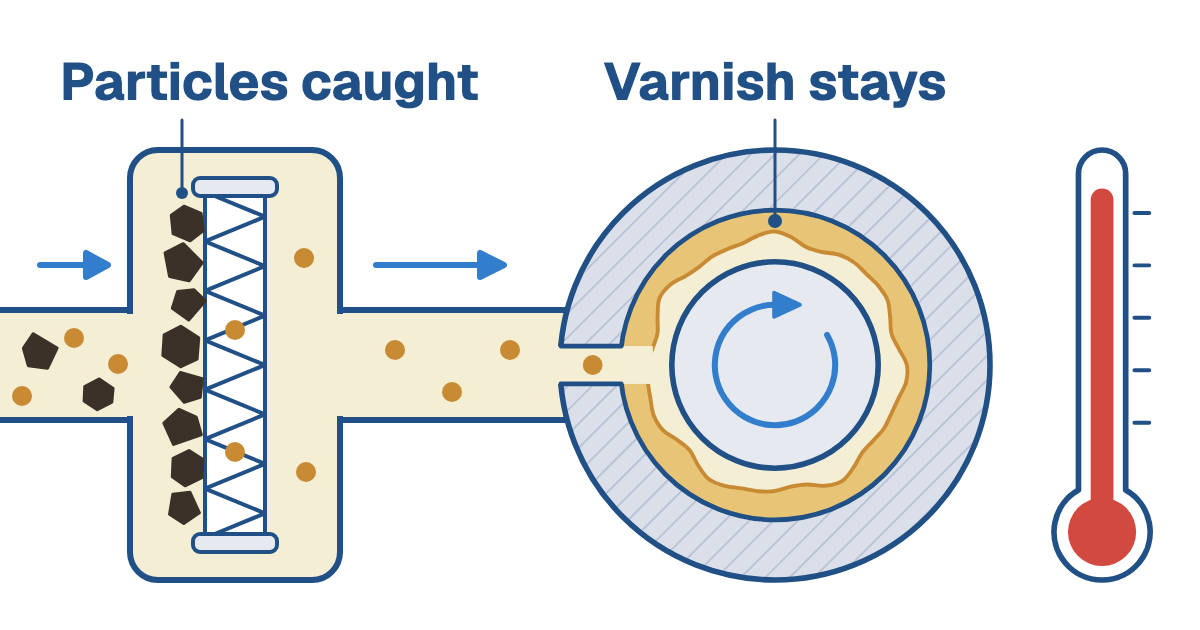
For particles, agree a cleanliness target relevant to the equipment, such as an ISO 4406 code. For water, identify the measurement method, units and required condition. A varnish concern needs its own treatment scope and verification. Our guide to oil filtration versus varnish removal explains the mechanisms. In a request for quotation, the practical task is to state which of those functions the supplier must deliver.
Give every supplier the same operating information
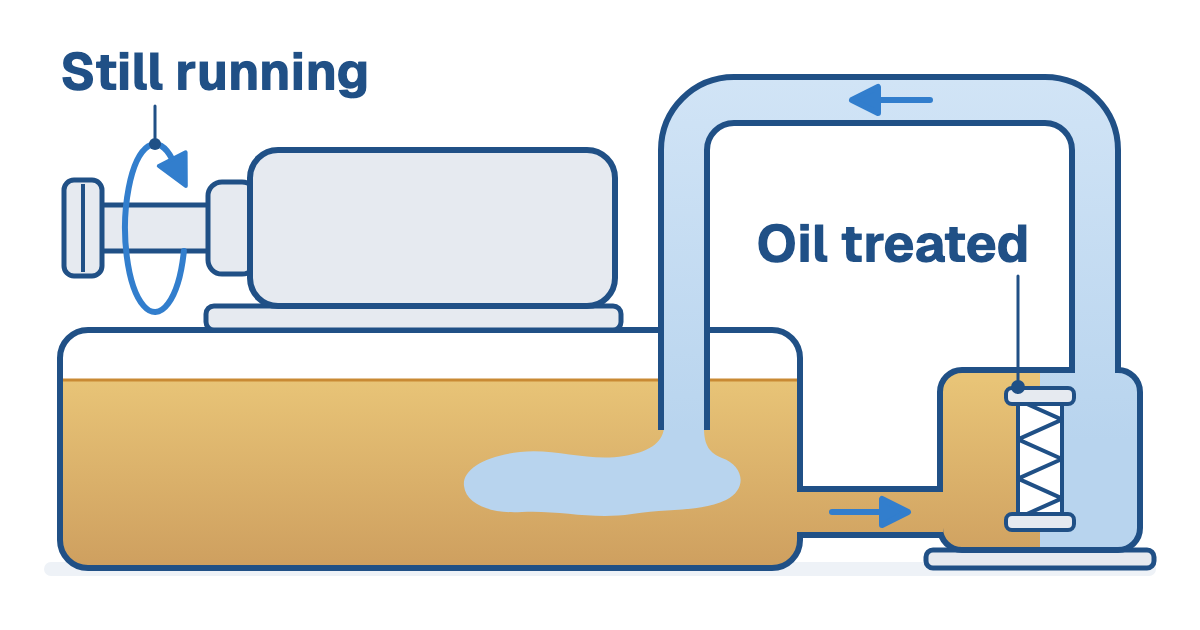
Share the lubricant name and grade, reservoir volume, operating and treatment temperatures, available connections and recent analysis trends. Include whether the machine will run during treatment, the available power supply and any hazardous-area requirements. These details let suppliers select an installation that fits the actual duty.
Ask for flow through the chosen treatment media at the stated oil viscosity and temperature. Reservoir volume and a pump's maximum flow do not establish cleanup time. The proposal should explain how circulation, contaminant loading and continuing ingress affect the treatment period. Include work to correct the contamination source where that work is needed to hold the result.
Ask what the micron rating actually means
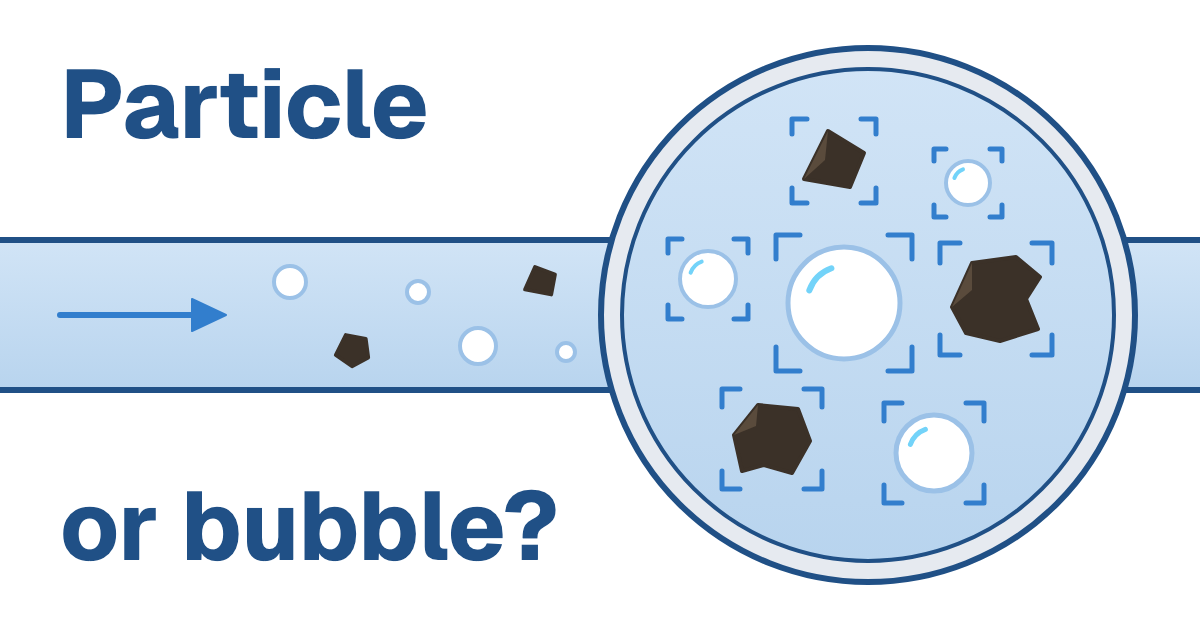
A quotation reading "3-micron filtration" leaves a purchasing question unanswered. How efficiently does the element capture particles at that size? Request the efficiency, test method and operating conditions behind the rating. Keep nominal and absolute descriptions exactly as supplied until the performance evidence makes the comparison clear.
For applicable hydraulic filter elements, ISO 16889 provides a multi-pass test for particle removal, contaminant capacity and pressure drop. The beta ratio compares particle counts at or above a specified size before and after the element. Compare ratios at the same particle size under comparable test conditions. Also request dirt-holding capacity and the pressure difference that signals an element change. Those figures help evaluate operating cost as well as capture performance.
The selected cartridge can change the whole comparison
Filtertechnik, a NATCOM technology partner, gives a useful example in its HIPPO filtration range. Its cartridge specifications recommend 1 to 10 litres per minute for the water-absorbing W2D element, while the F-series particulate elements list 22 litres per minute per cartridge. The housing specifications also make flow dependent on fluid viscosity and element selection.
These are different cartridge duties within one product family. Comparing only the housing name or largest advertised flow would miss that distinction. Ask each bidder to identify the exact element, its function and the proposed operating flow. A water-removal requirement must remain in the scope when an alternative cartridge or lower-priced configuration is offered.
Send this checklist with the request for quotation
Put these questions in the same document for every bidder. Ask for a written answer and a separate list of exclusions, so procurement can resolve differences before ranking prices.
- What starting condition and target oil condition does your offer cover? State the measurements, methods and acceptance criteria.
- Which treatment stages and exact elements are included? Identify particle, water and varnish duties separately, with supporting performance data.
- What flow and treatment period do you propose for our oil, temperature and reservoir? State the assumptions behind that estimate.
- Who provides connections, hoses, power arrangements, commissioning and operator instruction? Identify site work required before operation.
- Which consumables, element changes, sampling and laboratory tests are included? Price the expected additional items over the same comparison period.
- How will you demonstrate completion, and what follow-up is included? Name the report, sampling arrangements and response if the target is missed.
Compare the complete cost, then agree how the job closes
Use one comparison period and the same workload. Add equipment or service charges, consumables, installation, labour, testing, waste handling and follow-up. Separate confirmed prices from estimates. Ask what drives element replacement and whether replenishment stock is available. A low purchase price with an undefined consumable allowance is an incomplete cost comparison.
Agree the baseline, sampling locations and follow-up schedule before work starts. Check the reservoir condition the machine will operate with, rather than relying solely on a sample immediately after the treatment unit. Review repeat measurements under comparable conditions to see whether the improvement holds. Our oil filtration service follows the same progression from assessment to treatment and verification. Engineering can then sign off the result it requested, and procurement can close a purchase whose scope was clear from the beginning.
Preparing an oil filtration enquiry? Share the equipment details, oil report history and proposed scope with NATCOM. We can help define the treatment requirement and the evidence needed to judge the result before you compare quotations.

Frequently asked questions
Give each supplier the same oil details, operating conditions, contamination history and required result. Compare the proposed treatment, documented filter performance, installation scope, consumables, testing and acceptance criteria before comparing the complete price. Ask suppliers to identify exclusions and departures from the request explicitly.
Choose the rating and efficiency that suit the machine and contamination problem. A micron number alone does not establish capture efficiency, flow at operating viscosity, dirt capacity or water-removal capability. Request the test method and efficiency at the stated particle size, together with the selected element's operating limits.
A beta ratio compares the number of particles at or above a specified size upstream and downstream of a filter under stated test conditions. A higher ratio at the same particle size means greater capture efficiency. Compare ratings at the same size and with comparable test conditions; retain the method and particle-size notation in the quotation.
Cleanup depends on effective flow through the selected media, capture performance, contamination load, reservoir circulation and continuing ingress. Ask for the expected flow with your oil at its treatment temperature and the basis for the proposed treatment period. Pump capacity alone does not establish time to reach the target condition.
It should compare the agreed baseline and follow-up results, identify the sampling points and methods, record treatment conditions and consumable changes, and state whether the agreed oil-condition targets were achieved. Include the follow-up plan and outstanding causes of contamination so the plant can judge whether the improvement is sustained.