The vibration sensor has a current calibration sticker, but the control-room reading is still disputed. Should the team send the sensor away again, perform a field check or test the installed measurement path?
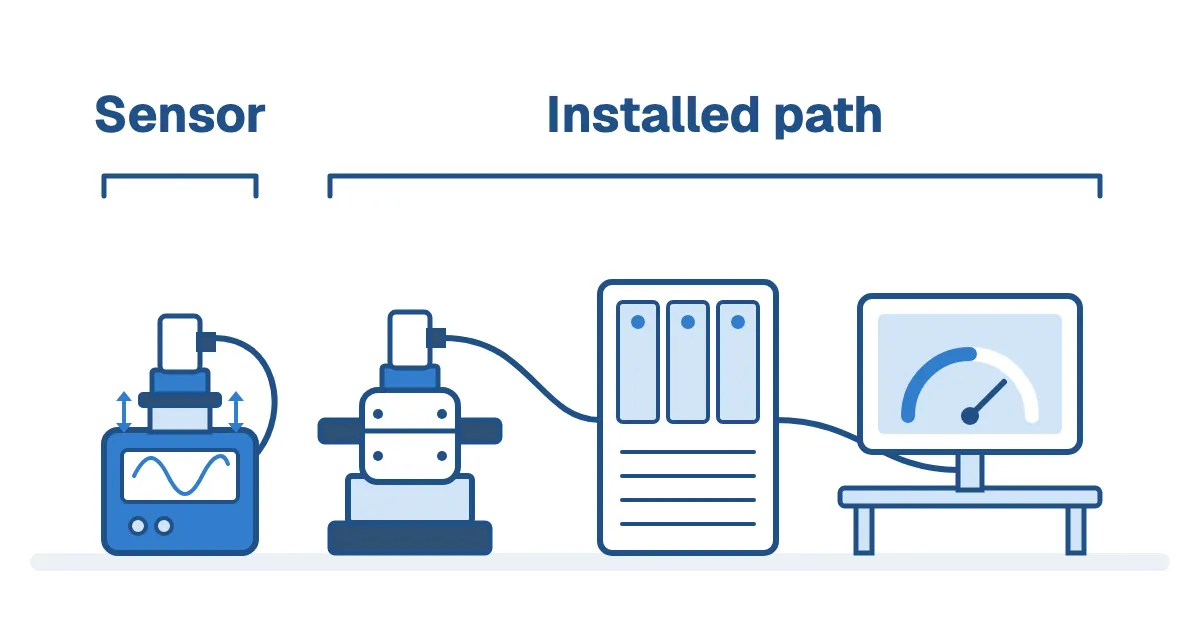
Choose the check around the unresolved question. Sensor calibration gives evidence about the sensor under stated conditions. A field check can test a selected response at the points used. An installed-system test can include the cable, signal conditioning, configured scaling and display, depending on its scope. None should be described more broadly than the evidence it produces.
Start by writing down which measurement or function you need to trust. That makes the test request much more useful than a general instruction to calibrate everything.
Ask what the calibration actually covered
A calibration report should identify the instrument, method, test conditions and results. For vibration work, examine which frequencies and amplitudes were included and whether the reported response addresses your application. Sensitivity describes how much output the sensor produces for a given vibration input.
The Modal Shop's selection guide distinguishes a reference sensitivity check from a multi-frequency amplitude and phase response. That distinction matters when a satisfactory result at one frequency is being used to support confidence over a much wider measurement range.
Suppose your concern is a reading at a part of the range that was never checked. The existing report remains evidence for its stated test points. Ask what additional scope is needed to answer the concern, rather than assuming that a current date on the sticker settles it.
Traceability needs a documented measurement result
NIST describes measurement traceability through a documented chain of calibrations to a reference, with each step contributing to uncertainty. In practical terms, the record needs to explain the reference and how confidently the reported result is known.
A statement such as traceable equipment is not enough to choose a test. Request the report and examine its stated uncertainty, conditions and scope against the measurement you intend to make. NIST also makes clear that traceability alone does not establish fitness for a particular purpose.
For procurement, that means describing the application before requesting a certificate. Identify the measurement range, the decision it supports and any required acceptance criteria. The technical parties can then determine what calibration and reporting evidence is appropriate.
Define the boundary of a field check
A field check is useful when its boundary is explicit. Record the applied input, the expected response, the observed reading and which components were included. A check made directly at the sensor output leaves a different evidence trail from one observed on the control-room display.
The Modal Shop's on-site verification brochure describes equipment that can support testing through the sensor, cabling and displayed value, as well as configured functions within an agreed procedure. This is a capability to plan a test around. It is not proof that any particular site channel has already been verified.
If the purpose is to investigate a display discrepancy, identify the complete path on the channel drawing. Mark the parts the proposed check includes and the parts it leaves untested. That simple boundary makes the result easier for maintenance and instrumentation teams to interpret together.
Keep calibration separate from machinery diagnosis
A satisfactory instrument check does not explain why a pump is vibrating. It establishes confidence within the checked measurement scope. The machine still needs an interpretation based on its operating conditions and diagnostic evidence.
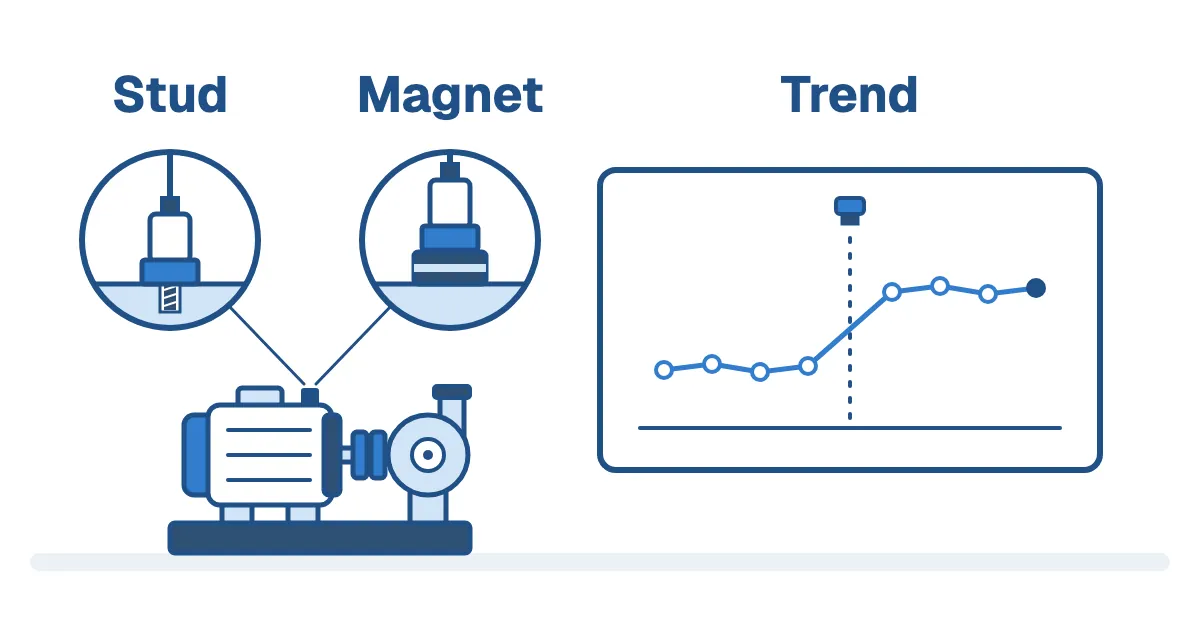
Likewise, a sensor calibration does not verify the physical mounting on the machine. The sensor-mounting guide explains how that connection can affect the measurement. Retain installation and configuration changes with the trend, even when the sensor's calibration remains current.
Protection functions need their own defined responsibilities. If the work includes alarm or trip verification, have the site's responsible team define the approved procedure, controlled conditions and required evidence. The protection and monitoring comparison explains why a diagnostic warning and an automatic shutdown have different jobs.
Write the requirement before choosing the equipment
NATCOM's catalogue includes portable vibration calibration equipment and a Modal Shop accelerometer calibration workstation. These are different equipment categories for different test needs. Listing them does not establish that NATCOM operates an accredited calibration laboratory or provides every local calibration service.
Bring the sensor and instrument models, measurement range, channel arrangement and reporting requirement to a calibration-system discussion. Add the practical constraints, including whether the sensor can be removed and whether the question concerns a laboratory result or an installed reading.
Ask the proposed supplier to return a scope that identifies the test points, reference, uncertainty information, included components and report deliverables. Start with the disputed measurement and expand only where the evidence requires it. The outcome should be a record that explains what was checked well enough for another engineer to use it later.

Frequently asked questions
It provides evidence at the checked point and within the stated arrangement. Whether that is sufficient depends on the intended use, measurement range and applicable requirements.
Only if they were included in the documented test. A sensor-only calibration does not establish the response of an installed measurement path.
No. Review the calibration scope, uncertainty and conditions against the intended measurement. Traceability alone does not establish fitness for that purpose.
This article describes calibration equipment and how to define a requirement. It makes no claim that NATCOM operates an accredited local calibration laboratory. Discuss the required scope and delivery arrangements with the team.