Two diesel-filter quotations arrive with the same micron number. One includes a particle-removal efficiency and a test reference; the other supplies only an element grade. Treating those offers as equivalent leaves a basic question unanswered: what measured performance sits behind the number?
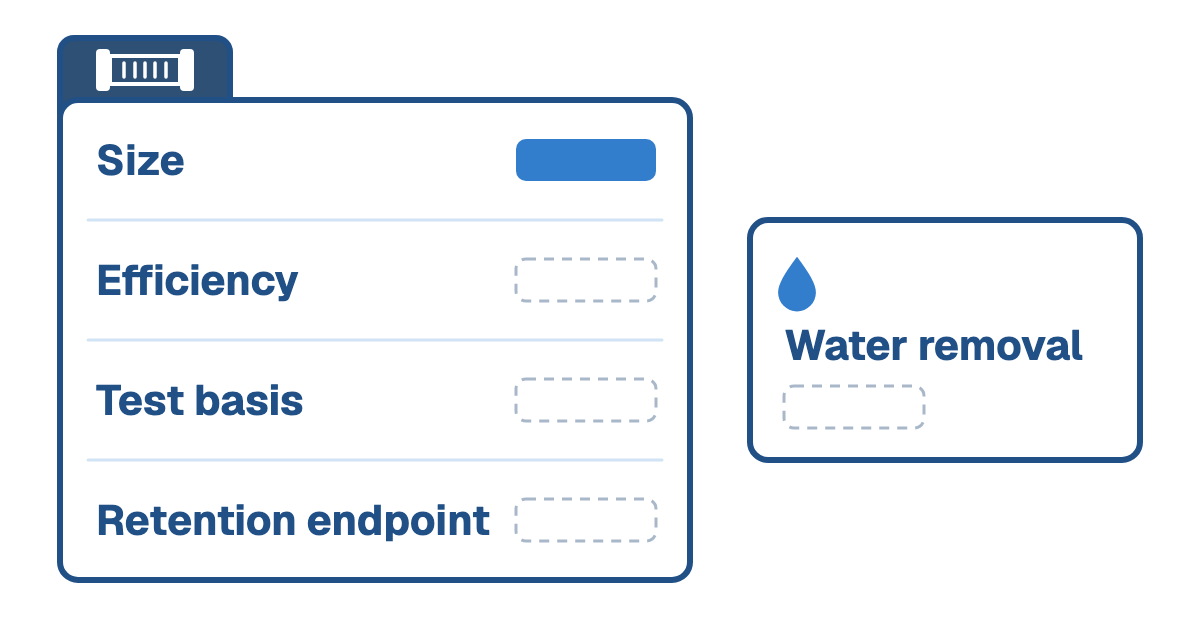
A diesel filter's micron rating identifies a particle-size claim. To interpret it, also read the stated removal efficiency, test method, dirt-retention endpoint and operating limits. Water separation requires separate evidence. The useful comparison is the complete specification for the selected assembly, not the smallest number on its cover.
Read the size and the efficiency together
A micrometre, commonly called a micron, is a unit of size. A size label does not, by itself, tell you what proportion of particles a filter removes under a defined test. Look for the particle size attached to the performance statement, the reported efficiency and the test reference in the same part of the sheet.
The wording around the size matters. Keep the manufacturer's notation intact when you request clarification or compare reports. Do not silently turn a result for particles greater than a stated size into a promise about every particle at that size, or apply the result to an element grade that the table did not test.
This is a practical procurement issue. If one supplier gives the complete statement and another gives only a size, ask the second supplier for the missing basis. Missing evidence does not prove inferior equipment. It means the documents do not yet support an equivalent-performance comparison.
Work through a documented diesel-filter table
Schroeder's HDP onboard diesel-filter datasheet, supplied through NATCOM technology partner Filtertechnik, gives a useful example. Its particulate table identifies a 10 µm element and reports greater than 99% for particles greater than 10 µm(c), under the heading Filtration Ratio Per ISO 19438. The same table reports dirt retention greater than 42 g at a differential-pressure endpoint of 300 mbar.
Those are separate pieces of information. The percentage describes the stated particle-removal performance. The mass and pressure endpoint describe the dirt-retention result in the referenced test. Differential pressure is the pressure difference across the filter. Keeping the endpoint beside the mass prevents a capacity figure from appearing independent of the test that produced it.
| Field in the HDP sheet | Value shown | How to read it |
|---|---|---|
| Particulate element grade | 10 µm | The identified element grade for this row. |
| Particle performance | Greater than 99% for particles greater than 10 µm(c); ISO 19438 reference | Keep the reported particle size and test reference with the percentage. |
| Dirt retention | Greater than 42 g at 300 mbar differential pressure | A test capacity with a stated endpoint, not a predicted replacement interval. |
The sheet does not turn 42 g into operating hours on your site. That would require evidence about the contamination reaching the filter and the actual service conditions. Nor does the table establish that 300 mbar is the correct service alarm for your installation. Ask for the selected equipment's operating and maintenance instructions rather than using the laboratory endpoint as an automatic setpoint.
The source values are an example of how to read this particular document. Confirm the current sheet and exact model offered before specifying equipment. A test reference reproduced in a brochure is not, by itself, a certificate covering every configuration in the range.
Compare a detailed test row with a catalogue rating
Filtertechnik's First Aid for Fuels brochure describes a bulk-diesel skid with 3 or 1 µm absolute-rated particulate pre-filtration, followed by a coalescing stage. That identifies selectable filtration grades and the treatment arrangement. The short catalogue description does not provide the same particle-efficiency and dirt-retention detail as the HDP table above.
The comparison is about what the documents disclose. These are different products and duties, so the smaller catalogue number does not establish a superior choice for an onboard installation. Equally, the HDP's more detailed row does not establish better performance for bulk transfer. First match the duty, then compare the supported performance at the required conditions.
| Document | What it supplies | What remains to establish |
|---|---|---|
| HDP onboard-filter datasheet, particulate table | 10 µm element, greater than 99% above 10 µm(c), ISO 19438 reference, and a dirt-retention mass/pressure endpoint. | Current selected-model suitability and the intended installation and service limits. |
| First Aid for Fuels, bulk-diesel skid description | 3 or 1 µm absolute-rated particulate stage followed by coalescing. | The detailed efficiency/test basis, retention data and limits for the offered skid and elements. |
Do not translate the word absolute into 100% capture, or assign it an efficiency percentage that the source did not state. Ask the manufacturer to define the rating for the offered element and supply the supporting performance data. Likewise, a nominal label needs its definition and evidence; the label alone does not settle a comparison.
Keep water-removal performance in its own column
On the same HDP sheet, the water-coalescing table is separate from the particulate table. It lists a 10 µm coalescing element, a maximum flow of 158 gallons per hour and greater than 95% single-pass water removal. The stated basis is Diesel Fuel Type A with 1,500 ppm water, referencing ISO CD 16332 as written in the document.
The particle percentage and water percentage describe different measurements. Neither substitutes for the other. Even where both rows contain the number 10 µm, you still need the water-removal statement, its test fuel and operating conditions to understand the coalescing duty.
A compatibility list also answers a different question. Listing biodiesel blends or synthetic diesel does not prove that every blend achieves the displayed water-removal percentage. Request the performance basis relevant to the actual fuel, especially when comparing proposals tested under different conditions.
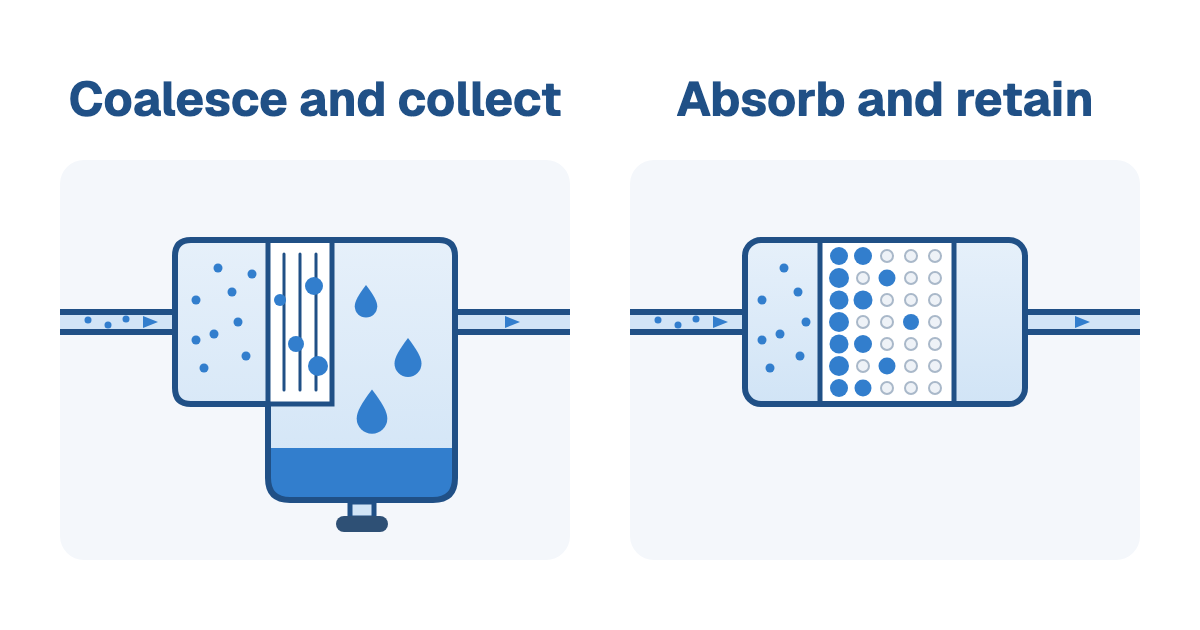
The choice between water-removal mechanisms is covered in coalescing and water-absorbing diesel filters. Use that guide when the unresolved decision concerns water treatment rather than interpreting a particulate rating.
Apply the rating to the correct assembly and duty
The HDP sheet identifies a suction-side application. That matters when interpreting its performance and selecting an installation. Do not lift a result from that sheet and apply it to a pressure-side arrangement without manufacturer confirmation.
Also distinguish a product-family maximum from the operating point of the model you are buying. A family can contain several housing sizes and element options. Ask the supplier to identify which configuration supports the quoted flow and which performance data apply to that configuration. Keep the selected element, housing and duty together throughout the comparison.
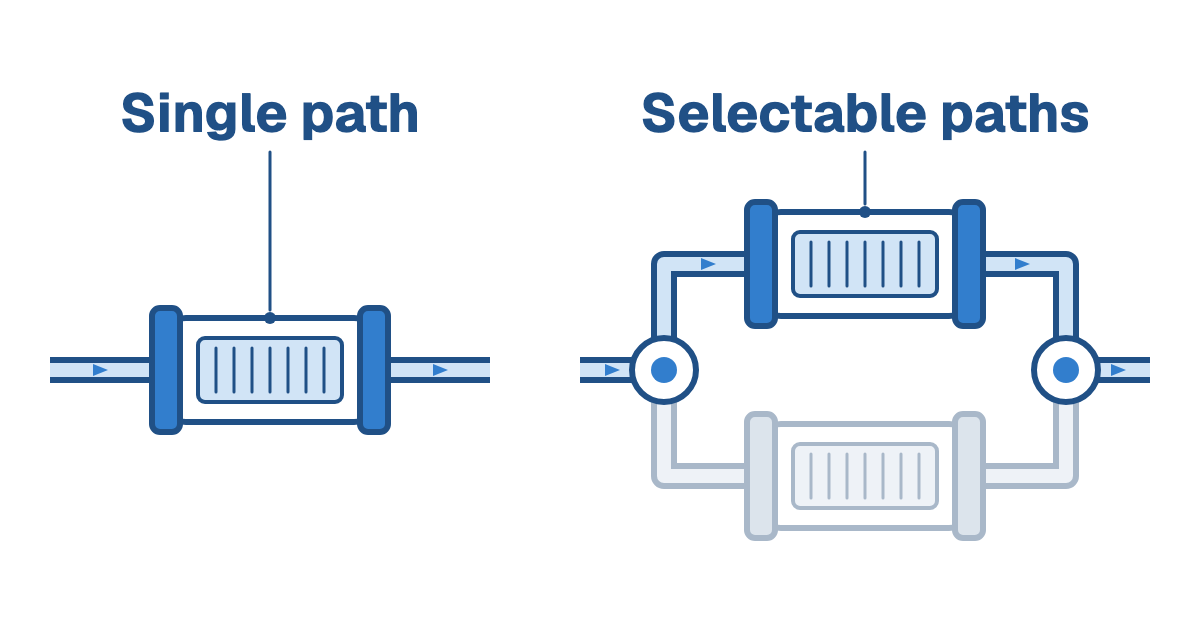
Maintenance arrangements deserve a separate answer. A quotation may need to address access, water drainage and the filtering path available during servicing. None of those is established by the particle-size rating. Our single-versus-duplex guide explains how those service choices change the equipment brief.
Review single and duplex diesel filters if uninterrupted duty during a service task is part of the requirement.
Return incomplete specifications with specific questions
Ask each supplier to fill the same evidence gaps. The aim is to make a technical decision from comparable information, while retaining the differences between tests and application duties.
- Which exact element and housing do the figures describe?
- What particle size, efficiency and test method define the quoted rating?
- What dirt-retention result is available, and at which endpoint?
- Which water-removal claim applies, with what fuel, concentration and flow?
- Which operating limits and manufacturer service instructions govern the proposed installation?
Then agree how the installed system's result will be checked. An element test supports equipment selection; a fuel sample shows the condition of material collected at a particular place and time. They are complementary evidence, not interchangeable certificates of the complete tank and supply system.
Use the diesel-delivery checks guide to connect the selected equipment with receipt, transfer and traceable sampling. If filters already block repeatedly, investigate the contamination source alongside the specification review.
A good comparison ends with a supported choice for the actual duty. A lower micron number is useful only when the rest of the specification shows what it means and why that performance is appropriate.

Frequently asked questions
Not on that information alone. Compare the stated particle efficiency, test method, dirt-retention endpoint, fuel compatibility and operating limits for the exact assemblies. The same size label may be accompanied by different or incomplete performance evidence.
Do not infer 100% capture from the label. Ask the manufacturer for its rating definition, stated efficiency and supporting test conditions for the offered element. Preserve those details when comparing specifications.
A laboratory dirt-retention result describes capacity under its stated test conditions and endpoint. It is not a site-specific replacement interval. Actual contamination, duty and the equipment manufacturer's instructions must inform maintenance.
The cited 300 mbar is the endpoint attached to a documented dirt-retention test. It is not a universal service threshold. Obtain the correct operating and maintenance limits for the selected assembly and installation.
No. Read the water-removal table separately, retaining its test fuel, water concentration, flow and method. A particulate efficiency and a water-separation percentage describe different measurements even when the element labels contain the same micron number.