
The oil supplier already collects samples and sends reports, so why pay for oil analysis? It is a fair purchasing question. The answer starts with the maintenance decision the plant needs to make. An included service is enough only when its measurements, sampling and interpretation give the team adequate information about the risks it needs to manage.
Free oil analysis can be useful, and a paid report can still be incomplete. Check whether the program can detect the condition developing inside the turbine, compressor or gearbox before accepting its overall assessment or approving a replacement budget.
Check the test list before trusting the summary
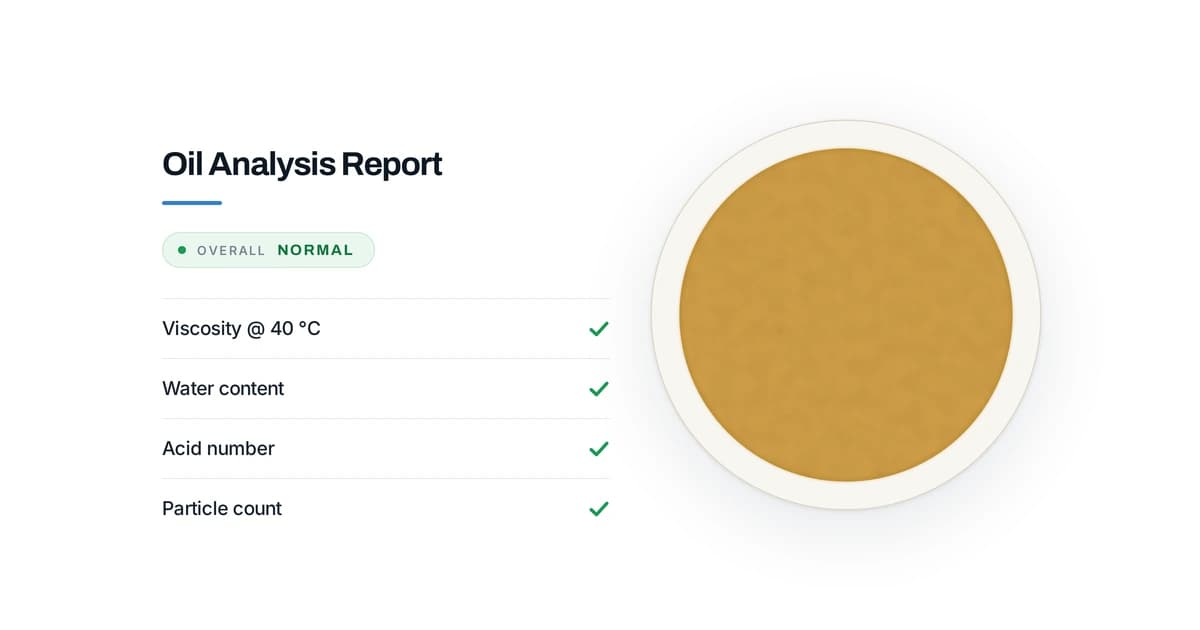
Ask for the exact test package assigned to each machine. Routine measurements such as viscosity, water, acid number and particle count answer useful, different questions. They do not automatically establish antioxidant condition or assess varnish-related insoluble material. A report cannot rule out a condition it did not examine.
Some supplier packages include advanced testing. Others offer it separately or apply it only to selected equipment. Avoid judging an entire service by its description as standard, premium or free. Look for the method names, the baseline used for comparison, the reporting limits and the additional tests triggered by a machine symptom or an adverse trend.
This is where the comparison with vibration condition monitoring helps. A vibration program earns its budget by giving engineers information they can act on. Oil monitoring deserves the same scrutiny. Which developing problems will this program help us detect, how soon will we know, and who will decide what to do next?
Include the measurements the risk calls for
For suitable in-service turbine oils, Membrane Patch Colorimetry, or MPC, measures the colour of insoluble material collected on a membrane. ASTM D7843 treats it as a trend within a wider monitoring program. It measures material recovered from the oil sample; it does not locate or measure deposits attached to machine surfaces. The method is not appropriate for dyed turbine oils.
RULER® uses an electrochemical method to compare active primary antioxidants with a suitable reference oil. Antioxidants help protect the lubricant against oxidation. Their depletion trend provides a different part of the condition picture. A remaining-antioxidant result of a given percentage does not mean the oil has that percentage of its calendar life left.
Neither test is a universal addition for every lubricant and application. Establish method suitability with the laboratory and equipment context, then read the results together with the other oil measurements and machine evidence. Our guide to MPC, antioxidant results and turbine oil reports explains those distinctions in detail.
Will the information arrive in time to act?
Good test selection still needs representative samples. Document the sampling point, procedure, operating condition, oil identity and recent additions. Keep the method consistent enough to compare results. When any of those inputs change, record the change so that the next person reviewing the history can interpret it.
Set sampling frequency around the asset, operating duty, known problems and speed of change. A convenient collection schedule may not match the time available to act. Agree how an unexpected result will be checked, who receives it and what prompts another sample, an inspection or a revised monitoring interval. One sample remains a snapshot.
Ask for the time from taking a sample to receiving a technical recommendation. Include transport, laboratory work and review, rather than laboratory turnaround alone. Agree how urgent findings reach the responsible engineer. A report filed after the maintenance decision cannot inform that decision, however comprehensive its test list.
Use online measurements where the time gap matters
Online oil condition monitoring can add frequent readings between laboratory samples. Select the sensor for the property and application you need to observe. Particle measurements can help reveal contamination changes; they do not automatically provide MPC or antioxidant results. Laboratory analysis remains useful for properties outside the sensor's scope and for investigating why a trend changed.
A documented Atten2 case at an anonymous Queensland minerals facility shows the operational value. Two OilWear S sensors monitored oil before and after the filters on a ball mill lubrication system. They detected contamination changes when filters blocked and the system entered bypass. The team followed the developing condition, timed a shutdown, replaced 6,000 litres of oil and scheduled gearbox refurbishment.
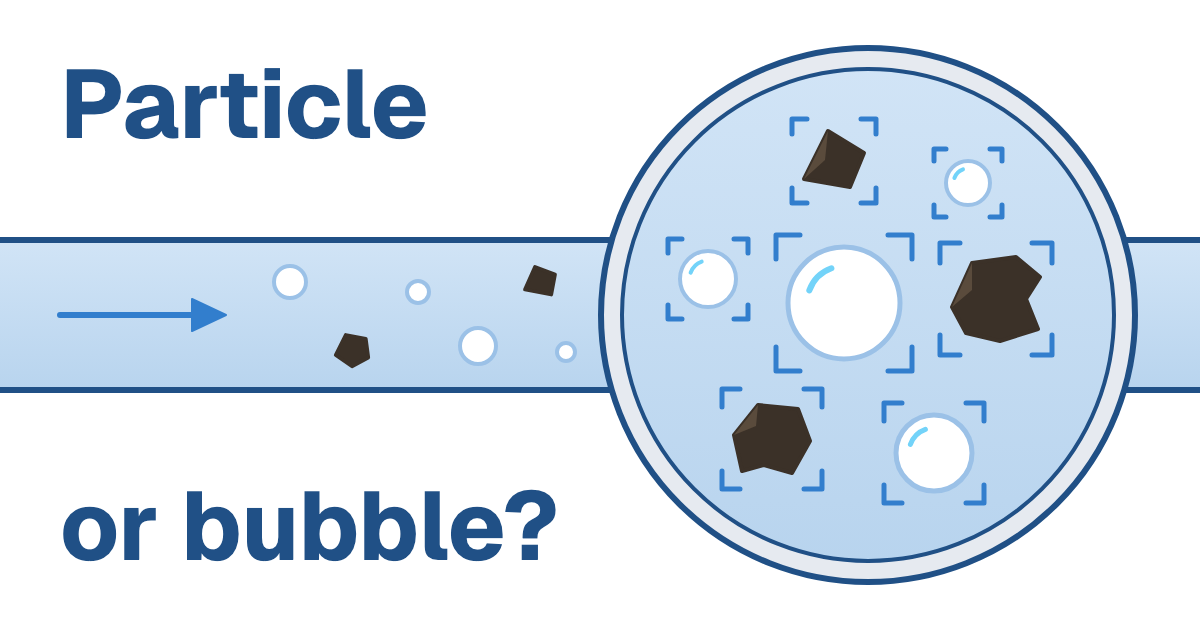
The team used continuous evidence to choose and time its maintenance response, including oil replacement when it was needed. Aeration and measurement suitability also matter. Read how air bubbles can affect an oil particle count when selecting or interpreting a particle-monitoring system.
What extra scope is worth paying for?
The review should lead to a purchasing decision. Compare the existing coverage with the missing information and choose the response that closes that gap.
- Keep the included program when its tests, sampling and follow-up cover the asset's risks. Paying again for the same adequate work adds little.
- Purchase targeted additions when measurements or interpretation are missing. For suitable turbine oils, that might mean MPC and antioxidant testing alongside the existing panel, with someone assigned to interpret the combined trend.
- Assess online monitoring when changes between samples could affect an operating decision. Confirm that the proposed sensor measures the relevant property and that someone will act on its alerts.
Ask each bidder to separate included work from optional charges. Compare annual sampling frequency, tests, transport, interpretation and follow-up on the same basis. The extra spend should purchase missing information or an earlier useful response, with a named person responsible for using it.
If the report leads to an oil-change recommendation, use our questions to ask before buying replacement oil to review the proposed response.
Share the current test list, sample schedule, equipment details and report history with NATCOM's oil analysis team. We can review what the program answers, what it leaves open and whether additional laboratory measurements or oil monitoring equipment fit the operating problem. The target is information the plant can use before a decision becomes urgent.

Frequently asked questions
It can be, if the actual program covers the equipment's risks with appropriate tests, repeatable sampling, suitable intervals, interpretation and follow-up. Check the scope rather than judging quality by price. A paid report with the wrong test list can leave the same gaps.
Some do, while other packages require additional tests to be requested. Ask for the named methods and the scope included for each asset. Never assume that a standard package either includes or excludes the measurements needed for your machine.
No. It measures active primary antioxidants against a suitable reference using an electrochemical method. Trend the depletion and interpret it with other oil and machine evidence. The reported percentage is not a percentage of calendar life remaining.
Online monitoring provides frequent readings for the properties a particular sensor measures. Laboratory analysis can investigate additional properties and help explain a change. Select both around the equipment's risks; a particle sensor does not automatically measure varnish potential or antioxidant condition.