Your turbine oil gets sampled regularly, but MPC and RULER appear only when somebody asks for an investigation. By then, the maintenance team may already be discussing high bearing temperatures, sticking valves or an oil change. Advanced testing is more useful when it has a place on the maintenance calendar, while there is still time to act on the trend.
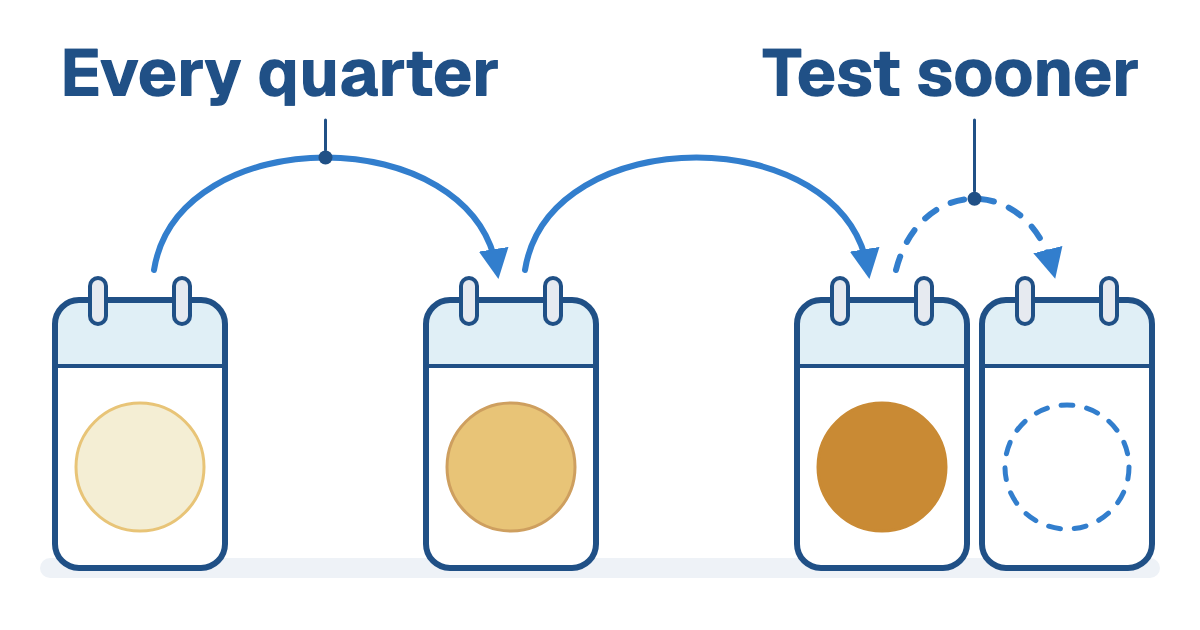
For critical turbine oil, start with MPC and RULER every three months. Keep routine oil checks monthly and add a broader functional review annually. This is a practical starting schedule used in published turbine testing programs. Adjust it to the equipment requirements, lubricant and results, with earlier checks when conditions change.
Put the tests on a working calendar
A useful schedule separates frequent condition checks from the additional measurements that answer longer-term oil-care questions. Write the tests into the maintenance plan by name so that a change of laboratory, supplier or personnel does not silently remove them.
Establish a baseline when a charge enters service, and retain a suitable new-oil reference for comparison. If you are adding advanced tests to an existing program, start now and build the trend from that point. For a critical compressor, use the same planning approach with methods selected for its lubricant chemistry and duty.
Approve the annual testing scope together, including a route for additional samples when a result needs investigation. An engineer should be able to bring a test forward without rebuilding the purchasing justification each time. Put the sampling dates, required methods and person responsible for reviewing results into the same maintenance instruction.
Why both MPC and RULER belong in the plan
Membrane Patch Colorimetry, or MPC, measures the colour of insoluble material recovered from the oil onto a membrane. Its trend helps assess varnish potential. RULER measures active primary antioxidants, the additives that protect the oil against oxidation, against a suitable reference. The two tests follow different parts of the degradation process.
A RULER percentage is an antioxidant comparison, not a percentage of calendar life remaining. MPC also has a defined application: ASTM D7843 covers suitable in-service turbine oils and excludes dyed oils. Confirm method suitability for other fluids. Our guide to reading MPC and antioxidant results together explains how to interpret the paired evidence.
When should the next sample come sooner?
Bring the next test forward when MPC rises, antioxidant depletion accelerates, or machine behaviour changes. For a slowly worsening trend, consider moving the advanced tests to monthly sampling. New bearing-temperature concerns, valve sticking or an active treatment program need a closer schedule agreed around the actual condition. Waiting for the next quarterly date wastes useful response time.
Also review the schedule after an overheating event, contamination incident, substantial oil top-up or change in operating duty. Record exactly what happened and when. During varnish treatment or antioxidant replenishment, agree samples before treatment and at defined stages afterward so the team can follow both the intended improvement and the oil's wider condition.
Include transport, laboratory and review time in that decision. A sample taken promptly but reviewed weeks later leaves the maintenance team waiting. Assign someone to receive the result and decide the next action.
Which other advanced oil tests are worth requesting?
Ask for the actual test list in your package. Some laboratories include these measurements; others require a separate request. Our article on whether the existing oil-analysis package covers the job helps with that purchasing discussion. Select each additional test for the question it answers.
RPVOT, the Rotating Pressure Vessel Oxidation Test, evaluates oxidation stability under controlled conditions. ASTM D2272 supports comparisons of suitable turbine oils with the same composition. It complements direct antioxidant measurement when assessing continued use. Its result describes test performance rather than forecasting a retirement date for the charge.
Demulsibility means the oil's ability to separate from water. ASTM D1401 examines that property, which deserves attention where water ingress or persistent emulsions are a concern. A water-content result tells you how much water is present; a separation test answers whether the oil can release it.
Foam and air release answer different questions too. ASTM D892 assesses foaming tendency and foam stability. ASTM D3427 assesses the release of entrained air bubbles. Consider them when surface foam, aerated oil or unstable hydraulic response needs investigation. The lab result should inform a review of the oil and system conditions together.
Make each result comparable with the last
Use an identified sampling point and consistent operating conditions. Follow the agreed sampling procedure, record oil and machine hours, and tell the laboratory about top-ups, filter changes and treatment. Keep the method and reference consistent, and flag any changes on the trend. Otherwise, maintenance activity or sampling differences can complicate the comparison you are paying to obtain.
Use the evidence to keep serviceable oil working
At a combined-cycle power utility documented by NATCOM technology partner Fluitec, high MPC and antioxidant depletion identified through RULER and RPVOT prompted action. The plant controlled varnish and, after qualification, replenished antioxidants. Fluitec reported that this customer had kept the oil in service for over a decade, supported by routine analysis. Testing helped the team choose and follow a preservation strategy.
Use the same discipline when you assess an oil-change recommendation. Send your equipment list, lubricant details, current test package and recent reports to NATCOM's oil analysis team. The next step is a schedule that gives your engineers useful evidence while there is time to preserve the oil.

Frequently asked questions
Every three months is a practical starting point for critical turbine oil, alongside monthly routine oil checks and an annual functional review. Shorten the interval when the trend worsens, operating conditions change or treatment begins. Agree the final schedule against the equipment requirements, lubricant and observed rate of change.
Monthly testing is worth considering when a slowly developing trend needs closer attention. New symptoms or an active treatment program may need checks sooner than that. Stable equipment can start with a quarterly advanced-test schedule while routine condition checks continue monthly.
The percentage compares active primary antioxidants with a suitable reference oil. It does not translate directly into a percentage of service life or a number of months remaining. Interpret antioxidant depletion alongside MPC, routine oil results and operating history.
For suitable turbine oils, consider RPVOT for oxidation stability, demulsibility for water separation, foam testing for surface foam and air release testing for entrained bubbles. An annual functional review is a useful starting point, with earlier testing when the relevant symptom or maintenance decision arises.
Use the same planning approach, then select the methods and intervals for the compressor, lubricant formulation and operating duty. ASTM D7843 MPC specifically covers suitable in-service turbine oils and excludes dyed turbine oils. Ask the laboratory to confirm the method's suitability before applying it to another fluid.