A new drum arrives for a gearbox oil change. The lubricant matches the purchase order, the seals look intact and the maintenance team is ready to fill. Should the oil still pass through a filter?
Check the equipment's cleanliness requirement and verify the oil at the point where it enters the machine. If the delivery, storage or transfer arrangement cannot demonstrate that requirement, filtration should be part of the filling plan. A product label establishes lubricant identity. It does not document the condition of the oil after its journey through your store and transfer equipment.
The useful question is where cleanliness will be measured and controlled. That decision affects the transfer unit, the sampling arrangement and who can accept the fill.
Start with the receiving machine's requirement
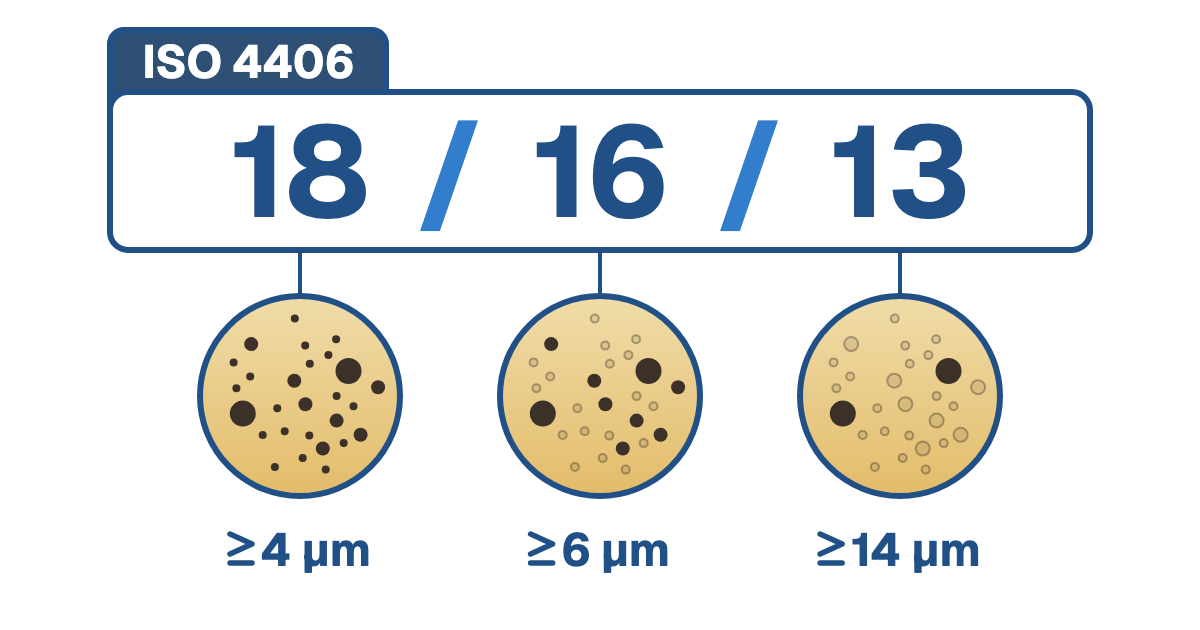
Ask for the equipment manufacturer's applicable cleanliness requirement and the lubricant supplier's compatibility guidance. Agree the measurement method and acceptance point before choosing a filter. The ISO 4406 guide explains what a particle code means and why the code alone does not choose a target for every machine.
Suppose your site has a delivery sample with an acceptable particle count. That is useful evidence about the sampled oil. Now consider a shared transfer hose that was last used for another lubricant. The delivery result does not describe what will reach the gearbox through that hose. The filling procedure needs to cover the intervening equipment too.
Keep lubricant identity and cleanliness as separate acceptance questions. Removing particles cannot establish that a mixed or incorrectly supplied lubricant has the right formulation for the machine.
Follow the oil through the whole transfer path
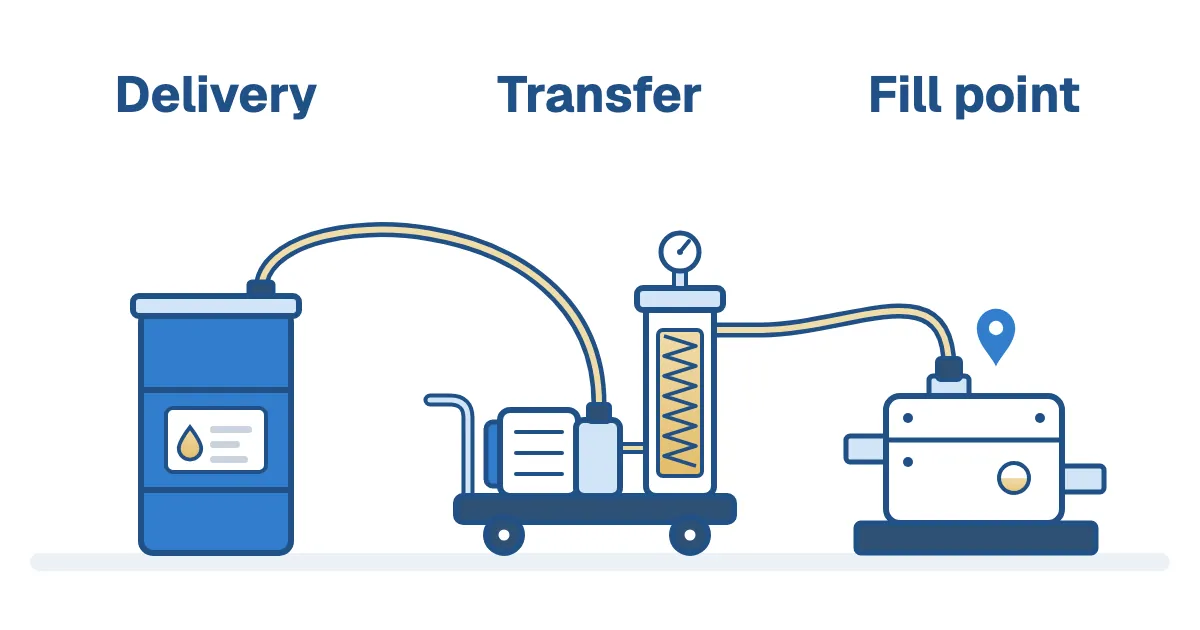
Walk the route from the storage container to the fill connection. Record which pump, hose, couplings and filter housing the team will use, how they are kept clean, and whether they are dedicated to the lubricant. Noria's storage and handling guidance recommends filtering oil while filling storage containers and protecting cleanliness during later handling.
That makes the final connection worth examining. A clean storage arrangement gives little assurance if the last hose or open fill port introduces contamination. Define a closed, controlled transfer method where the installation permits it, with preparation and connection steps that the maintenance team can repeat.
Filtertechnik's First Aid for Oils brochure lists filtered replenishment and oil transfer among the applications for its portable systems. Those are useful application categories, but they do not establish that any available cart suits your oil or meets your machine's requirement.
Thick gearbox oil changes the equipment choice
In an anonymous tunnel-boring-machine manufacturing account, Filtertechnik describes controlling contamination in bulk oil, during transfer and filling, and through assembly and commissioning. The oil was ISO VG 320, with warehouse temperatures reported around 10°C. The supplier selected a bespoke portable arrangement for that duty.
The source describes a progressing cavity pump, a magnetic strainer and a fine filtration stage. Its lesson is the application engineering. A transfer unit has to handle the actual oil at the temperature where the job will happen. A convenient cart already on site is only a candidate until its operating limits and suitability have been checked.
The account gives no measured before-and-after cleanliness result. It therefore supports the selection problem, rather than a promised cleanup time or an achieved particle code. The published gearbox filtration case explains that distinction.
Ask for evidence beyond the micron rating
A quotation should identify the oil and temperature range, proposed flow, filter performance evidence, pressure limits, bypass arrangement and sampling points. Ask how element condition will be monitored and what the operator should do if the unit cannot maintain the intended transfer conditions.
A micron rating describes an element specification within its stated test context. It is not a measurement of the oil leaving your filling hose. Treat a supplier's proposed rating as one part of the design, then agree how the finished fill will be checked. The filtration quotation comparison goes further into those procurement questions.
Avoid choosing an unnecessarily fine element on the assumption that a smaller number settles every concern. Have the supplier explain why the complete arrangement suits the lubricant, operating conditions and agreed cleanliness requirement.
Make the fill record useful at the next oil change
Retain the lubricant identification, batch information, equipment used, filter details, filling conditions and sample results. Label the sampling location clearly so the next reviewer knows whether a result describes the delivery, the transfer outlet or the filled system.
If the machine already contains contamination or residual fluid, a clean incoming charge does not establish the condition of the complete system. Decide separately whether inspection, cleaning or a defined flushing procedure is needed before the fill.
Start with one critical asset and trace its next fill from receipt to acceptance. That gives procurement a usable specification and maintenance a procedure it can follow. It also makes any later contamination investigation more precise than a record that simply says new oil was added.

Frequently asked questions
Compare verified incoming and transferred oil condition with the equipment requirement. Include filtration where the filling arrangement cannot demonstrate that requirement; do not assume every application needs one universal filter specification.
Select it with the equipment cleanliness requirement, filter performance evidence, oil viscosity, temperature and transfer conditions. A micron rating alone does not prove achieved oil cleanliness.
Have the lubricant and equipment suppliers assess compatibility and the risk of residual-fluid mixing. Define cleaning or dedication requirements before sharing transfer equipment.
Agree a representative location that answers the acceptance question, and record it. A delivery sample, transfer-outlet sample and filled-system sample describe different boundaries.