Your hydraulic-oil report comes back at 18/16/13. The previous result was 19/17/14. The numbers have fallen, but is the oil clean enough to keep the machine running?
An ISO 4406 oil cleanliness code describes the concentration of particles in the sample. Lower numbers mean lower particle-count bands. Whether the result is acceptable depends on the equipment's requirement, the sampling conditions and the other evidence about the oil and machine.
The code helps you make that decision. It cannot make it on its own.
What do the three numbers mean?
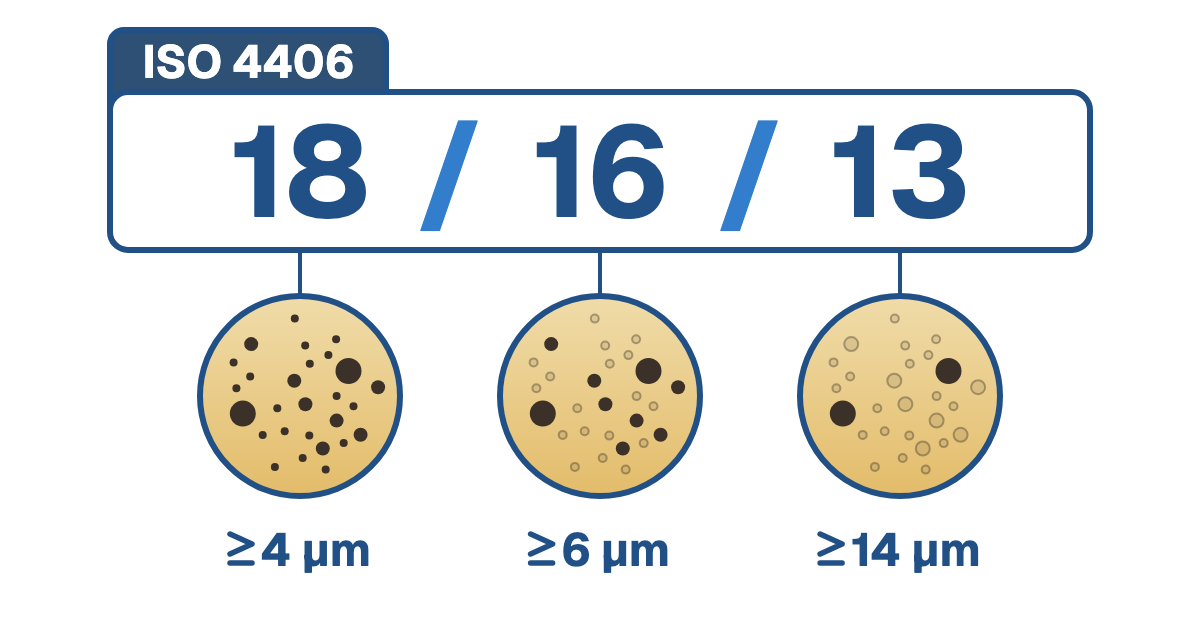
The familiar three-number code reports cumulative particle counts at three size thresholds, normally shown as 4, 6 and 14 micrometres, or µm, with calibrated sizing written as µm(c).
For an example result of 18/16/13:
| Code position | Particles counted | Count range per millilitre |
|---|---|---|
| 18 | Particles at least 4 µm(c) | More than 1,300, up to 2,500 |
| 16 | Particles at least 6 µm(c) | More than 320, up to 640 |
| 13 | Particles at least 14 µm(c) | More than 40, up to 80 |
These groups overlap. A 15 µm particle belongs in all three counts because it exceeds all three thresholds. The middle number does not mean particles only between 6 and 14 µm.
Keep that distinction in mind when reading a laboratory report. Adding the three counts together would count some particles more than once.
A one-code change needs context
The count bands roughly double with each step up the scale. A change from code 18 to code 19 therefore matters more than a simple one-point rise might suggest.
But a code is a band, not an exact concentration. As an illustration, 1,400 and 2,400 particles per millilitre both sit within code 18. A report could keep the same code while the underlying count rises substantially.
Ask for the raw counts when comparing treatments, investigating a trend or judging a result close to an action limit. Do not convert a drop in ISO codes into an exact removal percentage. Use the measured counts, collected under comparable conditions, for that calculation.
Also check the units. A value reported per 100 millilitres is not directly comparable with the same number reported per millilitre. Read the column heading before deciding that contamination has increased.
Find the target for this equipment
There is no single cleanliness code that makes every hydraulic system acceptable. Obtain the applicable requirement from the equipment manufacturer and establish where and under what conditions it should be measured.
Write that requirement into the maintenance plan. A target without an identified machine, sample point and method leaves too much room for disagreement after the work.
Consider a hypothetical requirement of 18/16/13. A result of 18/16/14 meets the first two numbers but exceeds the third. Calling the report "close enough" would dismiss the very population of larger particles that the third limit controls. The engineering owner needs to decide the response against the actual requirement.
A filter's micron rating answers a different question. It describes the filter's particle-capture specification, while an ISO code describes the sampled fluid. Installing a finer element does not, by itself, demonstrate that the reservoir has reached its target. Confirm the outcome by measurement.
Check whether the results are comparable
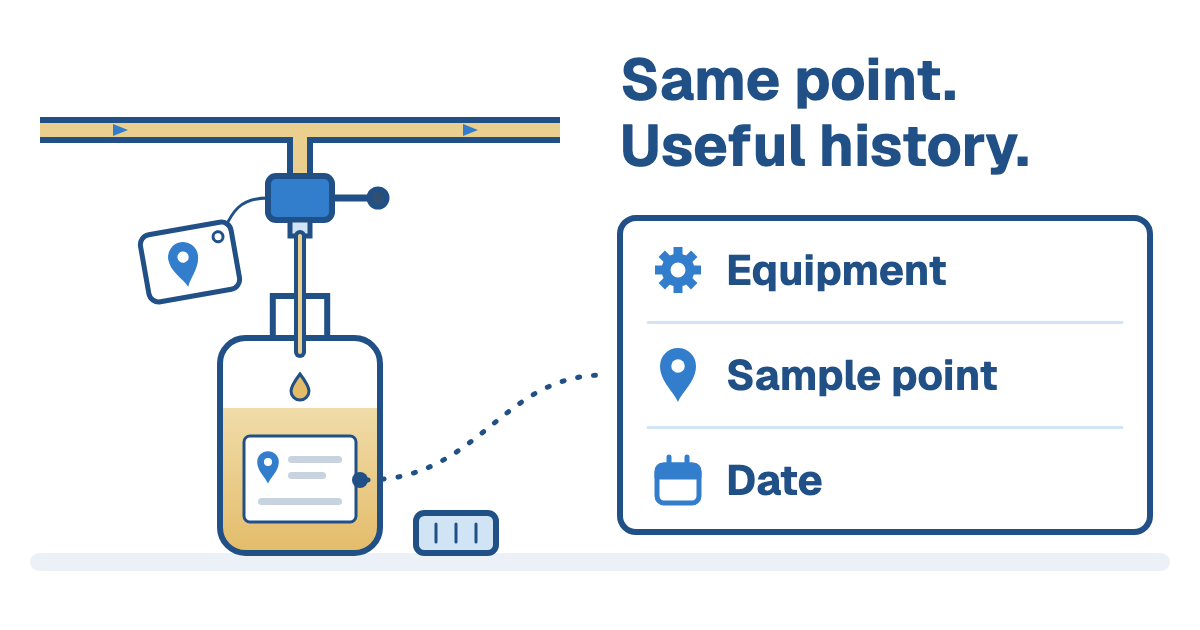
A sample from an active return line and a sample drawn from a quiet corner of the reservoir do not necessarily describe the same condition. The same applies to samples taken before and after a filter. One may be suitable for trending system wear; another may answer a question about oil leaving the filter.
Before treating a change as a machine trend, check the sampling point, operating state and recent maintenance. Keep those details consistent or explain the differences to the analyst. A changed collection method can interrupt a trend even when the asset number on the bottle stays the same.
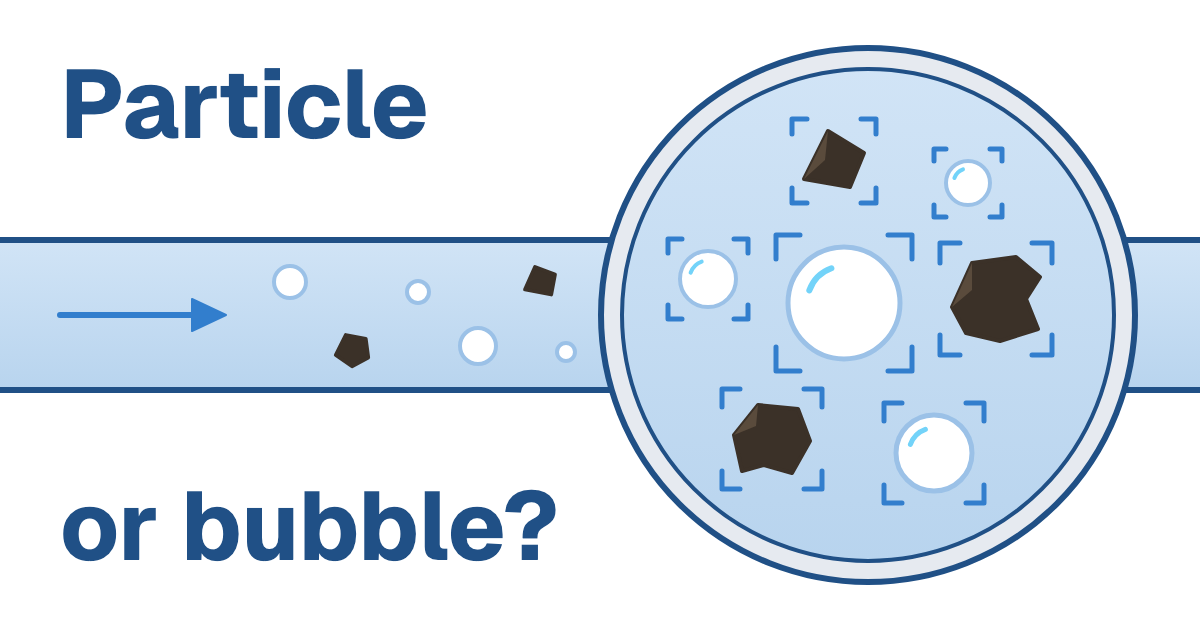
The measurement method also matters. In a documented Atten2 gearbox test-bench case, aerated oil caused difficulty for earlier particle counters. The selected imaging sensor distinguished bubbles from particles. That experience supports checking measurement conditions when a count looks implausible; it does not justify dismissing a high result because the oil contains bubbles.
Our guide to how air bubbles can distort a particle count explains that investigation in more detail.
A clean particle count does not clear the oil
Particle concentration is one part of oil condition. Water, viscosity and chemical degradation need their own measurements. A cleanliness code also does not identify the material or shape of every particle, so it cannot tell you which component is wearing simply from three numbers.
That is why an oil-analysis service should start with the equipment and the decision you need to make. A particle problem may justify filtration. A water problem needs a suitable water-removal assessment. A change in viscosity or chemical condition may need a different response.
For water results, keep the units and temperature context visible. Our explanation of water content and saturation covers why those readings need separate interpretation.
What a documented cleanup can establish
Filtertechnik, a NATCOM technology partner, documented a hydraulic-oil cleanup at Commonwealth Steel. The starting cleanliness was ISO 21/19/16, with water reported at 800 ppm. The customer sought a cleanliness level below 15/13/10 and water below 80 ppm.
After the portable filtration work, the supplier reported ISO 13/12/8 and 50 ppm water. The existing oil stayed in service.
The useful part of this account is the link between a stated starting condition, separate particle and water targets, and reported treatment results. It shows why a filtration discussion should define what will be measured before work starts.
It remains one documented account. The source does not provide a dated series of laboratory reports or measurement uncertainty. Its final code is neither a universal target nor a promise of the result another reservoir will reach.
Decide what needs to happen next
If a credible result exceeds the agreed limit, investigate both the contamination and its source. New oil, maintenance work and entry through the system can introduce particles; machinery can also generate them through wear. Cleaning the fluid and controlling renewed contamination are related jobs.
Prepare the next discussion with the equipment identity, lubricant, reservoir volume, recent reports, sampling location and manufacturer requirement. Include changes in operating behaviour and any recent oil top-up, filter replacement or repair.
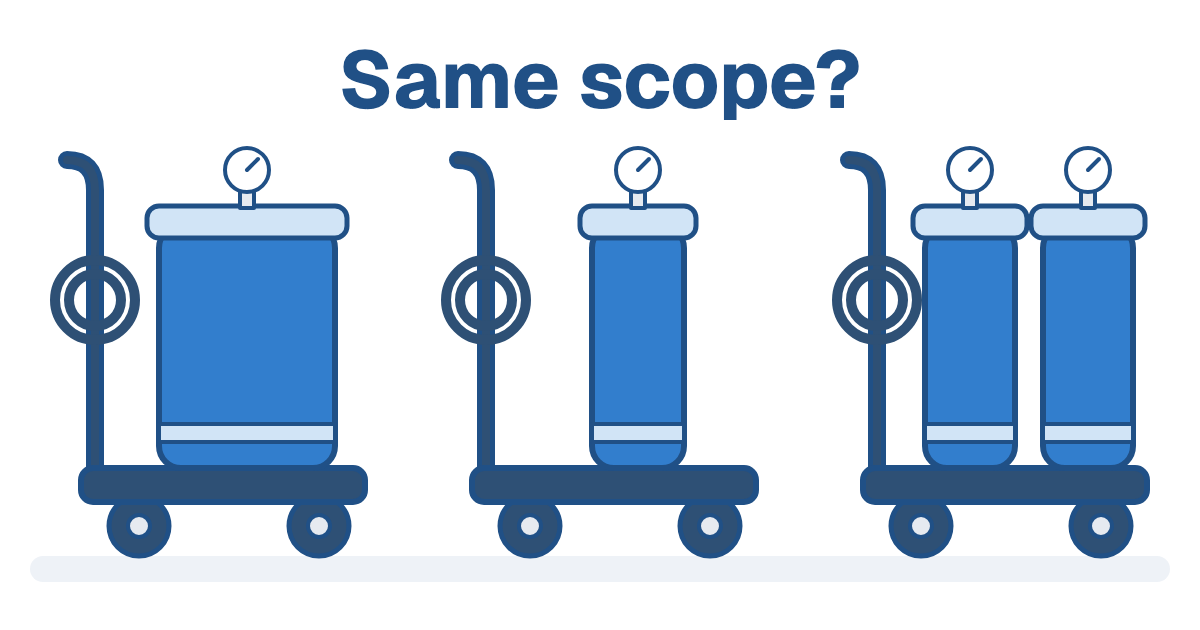
Then agree the treatment scope and how its result will be checked. Take comparable follow-up samples and review whether the improvement holds under operation. One good bottle is a snapshot, not evidence that a recurring contamination source has disappeared.
If you are buying treatment, the cleanliness target and verification plan belong in the quotation. Our guide to comparing filtration quotations explains what else the scope should contain.
Share the report and the equipment context with NATCOM to review your oil-cleanliness result before choosing the work.

Frequently asked questions
It depends on the equipment's requirement. The code describes particle-count bands; it is not a universal pass. Compare all three numbers with the applicable target and check that the sampling conditions match the assessment.
A lower code supports a lower measured particle concentration. Continued use also depends on the other oil properties, the equipment condition and the trend. It does not establish remaining oil life on its own.
Not precisely. Each code covers a range of counts. Use the underlying particle counts and comparable samples to calculate a percentage change, and retain the measurement conditions with the result.
No. A filter rating and a fluid-cleanliness result describe different things. The achieved code must be measured in the system under the agreed conditions.