A machine comes into the workshop for servicing. Its hydraulic oil is drained into a drum, then sent for recycling. The machine goes back to work with replacement oil. Before repeating that routine, there is a question worth settling: was the oil worn out, or did it need contamination removed?
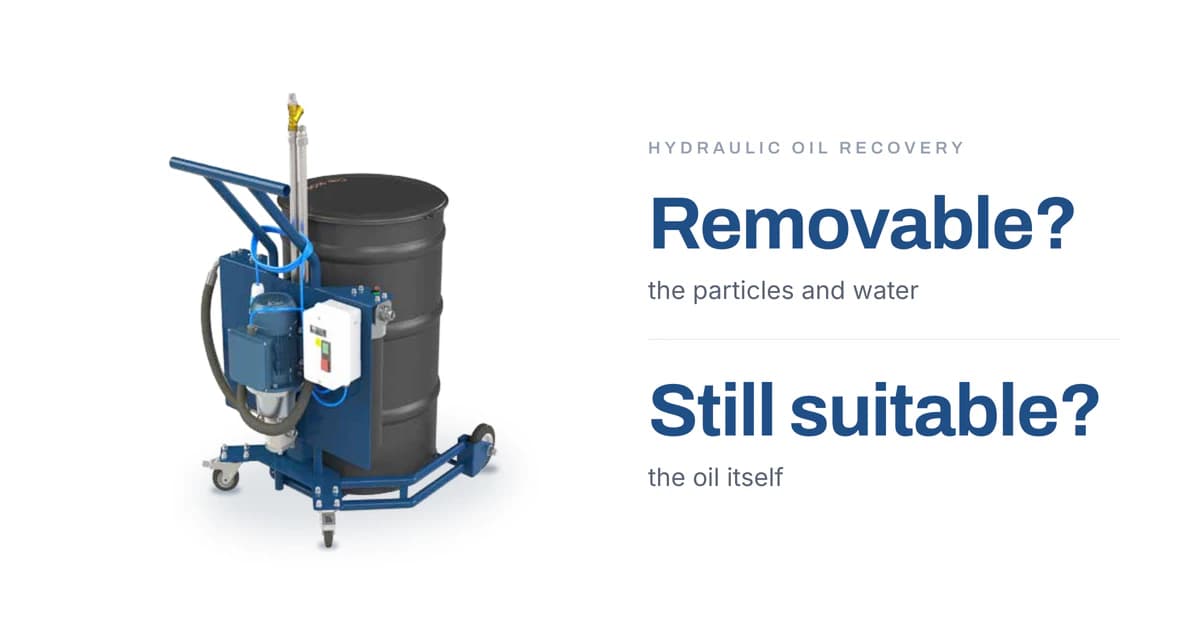
Contaminated hydraulic oil may be recoverable when the contamination can be removed and the lubricant remains suitable for service. Assess both before selecting treatment. A filter can improve cleanliness; it cannot establish the oil's remaining condition on its own.
Filtertechnik documented this decision at an unnamed construction-machinery service customer. An enquiry about slow oil transfers became a system designed to collect, filter and return hydraulic oil after maintenance. The case shows how recovery changes the whole handling process, from the machine tank to the refill nozzle.
First establish why the oil is being removed
Draining oil for access during a repair tells you why it left the machine. It does not tell you whether it can go back. Likewise, a high particle count identifies contamination but does not answer every question about lubricant condition.
Identify the oil product and grade, the machine it came from, operating history, recent top-ups and any known contamination event. Review the available analysis against previous results and the equipment's requirements. A batch with uncertain identity needs that uncertainty resolved before a reuse decision.
Viscosity describes resistance to flow. Oxidation is chemical deterioration of the oil. Measurements of these properties, together with relevant additive and contamination tests, answer different questions. Mobil's system-analysis guide explains the distinction between water, particles, viscosity and degradation testing.
If the oil remains suitable and the main problem is removable contamination, recovery may be worth evaluating. If the lubricant has deteriorated or no longer meets the machine's requirements, making it cleaner leaves that problem unresolved.
Plan the route back to the machine
Recovery needs a defined handling process. Record which machine supplied each container, which oil it holds and what has been checked. Keep the container identity attached to its analysis and reuse decision. That is practical preparation for a technical assessment, especially in a workshop handling more than one oil grade.
Work through collection, storage, treatment and refilling together. Where will samples be taken? How will the unit reach each machine? How will treated oil be returned? Who will confirm that the agreed acceptance criteria have been met? These questions determine what the equipment must do.
Fluid handling can also introduce contamination. Mobil's hydraulic system care guidance covers contamination control during storage and transfer as well as at the reservoir. Address the entry route alongside treatment; replacing or filtering the oil does not repair it.
A workshop case: collect, filter and refill
The Filtertechnik customer handled ISO VG 32 and ISO VG 46 hydraulic oils across eight separate drums. Used oil went from machine tanks into storage for collection by a recycling company. An older rotary hand pump made transfers slow and labor-intensive.
After a site survey, Filtertechnik proposed cleaning, testing and reusing suitable oil. It modified a DFC-3000 portable filtration unit with dual 14-inch filter housings, water-removal capability, a 10 m power cable and a flow meter. A dispensing nozzle let the same unit return conditioned oil to machinery after servicing.
The flow meter addressed a useful operating question: how much oil had been recovered from each tank? The nozzle addressed the other end of the job: how would that oil return to the machine? Neither feature replaces the condition checks needed to decide whether the oil should be reused.
Filtertechnik reports reuse and lower new-oil purchasing and disposal needs for this customer. It provides no before-and-after test readings, recovered volume or financial calculation. Read the construction-machinery hydraulic oil recovery case study for the documented configuration and outcome.
A filter rating is not an acceptance result
The construction case specifies 10 µm absolute filtration. That figure describes a filter rating. It does not tell the maintenance team that the oil reached a particular particle-cleanliness code, water content or remaining service life.
Agree the required measurements before treatment. Use the machine and lubricant requirements to define particle-cleanliness and water targets, with the test method and units recorded. Then select the treatment for the fluid, contamination and operating conditions. A filter specification alone cannot close that decision.
Use comparable sampling points and conditions when checking the result. Follow subsequent oil analysis and machine behavior to assess whether control is maintained. One improved sample is a snapshot, not evidence that the condition will hold.
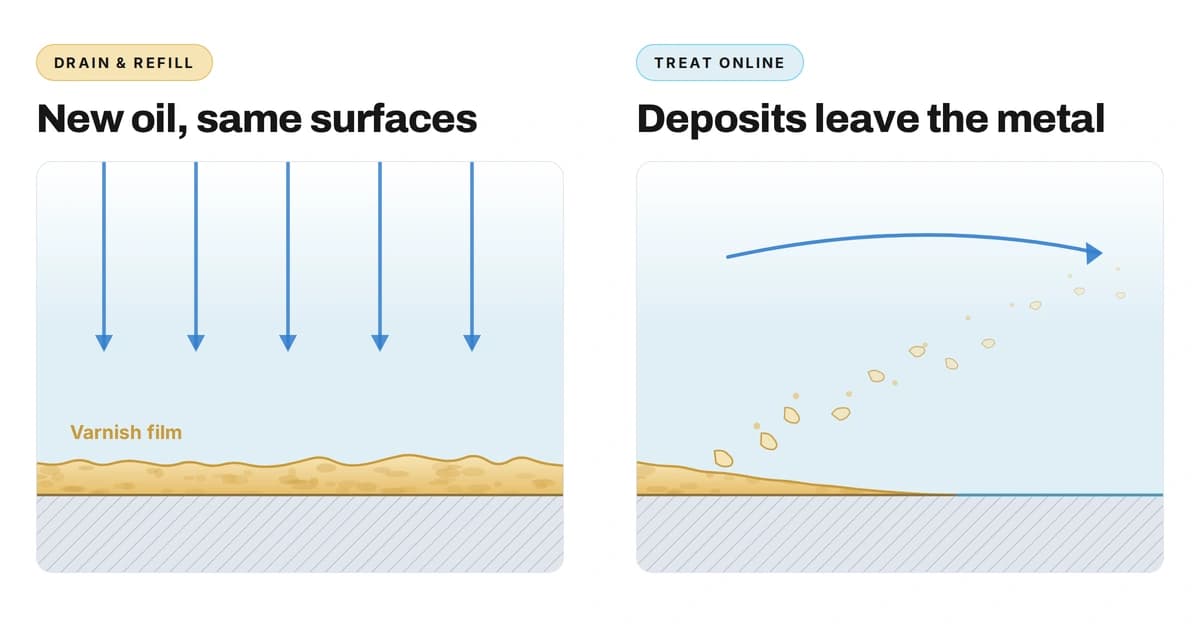
Deposits require their own diagnosis. A sticking valve or a slow press may need a different investigation from an oil-transfer problem. Our guide to hydraulic oil varnish and slow machine response explains that related question.
Compare the cost of the complete job
Use the workshop's own figures. For replacement, include new oil, handling, disposal or recycling, labor, any necessary cleaning and verification. For recovery, include assessment, treatment equipment or service, filter elements, labor, testing and follow-up. Include the available maintenance window and correction of contamination entry in both options.
The recoverable volume matters more than the amount drained. Some oil may remain unsuitable even after particles and water are removed. Base the comparison on the oil that passes the agreed assessment, and measure actual recovered volumes. The construction case supplies a process example, not a saving to apply to another workshop.

Frequently asked questions
It can be a candidate for recovery when the contamination can be removed and the lubricant remains suitable for the machine. Check oil identity, viscosity, degradation indicators, service history and contamination before selecting treatment. Agree acceptance criteria and verify the result with appropriate follow-up.
Particle filtration and water removal do not replenish depleted additives. A cleaner sample does not prove that the lubricant's chemistry has been restored. Oil replacement may still be needed when the oil no longer meets the machine's requirements.
No. A micron rating describes the filter, not the measured condition of the oil leaving it. Verify particle contamination and water with the agreed tests and compare the results with the requirements for that machine and lubricant.
Record the oil product and grade, source machine, service history, recovered volume and available analysis. Keep each container identifiable so the team can connect a test result and reuse decision to the correct oil. Confirm the handling and refill process before choosing equipment.
Savings depend on the amount of suitable oil recovered and the actual costs of replacement, handling, treatment, testing and disposal. Filtertechnik's construction-machinery case reports reduced new-oil purchases and disposal qualitatively, but supplies no measured saving or payback period.