Foam appears in the turbine oil reservoir, and the first suggestion is to change the oil or add an antifoam product. Before committing to either, establish when the foam appears and whether the system is introducing more air than it used to. The oil's condition matters, but so does the arrangement circulating it.
Begin with the event history, a review of possible air entry and tests suited to the symptom. Changing the oil may be justified if its performance has deteriorated. It is a weak first response when nobody has established what changed or what the replacement charge is expected to correct.
The cost is more than the new oil. An unnecessary change consumes a maintenance opportunity while a continuing system problem can leave the team investigating the same symptom again.
Describe what the operator is seeing
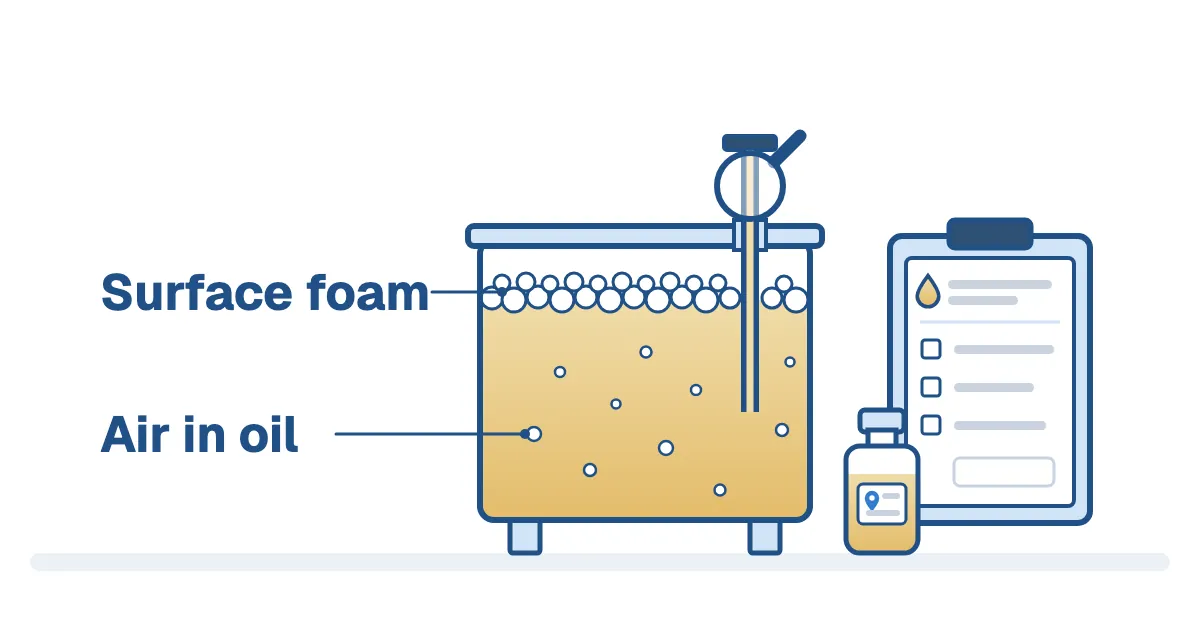
Surface foam and air carried within the oil are related observations, but they are not interchangeable. Record whether the concern is a foam layer, bubbles visible in circulating oil, an unstable level indication or a change that appears only during a particular operating stage.
Mobil's turbine-oil guidance identifies excessive air introduction, contamination and oxidation as possible contributors to foaming. Its discussion of varnish also distinguishes the consequences of entrained air from surface foaming. Neither observation, on its own, diagnoses the oil or a specific component.
Ask operators when it first appeared and whether it persists after conditions settle. Keep photographs with the operating state, oil temperature and recent maintenance history. A description such as foams during startup is a more useful starting point than bad oil, because it gives the investigation something repeatable to examine.
Reconstruct the change before changing the charge
Suppose the reservoir looked normal until work on the oil circulation system. The maintenance record should now sit beside the symptom history. Have the responsible engineering team examine the relevant changes and the system's intended operating conditions before selecting a fluid treatment.
Likewise, if the symptom followed a top-up, identify the product and quantity added and retain its batch details. That timing is a reason to investigate lubricant identity and compatibility. It is not proof that the delivered oil caused the foam.
Use the equipment and lubricant suppliers' guidance to define the inspection. Ask them which possible air-entry or circulation issues apply to this installation and what would confirm each one. Avoid collecting a list of plausible causes without assigning the next check that could distinguish them.
Ask the laboratory a performance question
Give the laboratory the symptom, rather than simply requesting the usual oil panel. Ask whether foam tendency and stability, air release and contamination checks are appropriate for this oil and system. Confirm how samples should be collected and handled for those methods.
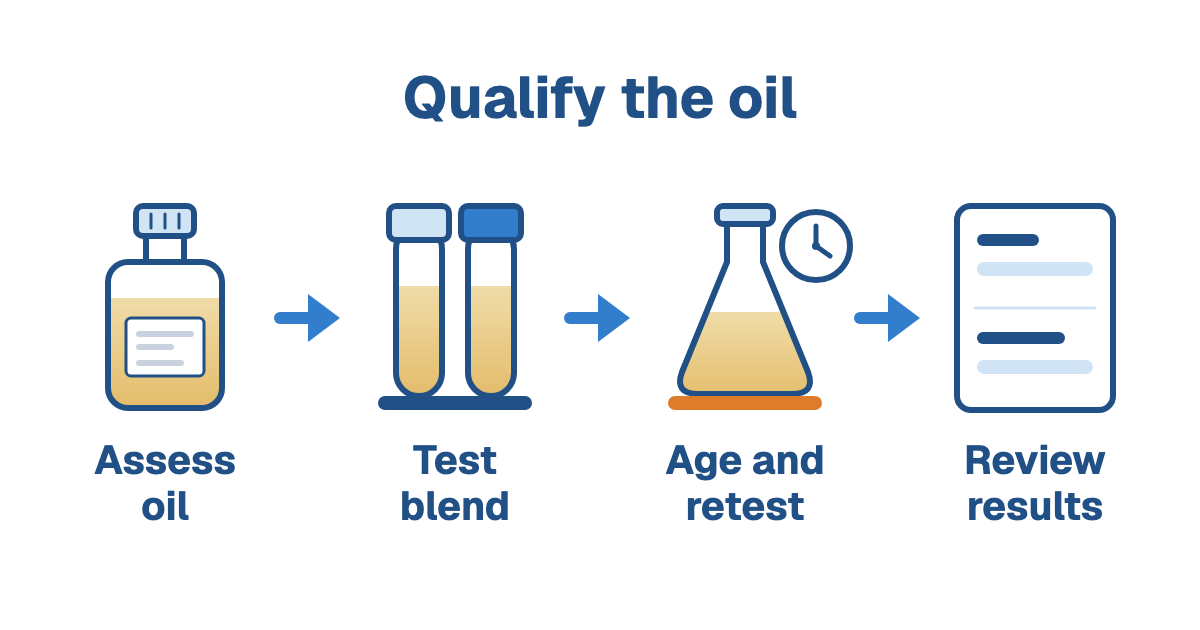
Fluitec's published work on turbine-oil qualification treats foam and air release as separate performance checks. That is a useful distinction for purchasing analysis. A report needs to identify which property was tested; a satisfactory routine panel does not imply that every relevant performance test was included.
Compare results with the applicable equipment and lubricant guidance and with the oil's history. The turbine oil report guide explains why the scope of a test matters. Do not import another oil's acceptance value merely because its viscosity grade matches yours.
What a documented treatment account actually supports
Fluitec describes an anonymous ammonia plant in Spain with fluctuating bearing temperatures and varnish-potential results. Its account reports using ESP treatment and Boost VR+, followed by steadier bearing temperatures and improved foaming and air-release performance.
The foam and air-release improvements are qualitative. The source supplies no numerical before-and-after values for those properties and does not isolate the contribution of each treatment. It therefore supports assessing the oil's wider condition, rather than prescribing the same intervention whenever foam is visible.
If your own evidence identifies a deposit or degradation concern, connect it to the relevant treatment assessment. If the findings instead point to an operating or mechanical issue, include correction of that issue in the work scope. The photograph of a foam layer cannot make that choice.
Resist an additive decision without a qualification plan
Adding a chemical is a change to the lubricant formulation. Have the lubricant supplier define whether that change is appropriate and how the proposed blend will be checked. Fluitec's replenishment work specifically notes the care needed with additives beyond antioxidants because overtreatment is a concern.
Ask for the evidence supporting the recommendation, the compatibility assessment and the verification plan. This article is not a dosing instruction. A commercial proposal should explain which measured deficiency it addresses and what outcome the supplier expects to demonstrate.
The antioxidant qualification article follows the same principle for a different intervention. Assessment of the actual oil comes before a treatment commitment.
Give the next action a way to be verified
Before the work, agree what will be compared afterwards: the observed foam under a recorded operating state, the relevant test results and any associated machine symptoms. Retain the operating context so a changed condition is not mistaken for a treatment result.
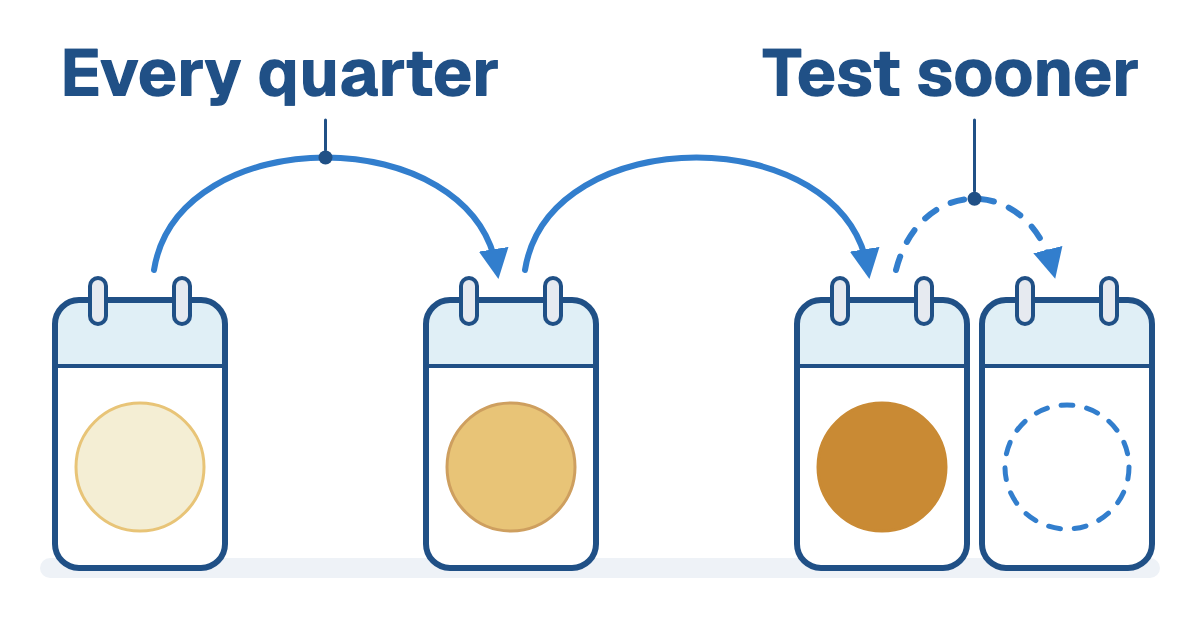
One better sample is a snapshot. Follow the oil and machine trend through representative operation before closing a recurring concern. Start by bringing the symptom history and the latest reports together; that makes the next discussion about a specific problem the team can investigate.

Frequently asked questions
No. Investigate system air entry, operating changes, contamination and relevant oil performance. Replacement should address an established condition problem, with an agreed way to verify the result.
No. Ask which property the laboratory method evaluates. Surface-foam observations and the ability of oil to release entrained air should not be treated as interchangeable evidence.
Have the lubricant supplier assess the actual oil and qualify any proposed formulation change. Do not select a dose or product from the visible foam alone.
Include the oil identity, top-ups, recent maintenance, operating state, temperature, when the symptom appears and earlier results. Agree collection and handling with the laboratory.