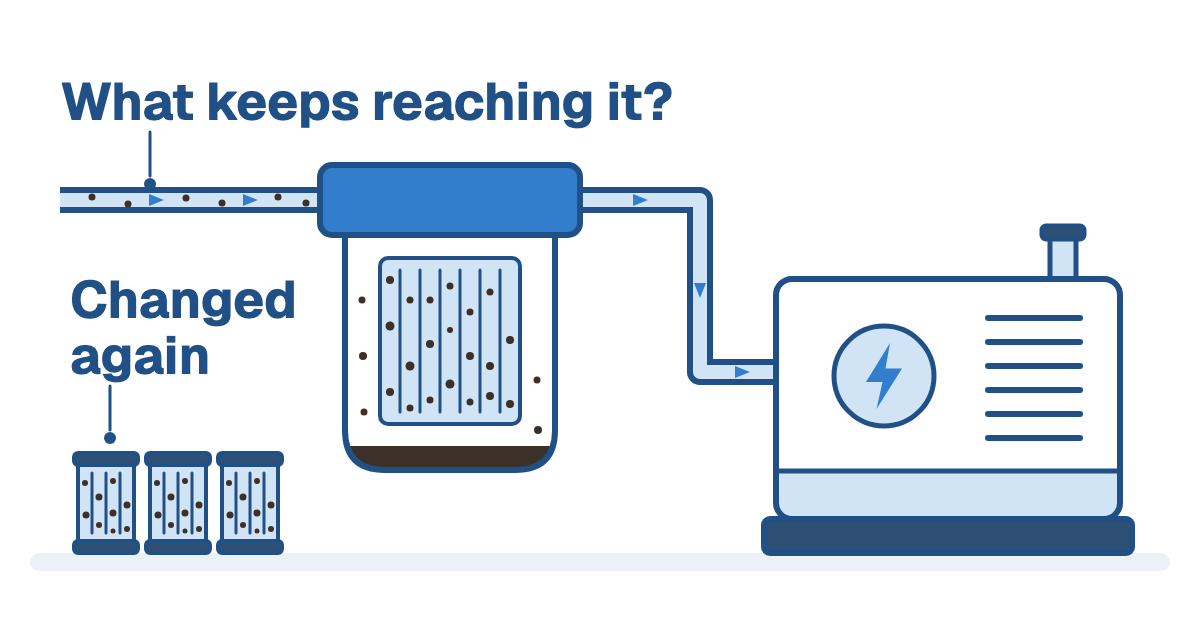

A diesel filter comes out dark and slimy. Someone calls it diesel bug, and the next conversation is about which treatment to buy.
That diagnosis needs evidence. Diesel bug is the common name for microbial contamination in fuel systems. Confirming it requires a suitable microbial test, interpreted alongside the sampling location, water findings and tank history. A filter photograph, a clear fuel sample or a particle-cleanliness result cannot answer that question on its own.
For a facility relying on stored diesel, the useful first step is to define what must be investigated. Otherwise, the maintenance team can finish a treatment job without establishing why the problem appeared or what would show that it has returned.
What diesel bug means inside a tank
Bacteria and fungi can live in water associated with stored diesel and use fuel hydrocarbons as food. Both living organisms and the material left after they die can add to contamination. This explains why microbial activity and physical cleanliness need separate attention.
Water control belongs in the investigation from the start. It should lead to practical questions about the affected tank and its supply route. When was water last found? Where was it found? Did the finding follow a delivery, a maintenance job or a period without inspection?
Record the answers before choosing the treatment. They give the specialist something more useful than a general request to "remove the bug" and help the maintenance team check whether the work addressed the original problem.
Treat appearance as a reason to investigate
Black residue, slime or haze can raise suspicion. They do not identify the cause. Fuel can also look clear while microbial contamination is present. A visual inspection therefore helps describe the problem, but it cannot confirm or exclude diesel bug.
Preserve the distinction in the maintenance record. Write "dark material found on the filter" when that is what was observed. Record "microbial contamination detected" only when a suitable test supports it. A suspected cause should remain a question until the evidence answers it.
That distinction also prevents the investigation from becoming too narrow. If microbial testing does not explain the symptom, the team still needs to investigate the recurring blockage. Our guide to generator fuel-filter blockage covers that wider question.
Make the test request specific
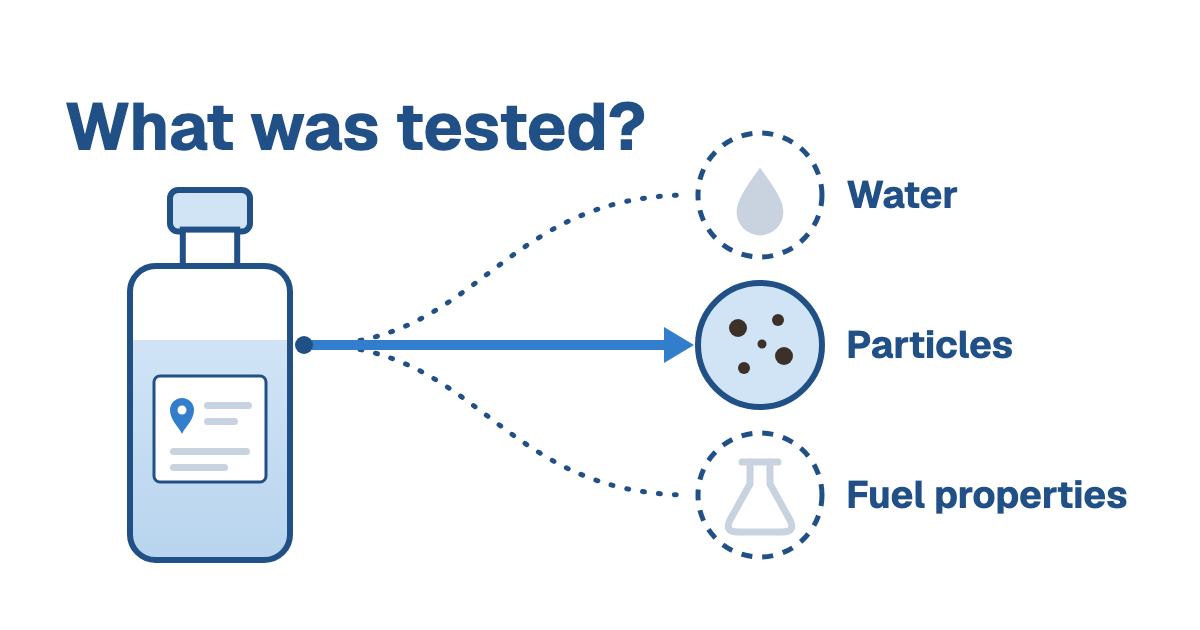
A useful test request names the suspected problem and the maintenance decision it will inform. "Is this fuel good?" gives the laboratory too little context. "We found recurring dark residue on the generator filter and water in the storage tank; please advise the microbial sampling and testing scope" is a better starting point.
Discuss the sampling locations and whether available water or residue should be assessed with the laboratory or test supplier before collecting samples. Follow its instructions for containers, handling and timing. These details depend on the method and the material being tested.
Ask what the result will mean. Which organisms or indicators does the test detect? What does its reported category or number represent? What follow-up would the laboratory recommend if the result does not agree with the observed symptoms?
Keep the results in separate columns rather than collapsing them into one "fuel quality" score:
| Evidence | Question it helps answer | What still needs checking |
|---|---|---|
| Microbial test | Does this sample show the contamination the method detects? | Location, method limits and the wider tank history. |
| Water measurement or inspection | What water condition was found at the sampled point? | How water entered and whether other locations differ. |
| Particle analysis | What solid contamination does the measurement report? | The origin of the material and any microbial finding. |
| Filter and maintenance record | What happened to the equipment, and when? | Whether the proposed cause explains that sequence. |
The diesel fuel testing guide explains how to build a test scope around a maintenance question.
Bring the history into the same review
A result without its sample location can be hard to act on. So can a filter change without the date, operating hours or circumstances that prompted it. Gather the existing records before commissioning more work.
Start with the tank identifier, fuel type, approximate quantity and supply arrangement. Add recent delivery dates, water findings, filter replacements, previous fuel treatments and any change in engine behaviour. Include who collected each sample and what was happening at the tank at the time.
The purpose is to give the reviewer a sequence of events. If the concern began after a delivery, that timing deserves investigation; it does not by itself establish where the contamination originated. If previous work produced a report, include it rather than starting the investigation again from a verbal summary.
For connected tanks, make the boundaries clear. Which tank was sampled? Which tank supplies the affected equipment? Which parts of the system were included in the previous work? These are questions to resolve with the site team, not assumptions to leave inside a quotation.
Match the work to the finding
A treatment scope should say what it will remove, what it will inspect and what evidence will be used to assess the result.
Polishing equipment addresses specified physical contamination in the fuel circulated through it. A microbial problem also calls for a decision about the tank condition and any retained material. Where findings justify a wider cleaning or specialist treatment scope, make that explicit before the work starts.
Keep any chemical treatment under the responsible specialist's control, with fuel and equipment compatibility considered. A chemical name on the work order does not answer how water, residue or filters will be handled afterwards.
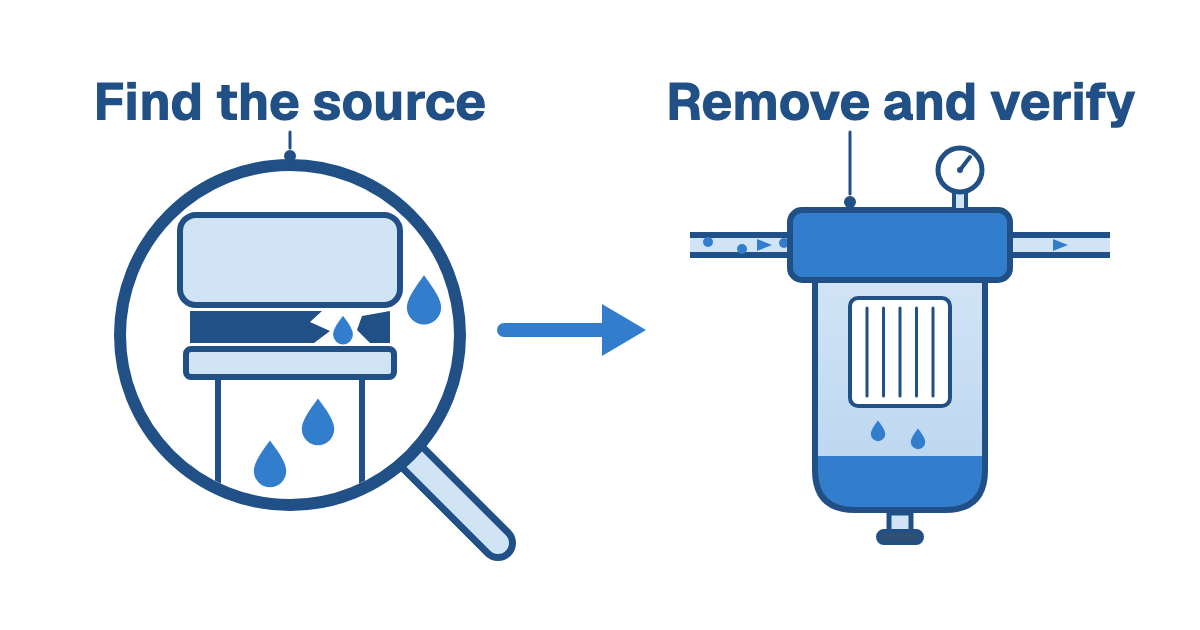
Check the contamination route as well. Damaged or poorly maintained transfer equipment, caps and seals deserve attention when relevant to the findings. The separate guide to water in diesel fuel helps frame that investigation.
What a documented polishing workflow proves
Filtertechnik describes a field workflow in which engineers test stored fuel, use a portable polishing unit, retest and retain the data. The instrument measures particle cleanliness and relative water saturation. The selected treatment equipment removes particles and water.
That is useful evidence for connecting a maintenance action to measurements before and after the work. It also shows why the test names matter. The documented measurements are not a microbial test, and the source reports no microbial result for the customer.
Apply the same discipline to your own scope. If the original concern was diesel bug, ask how microbial follow-up will be included alongside the physical-contamination checks. Do not let a cleaner particle result silently become an answer to a different question.
Our comparison of fuel polishing and tank cleaning explains how to discuss fuel treatment, retained tank residue and replacement as separate decisions.
Agree what closes the job
Before work begins, agree who will review the findings and who can accept the fuel for its intended duty. Ask for the proposed sampling locations, measurements and follow-up plan to appear in the scope.
The completion record should connect the original concern to the work performed and the evidence collected. It should identify the tanks covered, relevant observations, measured changes and anything requiring further action. Keep the laboratory's interpretation with its result.
One sample describes one sampling event. Follow-up needs to establish whether the initial improvement persists and whether the symptoms return. Set that review with the responsible technical team using the tank's history and intended duty, rather than treating the first favourable result as permanent clearance.
For a suspected diesel-bug problem in Egypt, bring NATCOM the available results, filter history and tank details. A diesel fuel polishing assessment can help define which questions the investigation and proposed treatment need to answer.

Frequently asked questions
Appearance can raise suspicion, but it cannot confirm the cause. Clear fuel can contain microbes, while haze or dark filter residue can have other explanations. Request an appropriate microbial test and interpret it with the sampling details and symptoms.
Do not assume that a polishing unit provides a microbial-kill treatment. Define its water and particle-removal duties, then ask the responsible specialist how confirmed microbial contamination and retained tank material will be addressed and checked.
Replacement needs a tank-condition review. Ask what will happen to any water or residue that remains and how the new charge will be protected. The decision to retain or replace fuel should follow the findings and the requirements of the equipment it supplies.
A result applies to the sample and the method used. Review its location, handling and scope alongside the tank history and symptoms. The responsible technical team should set the follow-up evidence needed for the intended duty.