Procurement has asked for a diesel test. The generator contractor wants to know whether the fuel is clean. The facilities manager needs confidence before planned electrical maintenance. Those requests sound similar, but a particle-count report may answer only one part of them.
Diesel fuel testing should begin with the decision the result needs to support. For generator and bulk-tank teams in Egypt, that means agreeing the suspected problem, the sampling locations, the relevant tests and the applicable acceptance criteria before a bottle is collected. A generic test order can produce a valid result that still leaves the important question open.
Choose the question before choosing the test package
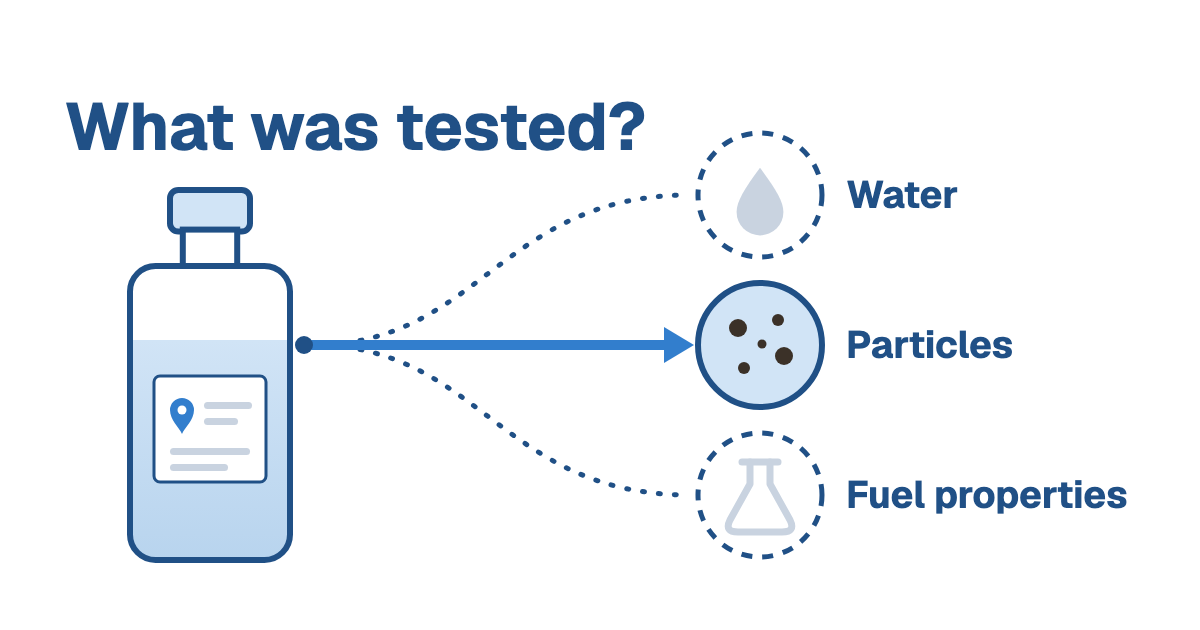
Tell the laboratory what prompted the request. Water at a drain, repeated filter blockage, an unfamiliar delivery and a tank of diesel with little turnover call for different investigations. Include the engine or generator model and the fuel specification where available. Use the following distinctions to discuss the scope with the laboratory:
| Test or property | Question it helps answer |
|---|---|
| Particle count | How many particles are present above defined sizes? ISO 4406 codes summarize those counts. They do not identify the material or establish water content. |
| Water content | How much water is in the submitted sample? Karl Fischer testing, such as ASTM D6304, measures water chemically. Confirm the procedure, sample preparation and reported units. |
| Water and sediment | A centrifuge method such as ASTM D2709 measures separated free water and sediment as a volume percentage. It is a different measurement from a water-only result in parts per million, or ppm. |
| Microbial condition | Is there evidence of microbial contamination in the tested material? Agree the method and whether fuel, associated water or both need examination. A particle count is not this test. |
| Viscosity | Does resistance to flow match the required fuel property at the stated test temperature? ASTM D445 measures this using flow through a calibrated tube. A clean fuel can still need its viscosity checked. |
| Oxidation stability | How does the fuel respond to specified oxidation conditions? Choose a method suitable for its grade and blend. This differs from counting contamination already in the sample. |
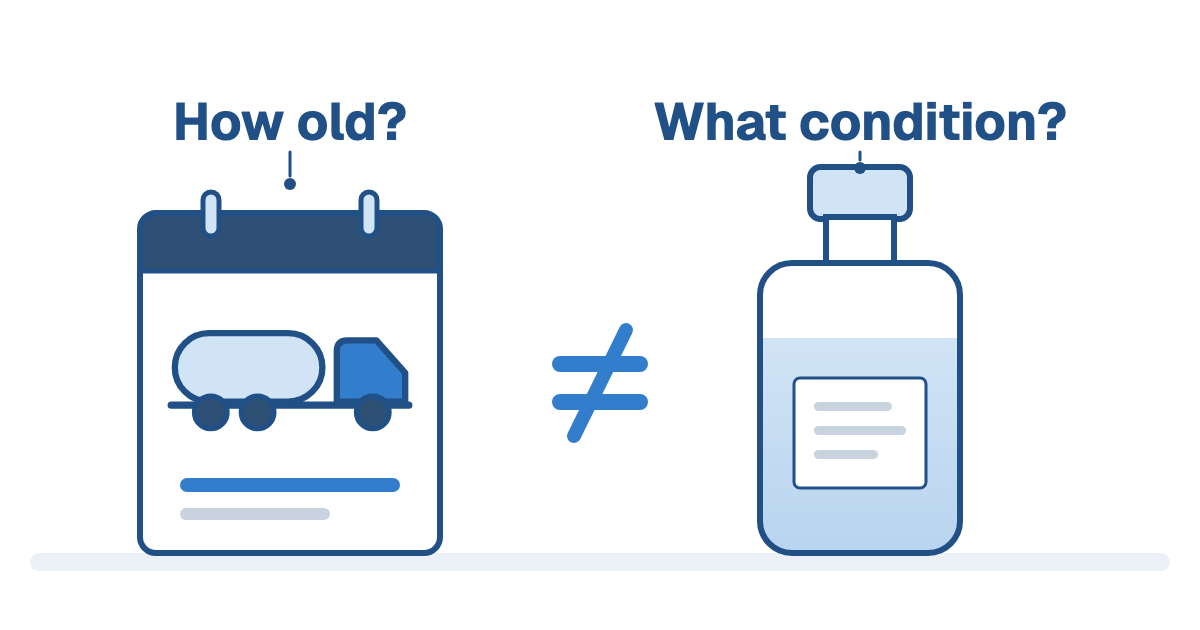
These are separate measurements in published engine-manufacturer test programmes. A report headed "fuel analysis" is useful only when you know which were included. An accelerated stability test exposes fuel to defined test conditions; its result is not a countdown to a tank's expiry date. Method suitability also matters for biodiesel blends. If the concern is a long storage period, the guide to how long diesel can stay in storage explains why the date of delivery alone cannot settle the decision.
What the three ISO 4406 numbers mean
The familiar three-number cleanliness code groups particle counts above calibrated sizes of 4, 6 and 14 micrometres. A micrometre is one thousandth of a millimetre. Each number represents a count range per millilitre, rather than a direct count or a percentage of contamination.
The size counts are cumulative. A particle larger than 14 micrometres also belongs in the counts above 6 and 4 micrometres, so do not add the three bands together. Lower codes indicate fewer particles. A change of one code represents roughly a doubling or halving of the count band; it is not an exact percentage change in a particular sample.
Keep the raw particle counts when they are available. Two measurements can fall inside the same code band even though their counts differ. Check the method and size convention when comparing reports, then compare the result with the equipment's agreed cleanliness requirement. A familiar code taken from another generator's report is not a universal acceptance limit.
Make the sample location part of the question
A bulk tank, a generator day tank and the connecting transfer route are distinct parts of the system. Decide which fuel you need to understand. A sample from the bulk tank does not automatically describe the fuel reaching the engine, particularly when other tanks and transfer equipment lie between them.
Sampling also has physical limits. A spot sample represents one location. Even an all-level sample represents the column from which it was collected, not every pocket of material in the tank. Ask the laboratory or sampling specialist to agree a plan that covers the investigation without assuming one convenient access point answers every question.
Give each sample a clear identity. Record the tank and sample point, date, fuel grade, recent deliveries, approximate storage history and any treatment or circulation under way. Request the laboratory's containers and handling instructions before collection. Labels and history should stay with the report when it passes between the site, generator contractor and procurement team.
Know what a field instrument actually measures
Filtertechnik, a NATCOM technology partner, documents a field workflow that combines portable testing, polishing, retesting and retained records. The described Particle Pal Plus configuration measures particulate cleanliness and relative water saturation, meaning how close the fluid is to its dissolved-water limit at the measured temperature. The document gives no measured customer before-and-after result or complete fuel-quality assessment.
That distinction matters when reviewing a quotation. Ask which sensors and methods the proposed instrument uses. Water concentration in ppm describes the amount of water relative to the fuel. It is a different measurement from relative saturation; do not copy a limit or result from one into the other. A manufacturer offering multiple sensor configurations does not mean the unit arriving on site measures every listed property.
Field data can help identify contamination and track a cleanup. Laboratory testing can address a wider question when the selected methods require it. Choose the scope by the evidence needed, rather than assuming that a fast result or a laboratory letterhead makes a test complete. For a specific water problem, read the guide to water in diesel fuel.
Read the report before relying on the status label
Check that the report describes the correct tank, fuel and sample point. Then find the test method, units and comparison limits. An ISO 4406 code reports particulate cleanliness; it does not certify water content or the fuel's overall suitability. A water result needs the same care over method and units.
Ask where each acceptance limit came from and whether it applies to this fuel and equipment. A limit used in a published case study is not automatically your generator's requirement. If two reports disagree, check sample location, timing, method and recent operating events before concluding that either laboratory is wrong.
The report should leave the reader with a decision and an owner. Does a result require further investigation, treatment planning or a follow-up sample? Who will review the next evidence? A status colour without that context can move between departments while the fuel question remains unresolved.
Consider an illustrative comparison at a factory in Egypt. The first report covers a bottom sample from the bulk tank before cleaning. The second covers fuel at the polishing-unit outlet while it is running. Both reports may be accurate, but they describe different material. Calling them a complete before-and-after assessment skips the condition of the tank and the supply to the generator.
A useful review would identify those differences, agree comparable follow-up locations and check whether the required tests were repeated. If the second report contains only a particle code, the water question remains unmeasured. If the original problem was recurring generator-filter blockage, retain that symptom and the filter findings in the investigation. A cleaner code is evidence of a change in particle condition, not an explanation of every deposit.
Use follow-up results to support the maintenance decision
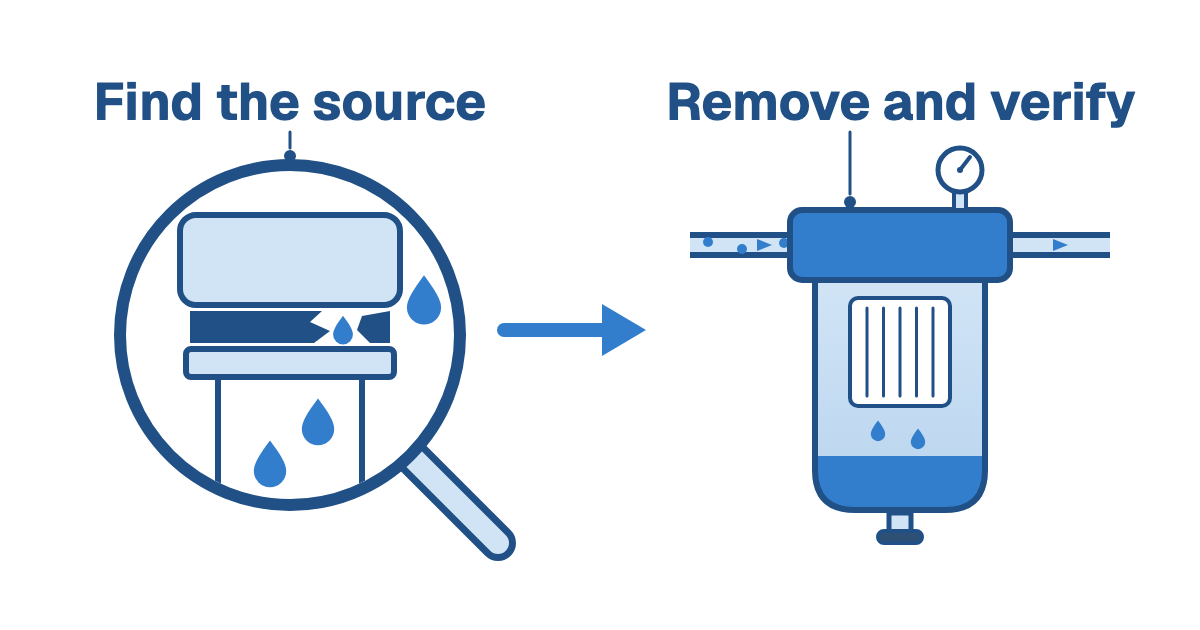
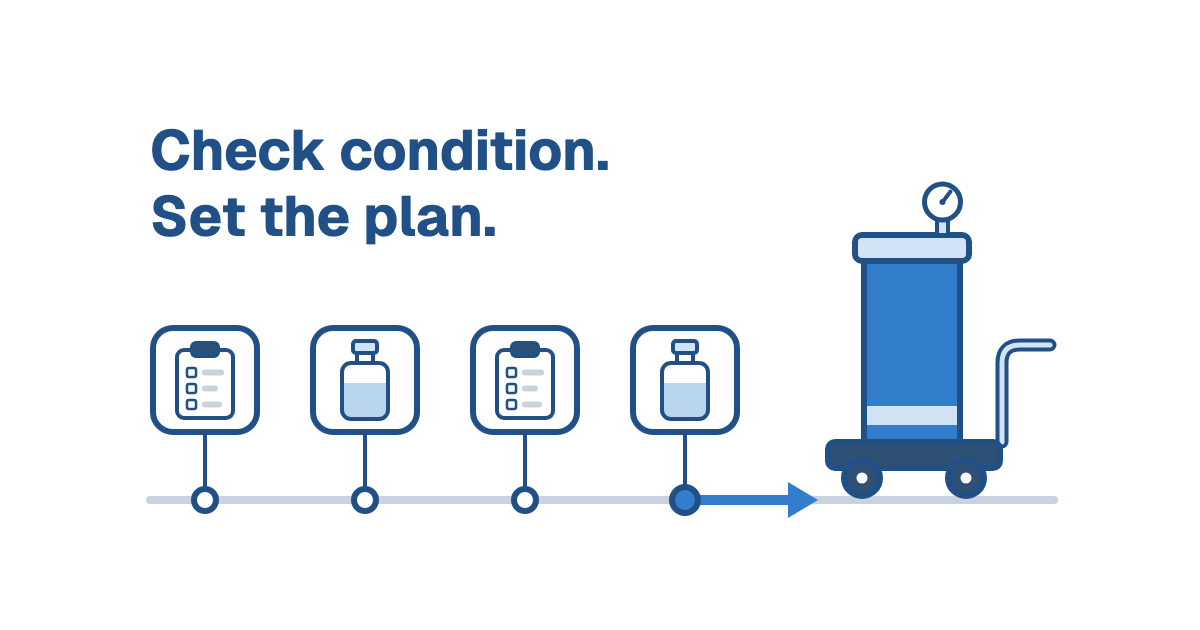
When testing leads to treatment, agree verification before the work begins. Keep the baseline and follow-up samples comparable. A clean reading immediately after a polishing unit describes its outlet at that time; the site also needs evidence about the fuel its equipment will receive.
Use enough comparable observations to assess whether improvement holds. A delivery, transfer or further water entry can change the situation after a sample was collected. One passing result is a snapshot, not permanent clearance. Link the follow-up plan to the conditions discussed in planning fuel polishing frequency.
The findings may point to polishing, tank cleaning or replacement, or to additional investigation before any of those choices. Keep the evidence separate from the equipment proposal until the problem is defined. When equipment selection is justified, the fuel filtration system guide helps connect the measured contamination with the required treatment duty.
For a testing-scope discussion in Egypt, send NATCOM the tank arrangement, generator duty, fuel and delivery history, symptoms and existing reports. Include the question the site needs to answer. The diesel fuel polishing service connects condition assessment with treatment and verification when the findings support it. A useful test request makes that next decision clearer before anyone selects a polishing unit.
Adham Lotfy is NATCOM's Fuel Polishing Sales Engineer and a mechanical engineering graduate of the American University in Cairo. His background includes technical sales at Swagelok North Africa and industrial sales at Air Liquide.
Frequently asked questions
Start with the maintenance question. Water and particle measurements help investigate contamination. Suspected microbial activity, long storage or uncertain fuel identity can require additional tests agreed with the laboratory and fuel supplier. There is no single test panel that answers every tank and engine question.
No. ISO 4406 reports particulate cleanliness. It does not establish water content, microbial condition, storage stability or every required fuel property. Compare the relevant results with the fuel specification and equipment requirements that apply to the intended duty.
Use the measurement method that answers the question. Field instruments can provide useful particle and water-condition information when correctly configured and used. A wider investigation may need laboratory methods. Confirm the measured property, method, units and limitations rather than deciding from the location of the test alone.
A sample represents the material collected at its location and time, subject to the sampling method. It cannot automatically describe a separate day tank, tank-bottom material or fuel after the next delivery. Agree a sampling plan and use adequate comparable follow-up evidence for the maintenance decision.