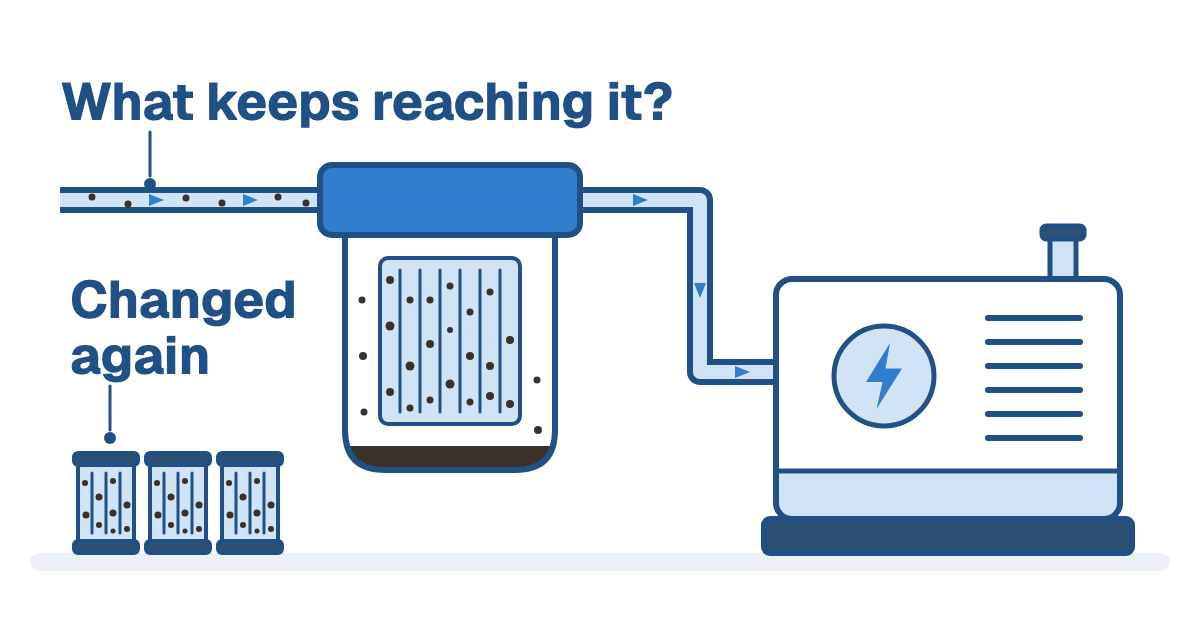
Another filter change. Another interrupted generator run. If generator fuel filter blocking keeps returning, the useful question is what keeps reaching the filter and whether the fuel system has been checked beyond the replacement element.
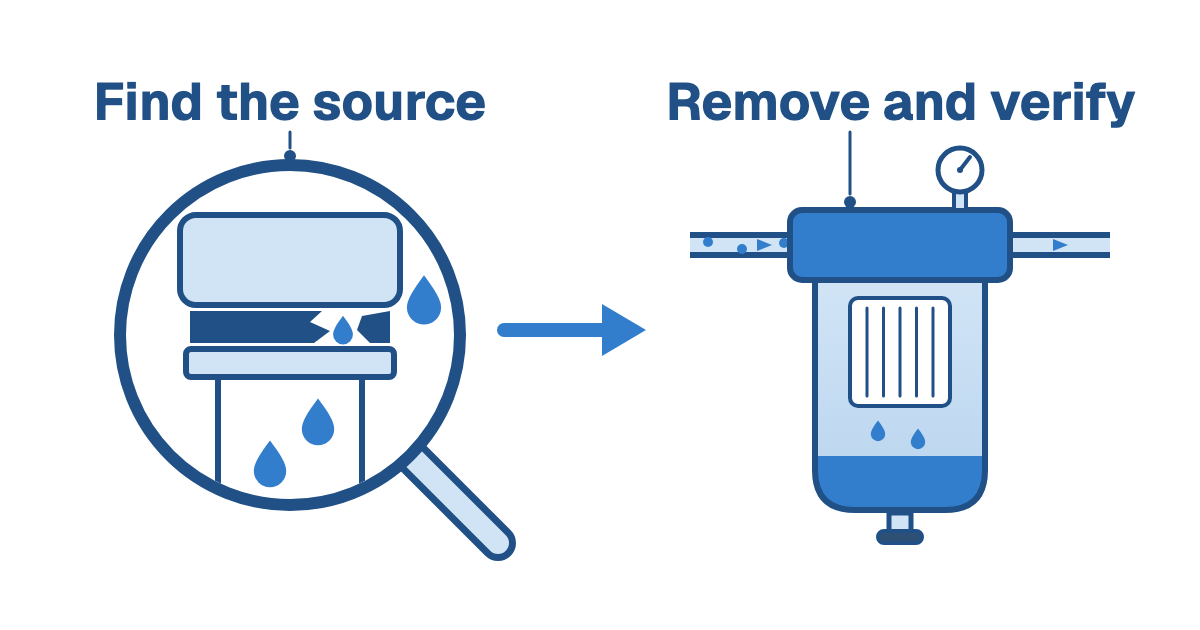
For a facility or maintenance manager in Egypt, start with one investigation that brings the generator service record together with the storage-tank and delivery records. Have the service team confirm the fault, test the suspect fuel and identify the contamination route before choosing treatment. Repeated replacement can consume maintenance time while leaving the source untouched. It is also too little evidence to decide that every litre in the tank must be replaced.
Record what keeps happening
Start with the last few incidents. Record which filter was changed, its part number, the date, generator operating hours and the symptoms that prompted the work. Attach the service findings and any recorded restriction readings. Keep photographs or observations from the removed element with the same record, following the service contractor's handling procedure.
Add recent deliveries, fuel transfers, tank work and changes in operation to that timeline. A recurring problem after the same event is a useful lead. A problem affecting several generators supplied by one tank is another question for the investigation. Neither observation proves the cause by itself.
Compare operating hours between changes as well as calendar dates. A filter changed after months of light standby duty and one changed during extended operation have had different exposure. Record load and fuel temperature where available. Pressure loss across a filter changes with flow and fuel viscosity, so readings taken under different conditions are not a clean comparison of how much material it has retained. Ask the service team to interpret them against the actual filter and engine requirements.
Ask the engine service team to confirm that the reported fault is filter restriction and that the fitted element and maintenance practice meet the manufacturer's requirements. A hard start or loss of power should not automatically become a fuel-polishing order. The resulting record should distinguish what the technician confirmed from what the site suspects.
Identify the material before choosing treatment
Water, microorganisms, hard particles, debris and sediment are different diesel contaminants. Hard particles can damage sensitive fuel-system components, but a blocked element does not establish which material caused the restriction. A dark deposit is worth recording. Its colour alone should not determine a diagnosis or justify adding a treatment chemical.
There are also contaminants formed within the stored fuel. As diesel oxidises, meaning it reacts with oxygen, it can form insoluble gum particles. Those particles can gather into larger groups that plug a filter. Biological slime can obstruct filtration too, with microbial growth supported by water in the system. These are different mechanisms: evidence of water supports investigating microbial activity, while suspected chemical deterioration calls for a wider fuel-quality review.
Temperature and fuel composition can introduce another explanation. Cooling can cause diesel wax to form solids; improperly blended additives can also contribute insoluble material. Where a fuel contains biodiesel, some blend-related constituents can separate under particular conditions. These are reasons to record the supplied grade, blend, treatment history and temperature, not to assume they explain an Egyptian site's problem. Confirm which mechanisms are plausible for the actual fuel before expanding the investigation.
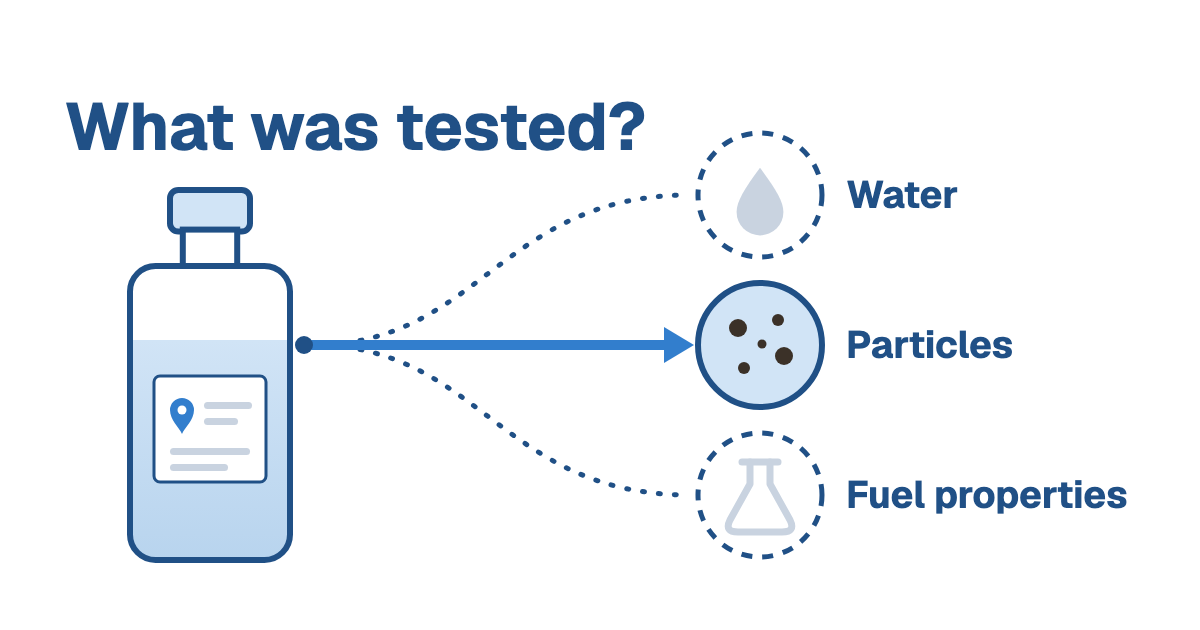
Ask the fuel specialist to build a test scope around the symptom and the system. Particle and water measurements help describe contamination. Suspected microbial activity needs an appropriate assessment too. Fuel testing can help investigate filter plugging, hard starting and low power, including water that can support filter-plugging microbial growth. The results should guide the corrective work.
Keep the used-filter observations linked to the fuel samples. The retained material may help the specialist choose a more specific investigation than a routine particle count. For aged fuel, the guide to diesel storage life explains why removing visible material does not establish that the fuel's remaining properties suit the engine.
Label each sample with its location, date and operating context. A sample from bulk storage and one representing fuel supplied to the generator answer different questions. Agree the sampling plan with the specialist; our guide to diesel fuel testing explains how to define the question before ordering tests. If water is identified, follow the investigation through to its source, as discussed in water in diesel fuel.
Look at what happened around the last delivery
Inspect the route between storage and the generator as part of the investigation. Hoses, piping, pumps, connections and delivery equipment can contribute to fuel contamination. Ask which team checks those items and where the findings are recorded. A fuel purchase record alone does not describe the condition of that route.
A truck trial reported by PT Tsar International provides a useful field observation. During filtration using equipment from NATCOM technology partner Delta-Xero, particle readings rose after rough-road movement. The report attributed that increase to disturbed tank dirt. It also recorded an increase after refuelling. The record does not separate contamination introduced with the refill from material already in the tank.
This was one truck, not a stationary-generator trial. The practical lesson is to preserve the event history. If blockage follows a delivery at your site, compare the available incoming-fuel evidence with tank and transfer findings. Do not assign responsibility from timing alone.
Keep a separate entry for each point where filters serve a different purpose. A bulk-transfer filter, a water separator and the generator's final fuel filter do not describe the same stage of the supply path. Knowing which one loads first helps the team decide where to investigate next. It does not justify removing a filtration stage or changing an element specification to make the symptom disappear.
Match the work to the evidence
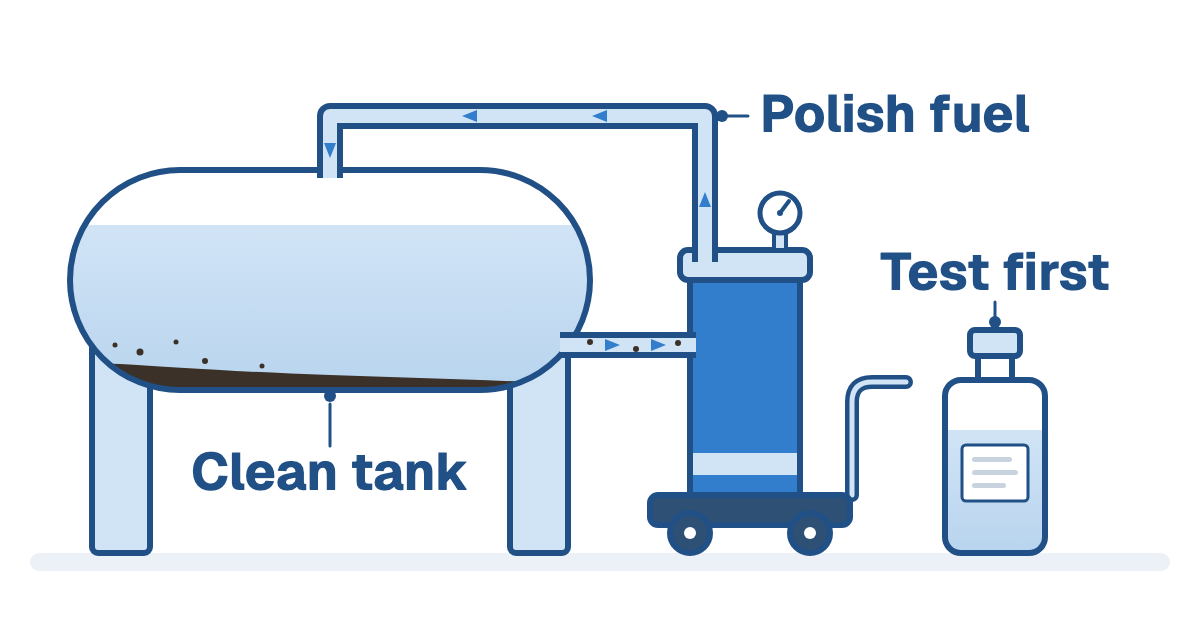
Fuel polishing can address particles and water through selected treatment stages when the fuel is suitable for recovery. The proposal should explain which contamination it will remove and how circulation will reach the affected fuel. Where accumulated tank material remains outside that effective circulation, ask how the contractor will remove it.
Filtertechnik, a NATCOM technology partner, documents a customer workflow that combines field particle and water-condition testing, portable polishing, retesting and retained reporting data. The useful feature is the connection between assessment and corrective work. The source gives no measured reduction in filter replacements and no promised cleanup time, so those outcomes need evidence from the particular job.
Ask for a scope that also covers any confirmed route for continuing contamination. Removing material from the fuel does not repair a damaged seal or worn transfer equipment. If the results raise a question about the fuel's suitability beyond removable contamination, involve the laboratory and fuel supplier before approving recovery or replacement. Our comparison of fuel polishing and tank cleaning explains how these jobs can fit together.
Close the job with evidence of what changed
Ask for a completed investigation that the facility team can use after the contractor leaves. It should contain these linked records:
- A confirmed fault description, naming the affected filter and recording the service findings, operating context and evidence used to distinguish restriction from another engine fault.
- A fuel and deposit assessment, with sample identities, methods, results and an explanation of which possible causes the evidence supports or leaves unresolved.
- A diagram or description of the contamination route, connecting deliveries, bulk storage, transfer equipment, day tanks and the affected generator where those parts are present.
- An action record identifying the treatment or repairs agreed, the responsible team and the evidence needed to check completion and recurrence.
Before treatment starts, agree the acceptance criteria, sample locations and follow-up events with the fuel specialist and engine service team. Keep the same methods and comparable operating context when reviewing results. One passing sample is a snapshot; it cannot show that the recurring problem has stopped.
Retain the treatment report alongside the subsequent filter-service record. Review relevant deliveries and operating periods as well as immediate test results. If the complaint returns, this record gives the next investigation something firmer than another replacement invoice.
A longer interval before the next change is useful evidence only when the duty is comparable. Fewer operating hours or no new delivery may also explain the difference. Combine filter history with fuel results and the action taken, then use that record to refine the fuel inspection and polishing plan.
Send NATCOM your site location in Egypt, tank arrangement, generator details, filter-change history and available fuel reports. The diesel fuel polishing service is the next step for discussing the assessment and treatment scope.
Adham Lotfy is NATCOM's Fuel Polishing Sales Engineer and a mechanical engineering graduate of the American University in Cairo. His background includes technical sales at Swagelok North Africa and industrial sales at Air Liquide.
Frequently asked questions
Repeated blockage needs investigation of the filter, the fuel reaching it and the tank and transfer history. Particles, stored residue and water-related contamination are possible contributors. Have the generator service team confirm the restriction, then use appropriate fuel tests to choose corrective work. The symptom alone does not identify the cause.
No. Colour is an observation to record, not a reliable basis for identifying the deposit or choosing treatment. Preserve the service record and ask the fuel specialist which fuel and deposit tests are appropriate. If microbial contamination is suspected, request testing that specifically addresses that question.
The timing is relevant but does not establish responsibility. Compare available delivery and tank samples, transfer records and the condition of stored residue. A refill can coincide with a change in measured contamination without showing whether the material arrived with the fuel or was already in the system.
Fuel polishing may be appropriate when removable particles or water are contributing and the fuel is suitable for recovery. The scope must also address contaminated tank material and continuing entry routes where present. Follow-up fuel results and filter-service history are needed to assess recurrence; a clean polishing-unit outlet sample is not proof that the whole problem is resolved.