An oil report suddenly flags high particles. The machine behaves as it did last month, but the sampling technician used a different point because the usual one was difficult to reach. Before arranging filtration or an oil change, establish what that bottle actually represents.
Useful industrial oil sampling starts with a defined question, a suitable collection point and a repeatable procedure. The laboratory also needs to know which equipment supplied the oil, how it was operating and what changed since the previous sample.
A more expensive test package cannot correct a bottle collected from the wrong place.
Decide what you need the sample to tell you
A routine condition sample should represent the oil and equipment state you intend to trend. A sample taken to investigate settled debris, check filtered oil or examine a suspected water entry point answers a different question.
Keep those purposes separate. An oil sample drawn after a filter can help assess the fluid leaving it. A sample taken before that filter may retain particles you want to examine for system wear. Neither is automatically the correct point for every investigation.
Write the purpose before choosing the location. For a routine route, that might be to track contamination and lubricant condition in a hydraulic system. For a fault investigation, it might be to compare two parts of the circuit. Tell the analyst which question each bottle should answer.
Confirm the test scope with the oil-analysis service before collection. Different tests can need particular containers, sample quantities or handling. Prepare the right kit before the technician reaches the machine.
Choose a point that can be used consistently
For a circulating system, a common starting point is an active oil line after the components of interest and before filtration. The actual choice depends on the circuit and the purpose. A convenient drain is not automatically a representative sampling point.
Where reservoir sampling is appropriate, use a defined location and depth away from the bottom and walls. Otherwise, the collection can include settled material that is not representative of the oil circulating through the machine. Record the method so the next technician can repeat it.
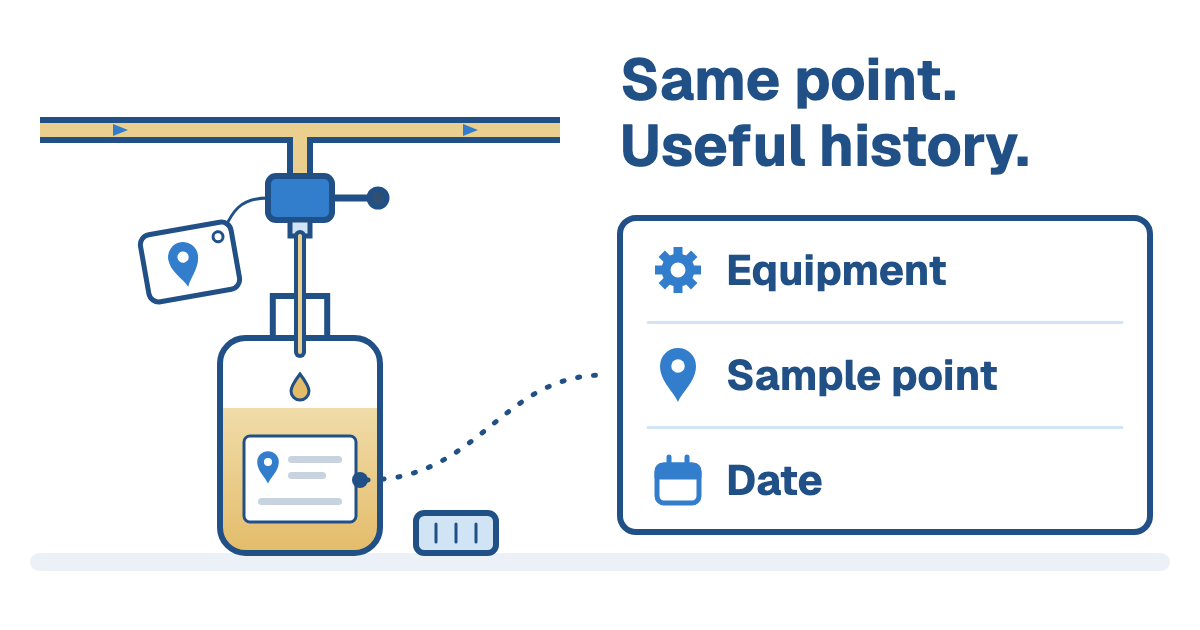
Give each routine point a visible identity. The procedure should identify the point, suitable sampling equipment and machine condition. "Take a sample from gearbox 4" leaves too much to interpretation if that gearbox has several accessible openings.
Use an approved sampling point and equipment rated for the system. Follow the site's safe method for hot oil, pressure and moving machinery. Do not loosen a pressurized fitting to obtain a sample. If access is unsuitable, plan a proper collection point with the maintenance team.
Keep the operating conditions comparable
Oil circulating under its normal operating conditions provides a different sampling opportunity from oil left standing after shutdown. For routine trends, keep the operating state consistent and record it. Where running sampling is unsuitable, use the approved shutdown procedure and record the timing.
Changes in oil, filters and top-up quantities also affect interpretation. Fresh makeup oil can dilute contaminants and wear material in the sample. A result taken immediately after maintenance may therefore look different from the preceding in-service result for reasons the laboratory cannot see unless you explain them.
Collect the planned condition sample before those interventions where the procedure allows it. Never delay necessary maintenance or safe operation to preserve a sampling schedule. If the work has already happened, record it and tell the analyst what the sample now represents.
Keep a treated-oil verification sample identified as such. Do not silently substitute it for the normal route sample and leave the analyst to interpret an unexplained improvement.
Prepare the bottle and collection equipment
Use the bottle specified by the laboratory for the intended tests. It must be compatible with the fluid and clean enough for the measurement. A reused drink bottle or workshop container is unsuitable for deciding whether an industrial oil system meets a cleanliness requirement.
Keep the cap on until collection and protect the opening from surrounding dust and debris. Do not rinse a laboratory-supplied bottle unless the laboratory's procedure calls for it. A bottle prepared for particle counting should arrive at the sample point in the condition the laboratory intended.
Prepare clean sampling equipment and new disposable tubing where the method uses it. Clean the outside of the sample point as the procedure requires. Purge stagnant oil from the valve and sampling line into a separate waste container before collecting the actual sample. Use the specified flushing procedure for that arrangement, rather than guessing a universal quantity.
With reservoir extraction, control the tube depth and keep it clear of settled deposits. Follow the sampling device's instructions so oil does not contaminate the pump or the next sample.
Fill to the laboratory's recommended level, leaving the required space for sample mixing. Cap the bottle promptly. Never collect a routine sample from a drain pan that contains oil and debris from earlier work.
Put the machine history on the sample record
A laboratory can measure the oil in an anonymous bottle. It cannot reliably connect that result to your maintenance history without the right identification.
Record the equipment and component identity, exact sample point, date and time, lubricant name and grade, and oil service hours where available. Add the machine's operating state and any relevant top-up, oil change, filter change, repair or treatment since the previous sample.
Describe the symptom that prompted the sample. A rising bearing temperature, repeated valve sticking or an unexpected filter blockage gives the analyst a different question from a routine scheduled check. Do not replace that description with "urgent" and expect the laboratory to infer the problem.
Label the bottle at collection. When several similar reservoirs are on the same route, filling the labels from memory later creates an avoidable identification risk. Make the laboratory paperwork or electronic submission agree with the bottle.
Seal and package the sample according to the laboratory's instructions and send it promptly. Keep the collection date distinct from the date you receive the report.
Use a series of observations to judge the result
One sample records one condition. A series can show how that condition changes, provided the samples and their context support comparison.
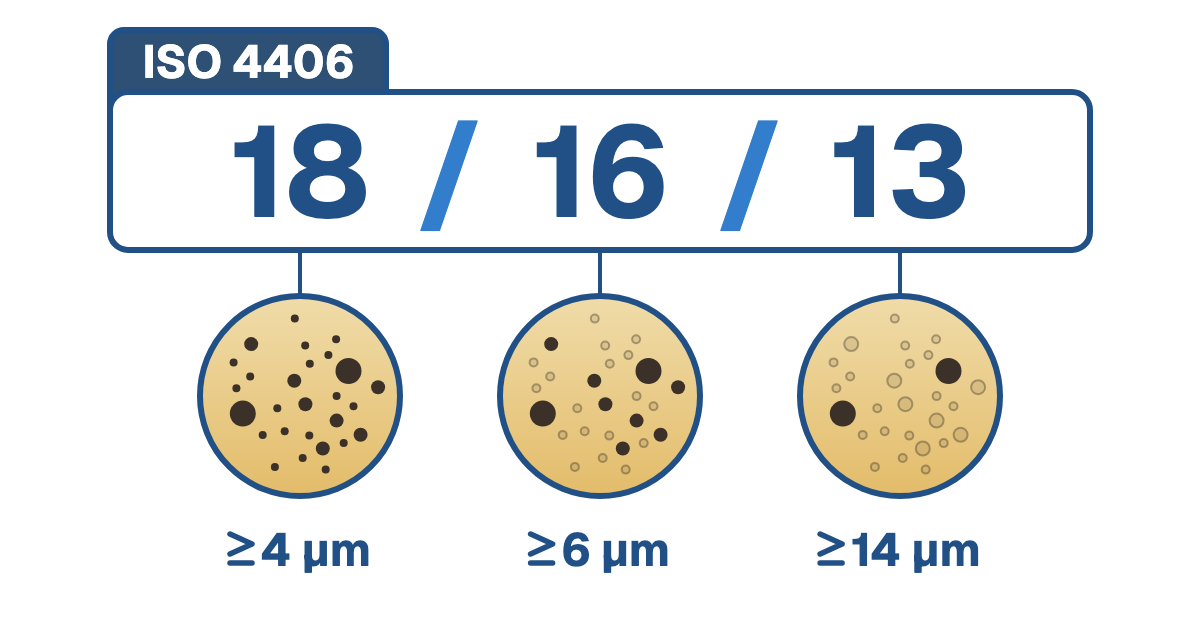
In a documented marine camshaft-oil case, Hexagon Europe reported three samples during the use of a Delta-Xero filtration unit. Particles above 4 µm fell from 2,994 to 1,210 and then 246 per millilitre across 528 lubricant operating hours.
The marine camshaft-oil case gives the observations and their limits. The source does not describe the collection procedure, so it cannot establish a sampling method to copy. It does show the value of retaining dated results and oil hours instead of presenting only a final clean reading. These figures belong to that account and are not a general filtration promise.
If your own report changes unexpectedly, review the sample record with the analyst. Check whether location, handling or recent work explains part of the difference, and whether a confirmation sample is appropriate. Assess the machine symptoms at the same time. Sampling uncertainty is not a reason to ignore evidence that equipment needs attention.
Make the procedure useful to the next technician
A workable sampling plan says what to collect, where, under which operating conditions, with which equipment, and how to identify and submit it. It also names who reviews the result and records the action taken.
Agree frequency around the equipment, operating duty, history and consequences of a developing fault. Avoid copying one interval across every asset. For turbine programmes, our guide to scheduling advanced oil tests explains a separate part of that decision.
Bring NATCOM the equipment details, lubricant, present sampling point and recent reports to review your oil-sampling plan. The aim is a sample the analyst can interpret and a result the maintenance team can use.

Frequently asked questions
Sampling oil during normal operation can provide a representative view of circulating fluid, but only through a suitable point and approved safe procedure. Where that is unsuitable, use the agreed shutdown method and record the conditions and timing.
A drain sample can have a specific diagnostic purpose, but it may not represent circulating oil. Do not use oil from a drain pan for routine condition trending. Agree the collection method with the analyst when no suitable sampling point is available.
For an established in-service trend, collect before topping up where practical and safe. Fresh oil changes the mixture being tested. If the sample follows a top-up, record the timing, quantity and lubricant used so the laboratory can interpret it.
Use the laboratory's required quantity and bottle for the requested tests. There is no single volume for every analysis package. Leave the specified headspace and ask before collection if the test scope has changed.
No. Interpret the tests against the equipment's condition, limits and history. A normal result describes the measurements made on that sample; it does not replace the operating assessment or resolve a mechanical symptom by itself.