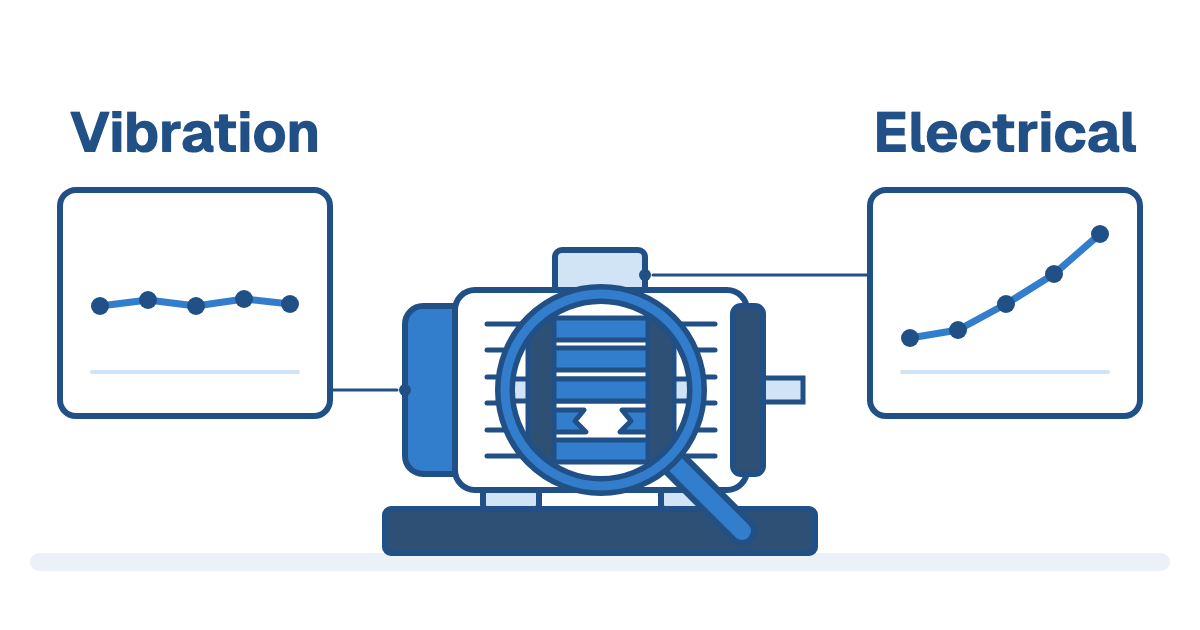
The motor's vibration report looks normal, but an electrical test has produced a warning. Which result should the team believe? Start by asking what each test measured. The reports may be answering different questions.
Normal vibration does not establish that every part of a motor and its supply circuit is healthy. Electrical assessment can investigate power quality, the power circuit, ground insulation, stator windings, the rotor and the rotor-to-stator air gap. A mechanical measurement remains useful within its scope, but it should not cancel an unresolved electrical finding.
The next decision is whether the electrical indication is repeatable, what component it concerns, and which additional measurement or inspection can confirm it. That is more useful than choosing one method as the winner and dismissing the other report.
One motor had conflicting indications and real rotor damage
PdMA's historical paper on online and offline motor analysis describes an anonymous 3,500 hp induction motor. Routine online current analysis raised a rotor concern in June 2003 while vibration testing reported a healthy motor. The customer followed the conflicting evidence rather than treating the vibration report as clearance.
The source documents a growing electrical indication and a later offline Rotor Influence Check. That check examines the change in electrical measurements as the rotor position changes. When the motor was removed in May 2004, shop disassembly found 22 of its 51 rotor bars broken or cracked. The paper attributed the damage to brazed joints from an earlier rotor repair.
This is one vendor-authored historical account. It does not establish how often vibration misses rotor faults, a universal alarm threshold or an accuracy rate for electrical testing. Its value is the sequence of evidence: an initial disagreement, a developing trend, another test and physical confirmation. A normal result in one measurement did not settle a separate concern.
Keep the supply circuit inside the investigation
A motor assessment should identify its electrical boundary. A test taken at the motor terminals and a test taken upstream can include different parts of the supply circuit. Keep the test point with the result so the team knows which conductors and connections it describes.
PdMA's fault-zone method separates the power circuit from the motor's internal components. The power circuit includes cables, connections, contactors and other equipment between the test point and the motor. Its historical method paper describes comparing measurements at successive points to help locate a high-resistance connection.
If the evidence concerns the circuit, a motor repair alone may leave that concern unresolved. Likewise, a test of insulation to ground does not answer every winding question. Define which part of the electrical system each proposed test addresses before interpreting a satisfactory result as a complete assessment.
Combine online and offline evidence when the question requires it
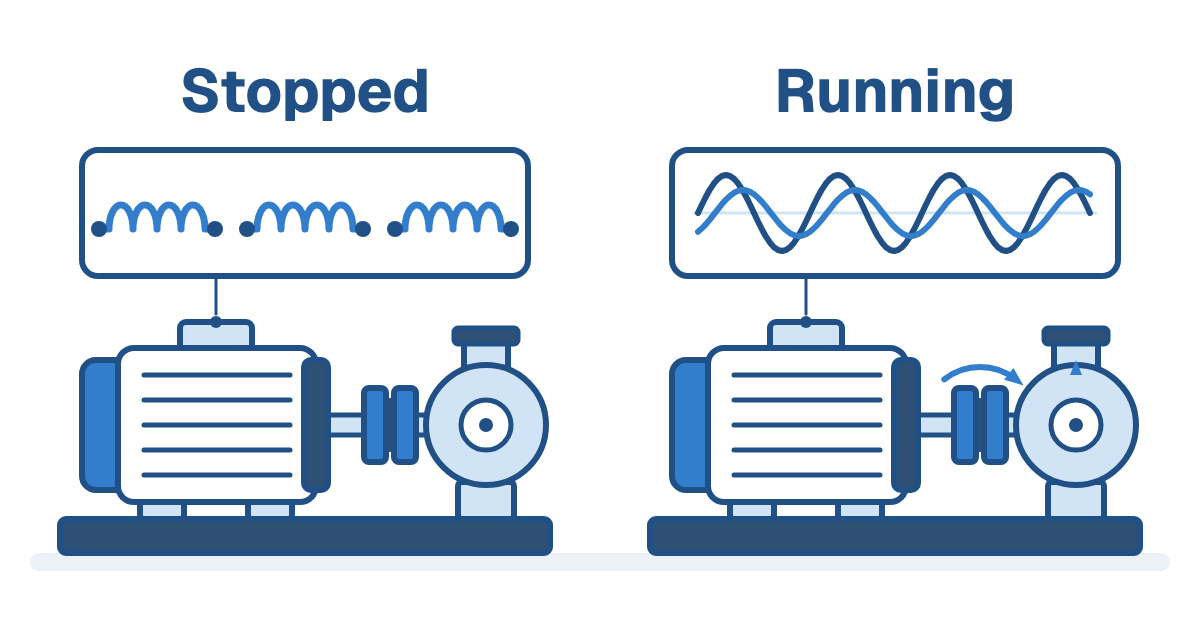
Online measurements examine the energized machine under recorded operating conditions. Offline measurements examine the de-energized motor or circuit and can address different electrical properties. The appropriate combination depends on the suspected mechanism and available access, not on a rule that every machine needs the same test list.
Record speed, load, drive arrangement and the operating changes relevant to an online comparison. For offline comparisons, retain the method, test point and the conditions needed to interpret the result. A trend assembled from different setups can create a misleading appearance of improvement or deterioration.
The online and offline motor-testing guide explains how those modes complement each other. Test selection and energized or de-energized work must follow the site's approved procedures and the current equipment instructions. Historical papers are useful diagnostic evidence, not current field-work instructions.
Treat a warning as a finding to confirm
An electrical indication is not a purchase order for a replacement motor. Review its history and look for supporting evidence. Ask whether the finding concerns the supply, a connection, insulation, winding condition, rotor condition or a separate process change. The answer determines the next check.
In a second, separate account in the same PdMA paper, an induced-draft fan motor assessment found moisture around the cable entrance and an abnormal insulation-test profile. The customer dried the affected cables and components and repeated the test. The reported profile improved. The source gives no longer-term operating follow-up.
That example supports a targeted response to a documented finding. It does not establish that drying is appropriate for every insulation concern or that an improved test clears all electrical and mechanical conditions. Keep the action tied to the evidence it addresses.
Define what would resolve the disagreement
Before the next assessment, collect the vibration and electrical reports together with their dates, test points, methods and operating conditions. Add the nameplate information, drive arrangement, repair history and available trends. Ask the reviewer to state the unresolved finding and the evidence needed to confirm or reject it.
If work proceeds, retain the inspection findings and repeat the relevant measurements afterwards. A lower vibration reading cannot verify a connection repair on its own. A better electrical result cannot close an unresolved pump-bearing finding. The pump diagnosis article follows the same component-by-component logic.
Share those records with NATCOM for a scoped discussion of electrical-signal monitoring and the additional tests the question may need. The objective is a defensible maintenance decision, supported by the relevant trend and confirmation, rather than a declaration that one method can replace every other one.

Frequently asked questions
Yes. In one historical PdMA account, vibration reported a healthy motor while electrical evidence developed; disassembly later found 22 of 51 rotor bars broken or cracked. That single account is not a general miss rate or accuracy claim.
The methods measure different evidence. Choose the combination around the suspected mechanism, machine and operating duty. A normal result in one method should not dismiss an unresolved finding in another.
PdMA's method separates power quality, the power circuit, ground insulation, stator, rotor and air gap. The test plan should identify which relevant areas its measurements address.
It answers an insulation-to-ground question within the test scope. It does not establish that every turn-to-turn, phase-to-phase, rotor or supply-circuit concern is absent.
Send the reports, methods, dates, test points, operating conditions, nameplate and drive details, repair history and available trends. The reviewer can then define the unresolved finding and an appropriate confirmation step.