An online oil sensor promises visibility between laboratory samples. That can be valuable on a critical machine, but it does not answer the purchasing question by itself. What will the sensor measure, and what should the team do when the trend changes?
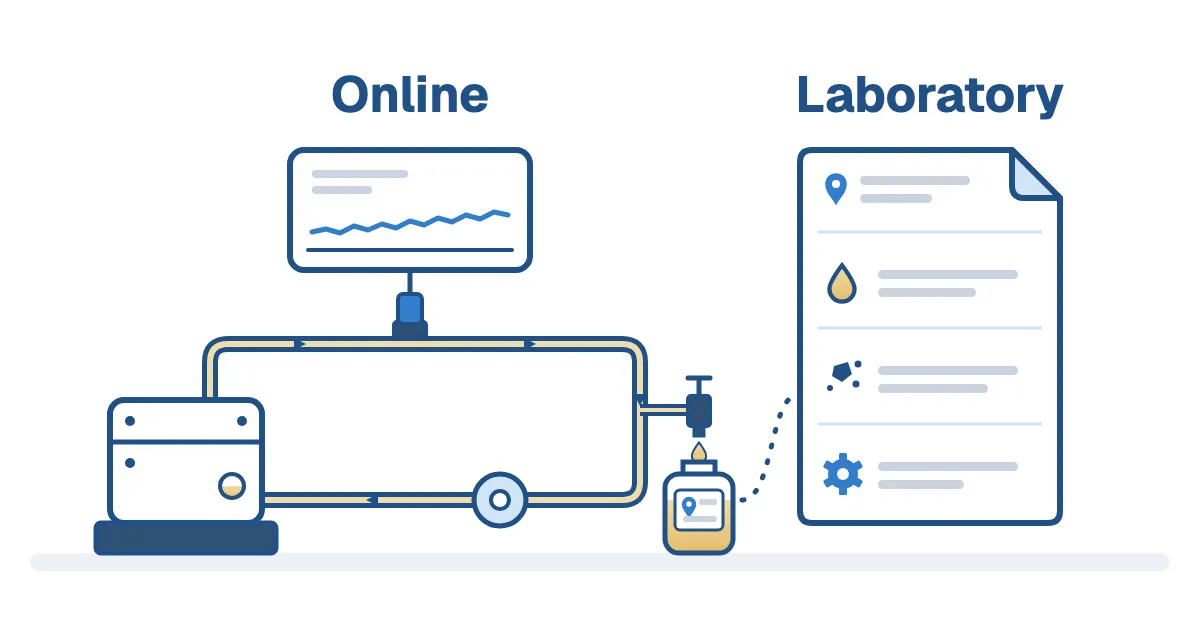
Select online monitoring and laboratory testing around the failure concerns you need to investigate. A continuous condition trend, a particle measurement and an application-specific chemical measurement provide different information. Their usefulness depends on the measurement, the installation and the action someone takes with the result.
The strongest programme gives each method a defined job. That lets you assess the value of continuous information without quietly dropping a laboratory test that still answers an important question.
Start with the decision, then list the measurements
Suppose a critical gearbox has a regular sampling programme, but the team wants to know whether the oil changes between visits. Write down which changes matter and which existing laboratory tests help explain them. Then ask a proposed sensor supplier which of those questions its instrument actually measures.
A useful comparison names the output, units, method and application limits. Oil condition is a category, not a universal measurement. Ask whether a quoted system provides an overall index, water information, particle counts, viscosity, chemical measurements or a combination.
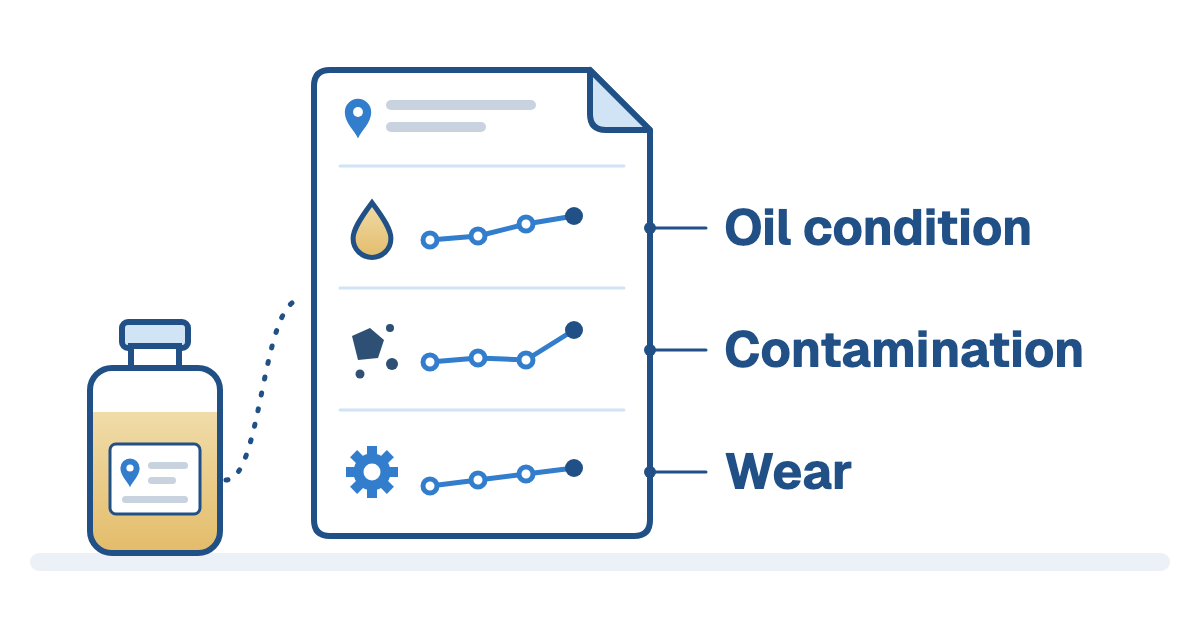
The oil-analysis report guide helps separate oil condition, contamination and wear questions. Use that same separation when assessing online equipment. A display with one status colour does not tell procurement which measurements support it.
Two sensor approaches illustrate why the specification matters
Tan Delta's application note describes an overall oil-condition output, a loss-factor value relative to a baseline and oil temperature. Its user guide says the overall condition information can be combined with cleanliness codes and laboratory results. That supports a programme in which continuous trending and specific tests work together.
Spectrolytic's FluidInspectIR brochure describes a different approach using mid-infrared measurement, with configurations incorporating a viscometer and optional or included particle measurement according to the model. The application table also varies the available parameters by fluid and duty.
These are examples of different measurement scopes. They are not a ranking of suppliers. Ask for the selected model, application calibration and included options, rather than comparing two quotations under the single heading oil sensor. Treat each output as the measurement it is, without converting an overall condition index into a laboratory concentration.
Make the installation representative of the oil you care about
Tan Delta's installation guidance shows the sensing head in moving oil and includes configuration for the selected lubricant. That is a practical reminder to review the proposed location before approving the equipment.
Ask which oil reaches the sensing point during normal operation, startup, standby and any bypass condition relevant to the machine. Keep the supplier's installation and operating requirements with the design. A good data connection cannot make an unsuitable sensing location representative.
For the gearbox example, mark the proposed sensor and laboratory sample points on the same drawing. Explain what each point observes. If they are on different parts of a treatment circuit, the team needs that context when it compares the results.
Commission a baseline that someone can explain later
Retain the oil identity, sensor configuration, operating conditions and available laboratory findings when monitoring begins. Record top-ups, oil changes, filter work and changes to the monitoring setup alongside the trend.
This makes a later change easier to investigate. If the trend moves after a documented top-up, the team can review that event and arrange the relevant checks. Without the record, the same change may be treated as unexplained deterioration or dismissed as a sensor problem.
Ask the supplier how a baseline is established and how changes of oil formulation or sensor configuration should be handled. Agree the approach before commissioning. Do not erase history merely to return a dashboard to its preferred colour.
Design the alarm response before adjusting the sample programme
A useful alarm starts a defined review. Assign who checks the signal and operating history, who decides whether an inspection or sample is needed, and which tests would help explain the particular concern. Keep machine protection and operating decisions within the site's approved arrangements.
For example, an overall-condition change may justify a targeted sample and a review of recent work. The next test should address the suspected mechanism. Repeating a standard panel without checking its scope can leave the original question unanswered.
The laboratory-selection guide explains how to match tests to a contamination concern. Continuous information can help the team decide when to investigate; the investigation still needs methods capable of answering the question.
Change the programme only when the evidence supports it
Keep the existing critical tests until the responsible team has assessed what the combined programme can detect, how its results compare and how reliably the response works. Review any proposed change to sampling intervals against equipment and lubricant requirements and the actual operating history.
A short sensor demonstration cannot establish a failure-detection rate or justify a universal sampling reduction. Ask the supplier to make its proposed role explicit and to identify measurements that remain outside the supplied system.
Begin with one asset and one clear monitoring purpose. Define the measurements, representative installation and follow-up response together. That gives NATCOM and your maintenance team a concrete basis for choosing equipment and deciding how online monitoring should fit the laboratory programme.

Frequently asked questions
Its role depends on what it measures and the application. Review which laboratory questions remain necessary before changing the programme; online oil monitoring is not one universal test method.
Do not treat an overall index as a specific contaminant concentration. Review the instrument's outputs and use suitable confirmation tests for the concern being investigated.
First compare the measured properties, units, sample locations, timing and operating conditions. Different methods may be answering different questions about the oil.
Follow the agreed response plan: review the signal and operating history, investigate relevant changes and arrange inspection or targeted sampling where needed. A dashboard status alone does not define the repair.