A report comes back with a normal status, yet the turbine bearing temperature is rising or the hydraulic valve still sticks. The report may be correct. The question is whether its tests cover the problem you are trying to explain.
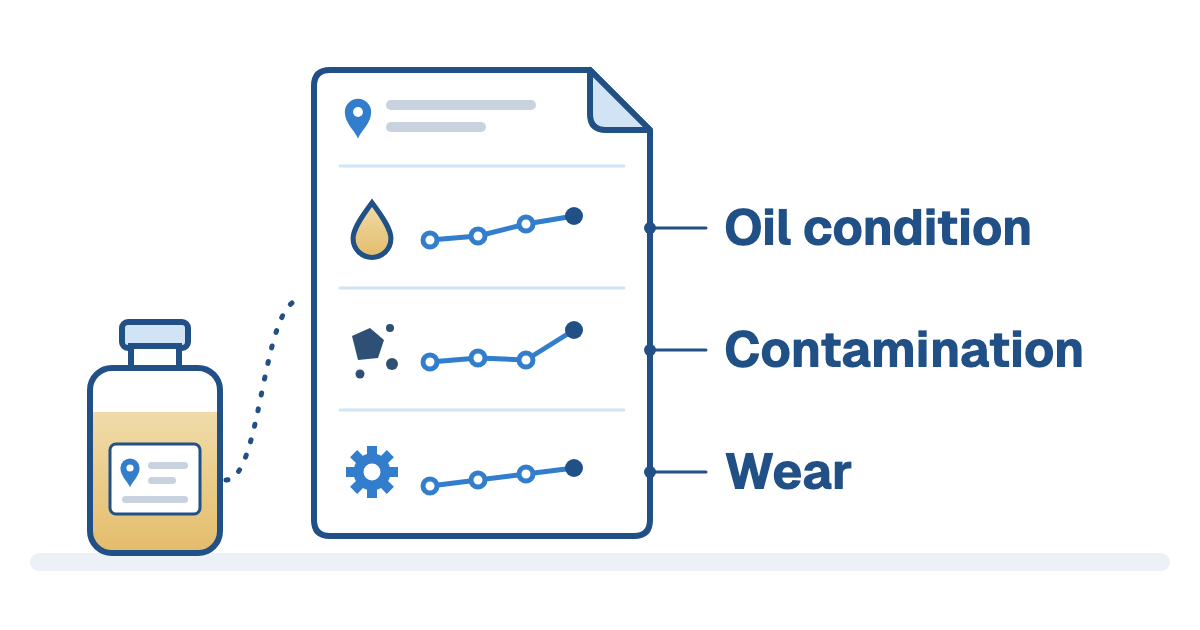
To read an industrial oil-analysis report, check the sample identity first, compare results with a suitable oil reference and previous samples, then separate lubricant condition, contamination and wear evidence. Finish by asking what was not tested. A laboratory status summarizes the selected measurements; it cannot clear every part of the machine.
This approach changes the maintenance discussion. Instead of asking whether the oil is good or bad, ask which result changed, what could explain that change and which evidence would justify the proposed action.
Check the record before the results
Confirm the equipment and component, lubricant product and grade, sample point and collection date. Add oil hours, machine hours and operating conditions where available. If those details are wrong or missing, a comparison can join samples that do not represent the same conditions.
Place top-ups, oil changes, filter changes and maintenance beside the sample dates. A result following fresh-oil addition needs that context. Ask whether collection used the same point and procedure as the previous samples. Spectro Scientific's oil-analysis handbook recommends consistent points and records, and separates primary condition sampling from checks intended to investigate a particular location.
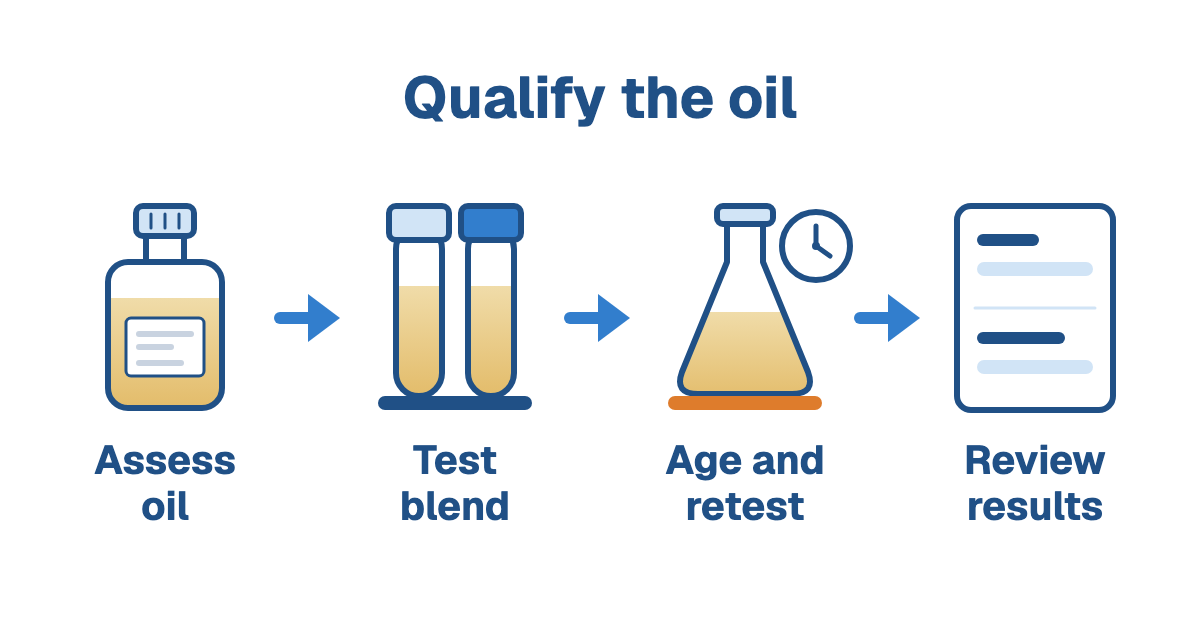
Use the industrial oil sampling guide to prepare the next sample. Better laboratory interpretation starts with a representative sample and a usable history.
Read the report as different kinds of evidence
Lubricant condition concerns whether the fluid has changed in service. Viscosity describes resistance to flow. Keep its measurement temperature and units with the result, and compare it with the correct lubricant reference. Acidity and oxidation-related findings may provide other condition evidence where those methods suit the oil.
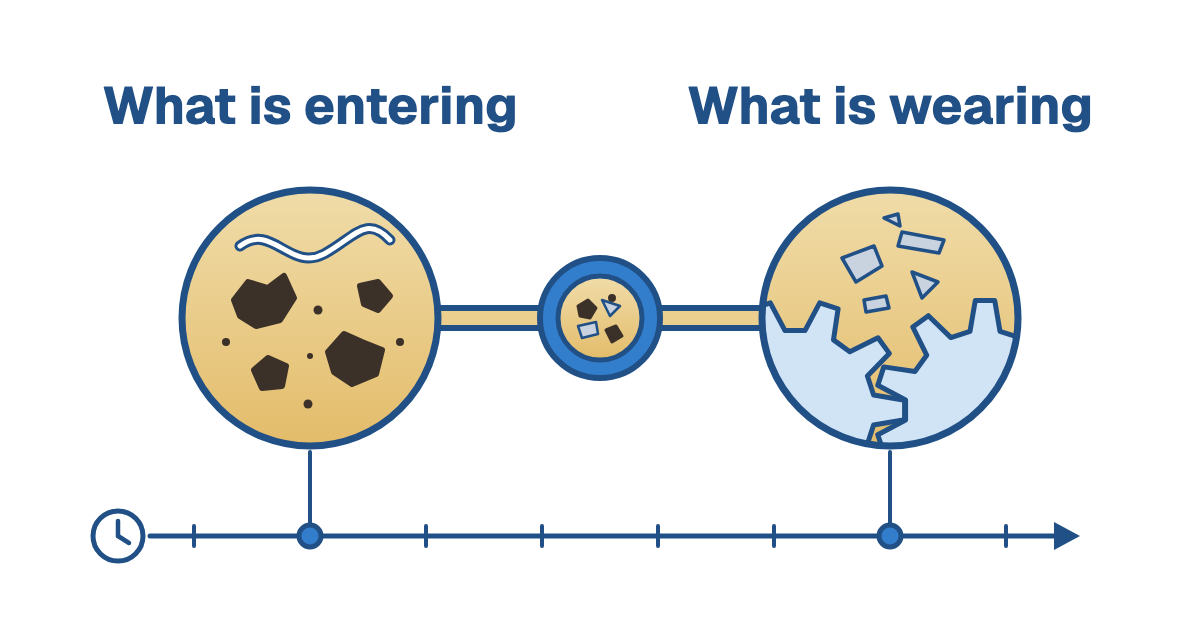
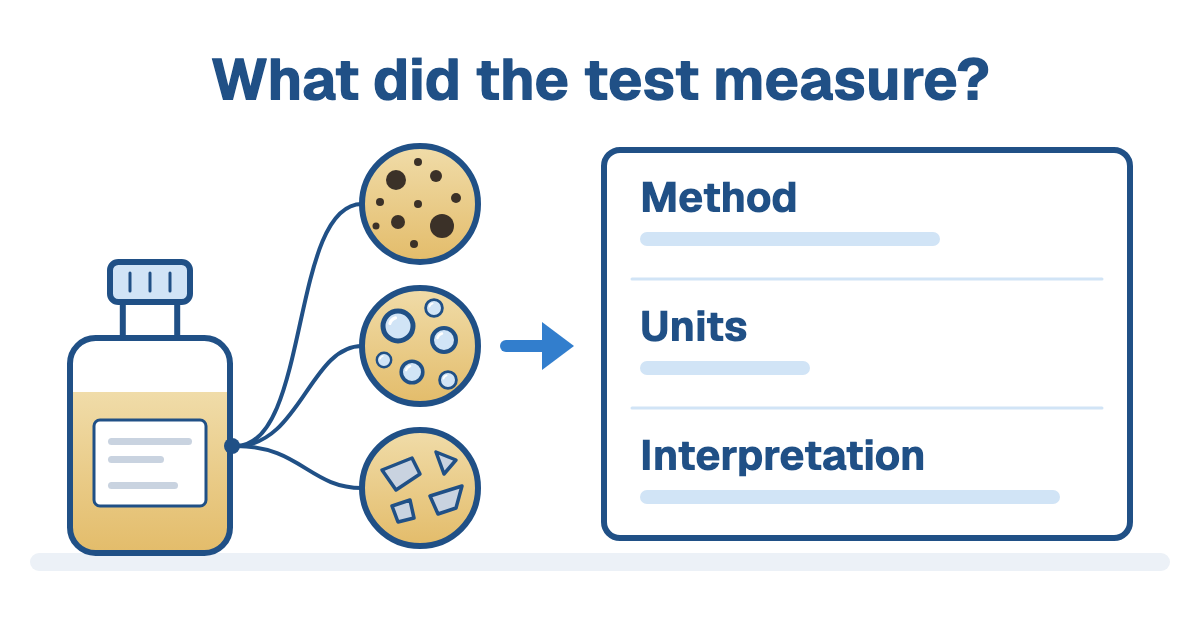
Contamination concerns material entering or accumulating in the oil. Particle counts, water tests and targeted fluid-contamination tests answer different questions. An ISO cleanliness code describes particle-count bands. It does not describe water concentration, oil chemistry or the identity of every counted particle.
Wear evidence concerns material associated with the machine. Elemental analysis, ferrous-debris measurements and particle examination provide different information. The handbook explicitly separates elemental concentration from particle size and shape and large ferrous particles. A normal result from one method does not substitute for the others.
That distinction is the practical lesson from the handbook's test tables. Select the evidence around the machine and its suspected failure mechanism rather than assuming every laboratory panel has the same coverage.
Compare trends before choosing a treatment
Put the current result beside earlier comparable samples and the relevant oil reference. Mobil's interpretation guidance asks readers to examine changes even when the current status is normal. A stable flag and a rapidly changing result raise different investigation questions.
Ask the analyst how the limits were chosen. Equipment requirements, the lubricant, the method and operating context matter. A generic limit copied from another application may be an unsuitable basis for an oil-change instruction.
Check whether related measurements support the interpretation. If particle count changes while the oil-condition measurements remain stable, investigate the contamination evidence and collection conditions. If viscosity changes, review the lubricant identity, additions and other condition findings. These are routes for investigation, not automatic diagnoses.
An example of reading the comments
Consider an illustrative report that says viscosity is stable, the particle-count trend has increased and wear-metal results show little change. No numerical readings or customer result are implied here. The next question is what the extra particles are and whether the sample represents the system.
The particle count establishes a change in counted material. The wear-metal result describes the method's elemental findings. Together they still do not identify every particle or prove which component is responsible. Review the sampling history and ask whether particle examination or another debris method would answer the remaining question.
Replacing all the oil at this point may leave the entry route unresolved. A useful recommendation explains what to investigate, why the proposed treatment fits the evidence and how the team will check the result afterwards.
Ask what the panel leaves unanswered
A routine panel may not include tests chosen to assess varnish potential or active antioxidants. If the complaint concerns sticking turbine controls or suspected deposits, ask whether the selected chemistry tests actually cover it. Our guide to MPC and RULER testing explains why those measurements need their own context.
The same discipline applies to a wear investigation. Request the method and its reporting scope rather than treating a reassuring wear-metal line as proof that large debris is absent. The laboratory should explain which result supports its recommendation and which additional test, inspection or trend would resolve the concern.
Finish with a decision and a verification plan
Record the finding, the supporting evidence, the proposed action and the person responsible for reviewing it. Agree how to collect follow-up evidence under comparable conditions. One improved sample remains a snapshot; adequate trend evidence is needed for an assessment conclusion.
For a scoped oil-analysis review, share the complete reports, lubricant details, collection points, maintenance history and the operating symptom. That gives NATCOM a clearer question to assess than a cropped photograph of the red or green status alone.

Frequently asked questions
A normal status describes the selected measurements and their interpretation. It does not cover untested mechanisms or clear every component. Review the sample history, test scope, trends and operating symptom.
Check equipment identity, lubricant, sample point, date, hours and recent oil additions or maintenance. Then compare results with the correct reference and previous comparable samples.
No. A particle count describes counted particles and their size bands. Elemental analysis describes measured elements within its method scope. Particle examination and other debris methods may answer questions those tests leave open.
Investigate the result in context before choosing treatment. The decision depends on the lubricant, equipment requirements, method, trend, symptom and confirmed cause. A new sample may help resolve sampling or testing concerns, but it is still a snapshot.
Send complete current and previous reports, lubricant details, sample-point and collection information, maintenance history and the equipment symptom. Include any fresh-oil reference and the action under consideration.