The maintenance plan says fuel polishing is due once a year. Then a generator filter blocks several months before the next visit. Bringing the visit forward may address the immediate contamination, but it leaves a harder question. What told the team the fuel was acceptable during the months between services?
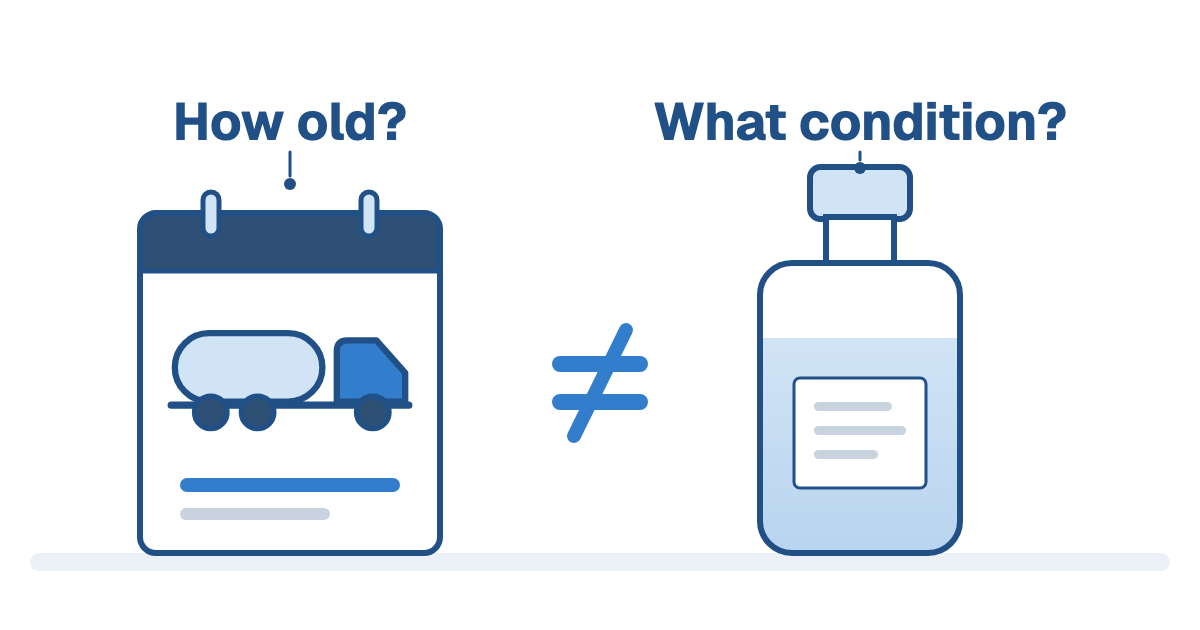
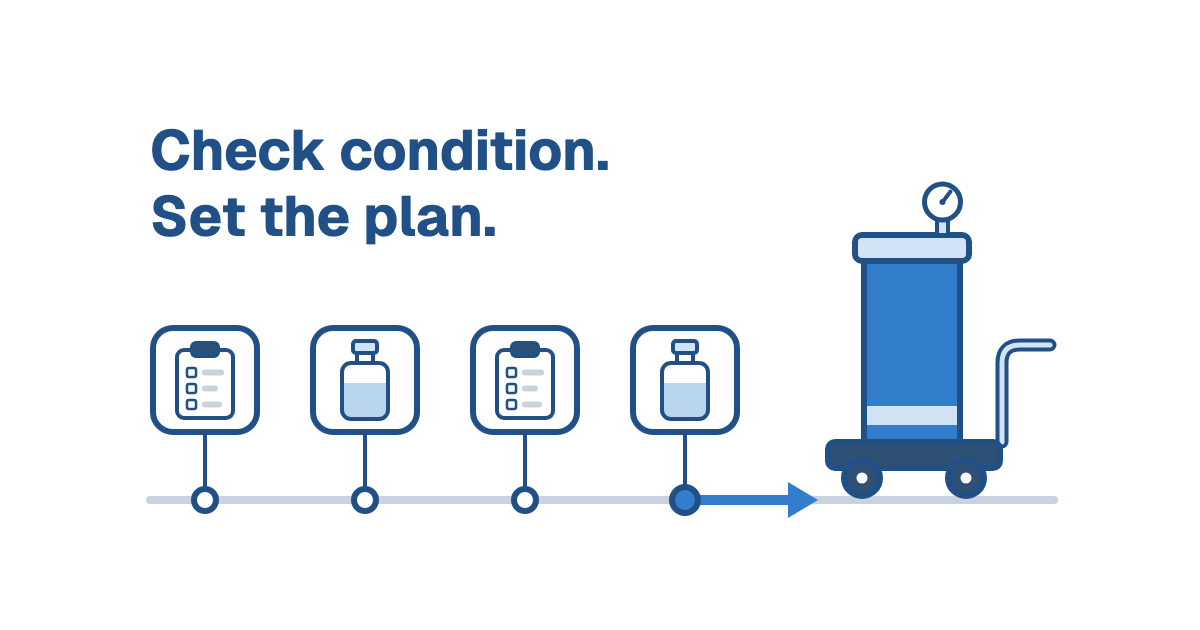
Fuel polishing frequency should follow a documented fuel-condition plan. Separate the schedule for inspections and testing from the decision to treat. Use fuel history, tank condition, equipment requirements and the consequences of losing the supply to set both. A calendar interval cannot establish the condition of every diesel tank in Egypt.
Separate the inspection date from the treatment decision
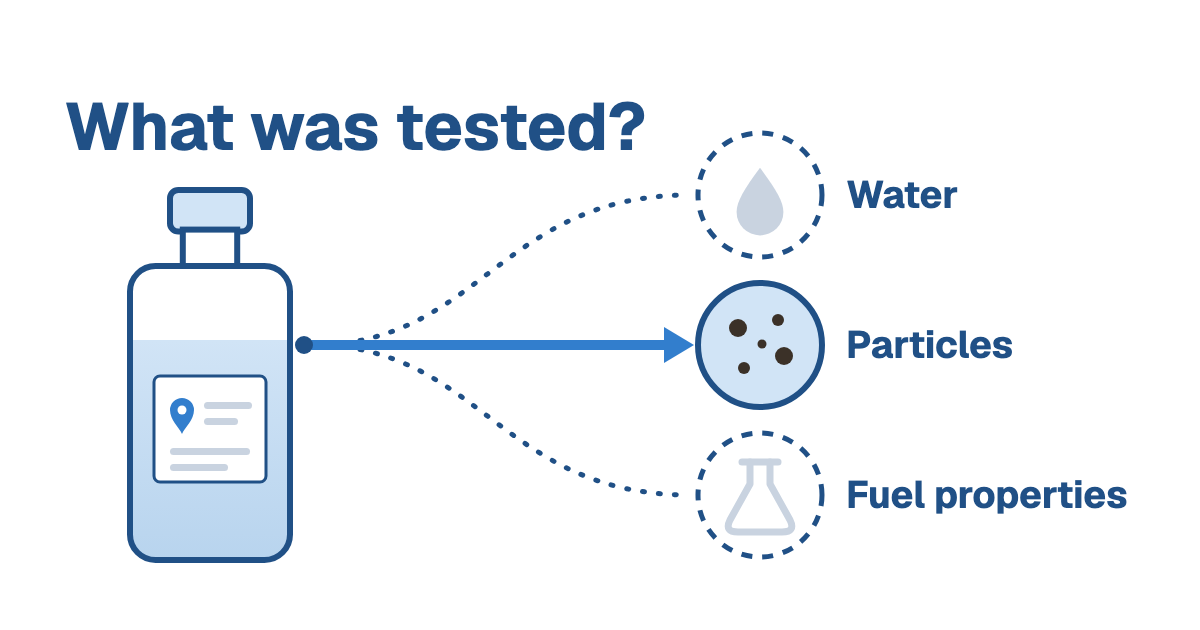
An inspection looks for changes such as water ingress, damaged filling equipment and unusual filter restriction. Testing measures selected properties of the fuel. Polishing removes the contaminants covered by the chosen treatment system. Each has a purpose; booking one does not demonstrate that the others have happened.
Begin with the site's applicable requirements and the engine and fuel suppliers' guidance. Agree a baseline and a routine review schedule, then identify the findings that would trigger treatment or further investigation. A treatment decision should say which result or inspection finding supports it, where the problem lies and how completion will be verified.
Keep three entries in the plan: the next inspection, the next sample and any scheduled operation of a fixed polishing unit. A system may run regularly to control removable contamination while testing checks the fuel it supplies. A portable treatment visit may follow an adverse finding. Neither arrangement removes the need for someone to review results and decide whether the plan still fits.
This also avoids specifying repeated polishing for a problem it cannot correct. A damaged fill-point seal needs attention. Suspected deterioration of fuel chemistry needs the appropriate laboratory review. Accumulated material outside the circulation path may require separate tank work. Running the same unit more often does not resolve every cause of recurring contamination.
Build the plan around the tank's actual duty
A hospital reserve tank, a factory day tank and a construction-site bulk tank should not automatically share a polishing schedule. Describe how each is filled, how much fuel moves through it, how long fuel remains and which equipment depends on it. These are planning inputs, not reasons to assign an unverified fixed interval to an entire industry.
For Egyptian facilities, record the conditions at the installation: outdoor exposure, access to low points, transfer arrangements, water history and previous test results. Where standby power is essential, involve the facility team in deciding how quickly a fuel concern must be investigated and what backup arrangements the maintenance work requires.
Review both how contamination could develop and what a failure would interrupt. Repeated water entry, poor delivery records or very low turnover increase the uncertainty that the plan must address. Planned electrical work can increase reliance on the same stored fuel without changing its volume. The documented standby-generator fuel case shows why that change in duty deserves attention. A reassuring result from an earlier operating period should remain attached to that period.
Track repeat symptoms as well. A declining filter service life deserves an investigation before the next planned visit. The generator fuel-filter blockage guide explains how to connect that symptom with tank, delivery and operating records.
Use measurements that can be compared
A useful history contains more than a sequence of reports marked pass. Record sampling point, method, units, tank condition and recent operating events. Keep those details consistent or explain changes. Otherwise, a difference between two results may reflect different samples rather than a change in the fuel supplying the engine.
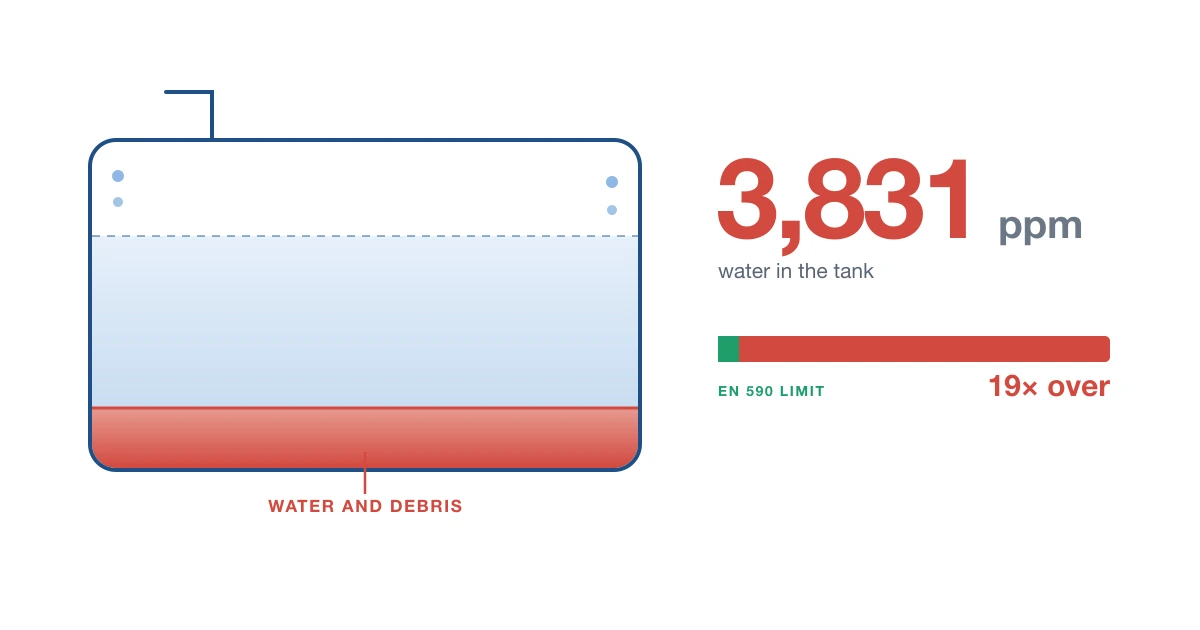
Filtertechnik, a NATCOM technology partner, documents a field workflow combining portable particle analysis, water-condition measurements, polishing, retesting and retained reporting data. Its Particle Pal Plus uses digital imaging to distinguish particles from bubbles, and the described water sensor reports relative saturation, the proportion of the fuel's water-holding capacity being used at its measured temperature. That reading is different from a laboratory water concentration in parts per million.
The report supports a practical way to collect evidence for maintenance decisions. It gives no customer before-and-after measurements and establishes no interval between polishing jobs. The lesson for a maintenance plan is to preserve comparable data. Our diesel fuel testing guide explains which questions the different measurements answer.
Name the events that bring the next check forward
A routine review date needs an exception list. Agree it while the system is operating normally, so that a new concern does not wait for the calendar. Use a table like this to assign checks to the site's actual arrangements. These are discussion prompts; the responsible team sets the methods, response times and acceptance criteria.
| Event or finding | Evidence to review | Planning decision |
|---|---|---|
| New fuel delivery | Incoming-fuel records, receiving tank and transfer route. | Confirm the receiving checks and whether changed conditions need a further sample. |
| Recurring water or filter restriction | Drain and service history, inspection findings and relevant tests. | Investigate the source and treatment need before shortening the polishing interval. |
| Tank or transfer-system work | What was opened, cleaned or changed; sample locations and results afterwards. | Check whether the previous baseline and circulation assumptions still apply. |
| Long storage or changed fuel grade | Delivery history, supplier guidance and relevant fuel-quality tests. | Review suitability and test scope; particle and water results may not answer the whole question. |
| Extended standby duty approaching | Latest comparable fuel results, unresolved findings and available backup arrangements. | Have the facility and service teams review readiness before the planned work. |
An event triggers the appropriate check, not an automatic polishing order. Establish the cause and scope first. Keep relevant delivery and maintenance records with the results so the next reviewer can see what changed. Where water is involved, investigate the entry route alongside the removal requirement. The guide to water in diesel fuel explains that part of the scope; the diesel storage-life guide covers the wider retention decision.
A fixed system still needs a verification plan
Permanent tank-side filtration may suit an ongoing duty, while a portable system can be selected for a defined treatment job. Choose between them after reviewing the tank arrangement, contamination history, staff responsibilities and maintenance access. The fuel filtration systems range describes the equipment options.
For either arrangement, a running pump is an operating record, not a fuel-quality result. Specify the sampling points, treatment targets and checks on filters, water removal and circulation. Confirm who reviews alarms and results. A permanent installation without an owner for maintenance can leave the same unanswered condition question as an infrequent service visit.
Review the tank drawing before accepting a runtime calculation. Where fitted, internal baffles divide the tank, and the pickup and return positions influence the route fuel takes through it. A pickup above a low point can leave settled material outside the intended treatment path. Ask the supplier how the proposed arrangement reaches each relevant part of the tank and how that coverage will be checked. A pump's published flow rate does not answer those questions.
Delivered flow also depends on the installed arrangement. Filter condition, hose length and size, and pickup and return restrictions can change performance. A larger stated pump capacity cannot substitute for the supplier checking the actual system. Record measured flow where available, completed run time, interruptions and the filter or water-removal maintenance carried out.
Flow multiplied by time gives a circulated volume. Dividing that by tank volume gives a nominal number of tank passes. It does not prove that every part received equal treatment, because some fuel can pass through the loop repeatedly. Use that calculation to plan and compare operation, then use the agreed sampling and inspection evidence to judge what it achieved. Where residue needs separate work, include it in the polishing and tank-cleaning scope.
Close the job with the next decision already defined
Compare the agreed baseline and follow-up results after treatment, then gather enough comparable evidence to assess whether the improvement holds. Record the next inspection, next test, responsible person and action triggers. Do not turn a single clean outlet sample or a stated number of tank passes into approval for the whole system.
Send NATCOM the tank list, fuel duty, contamination history and available reports to discuss a diesel fuel polishing scope in Egypt. The useful outcome is a maintenance decision the facility team can explain, with evidence for when to inspect, when to test and when treatment is needed.
Adham Lotfy is NATCOM's Fuel Polishing Sales Engineer and a mechanical engineering graduate of the American University in Cairo. His background includes technical sales at Swagelok North Africa and industrial sales at Air Liquide.
Frequently asked questions
Set the treatment plan from fuel condition, tank history, turnover, equipment requirements and the consequences of losing the fuel supply. Maintain an agreed inspection and testing schedule, with earlier checks after relevant events. There is no universal polishing interval that makes every tank ready for use.
An annual service date alone cannot establish the condition between visits. Check the applicable site and manufacturer requirements, then use documented sampling and operating history to decide whether treatment is needed. Testing frequency and polishing frequency are separate decisions.
No. Its operating log records that the system ran. Fuel measurements are still needed to establish what it achieved, whether the circulation reaches the relevant fuel and whether contamination is returning. Chemical or microbial concerns may require tests beyond the system's installed sensors.
Include deliveries in the site's fuel review plan. Incoming fuel and the filling process can change tank conditions, so agree the checks, sampling points and timing with the supplier and fuel specialist. A result from before the delivery cannot establish the condition afterwards.