One proposal offers a permanently installed fuel polisher. Another offers a visit with a mobile unit. Both say they will clean the diesel, but they may be describing different jobs.
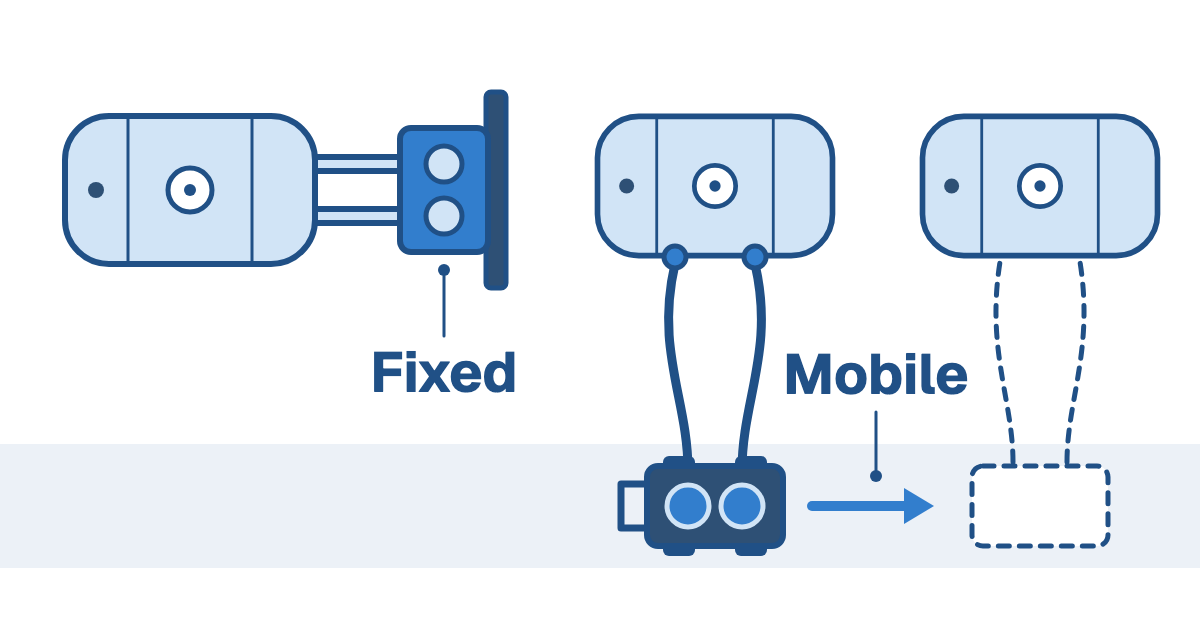
Fixed fuel polishing connects treatment equipment to a defined tank arrangement. Mobile polishing brings equipment to the tank for a planned intervention or moves it between locations. Choose between them by the contamination to be addressed, the tank connections, the required access and who will maintain and verify the work. Tank size alone cannot settle the decision.
Before comparing prices, ask each supplier to describe the same treatment duty. A quotation is much easier to judge when it explains which fuel will be treated, what condition is required and what happens when the equipment needs attention.
Start with the work the tank needs
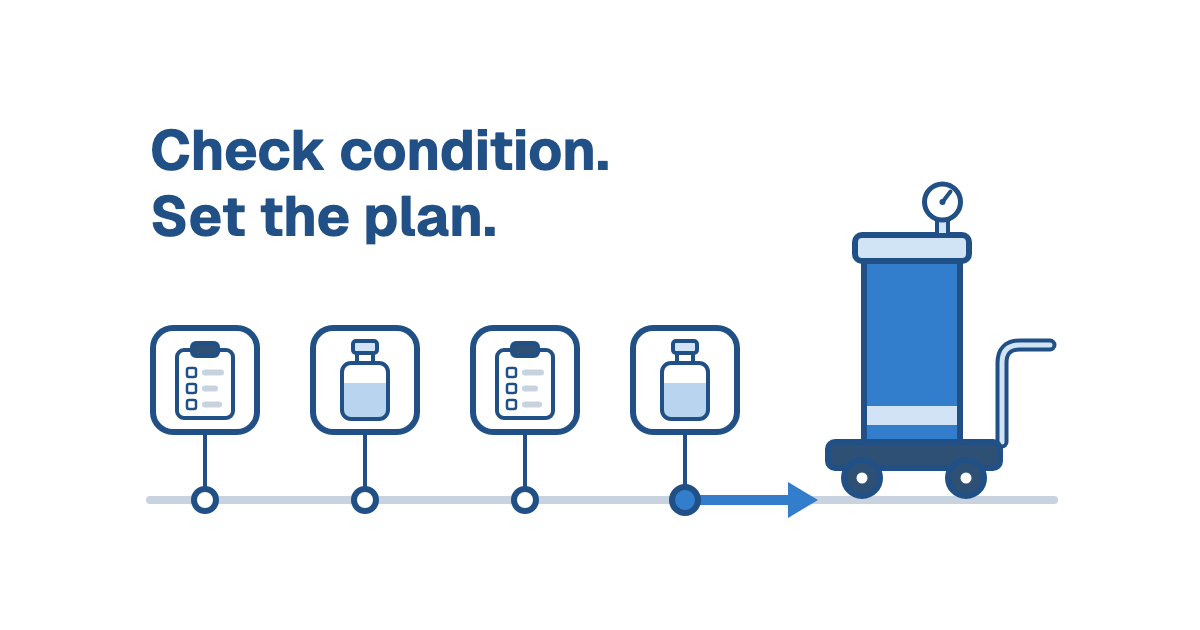
A tank with an unresolved contamination problem needs an assessment of the corrective work. An ongoing fuel-management plan needs a clear arrangement for inspection, treatment, maintenance and review. The same site may need both, but they should appear separately in the scope.
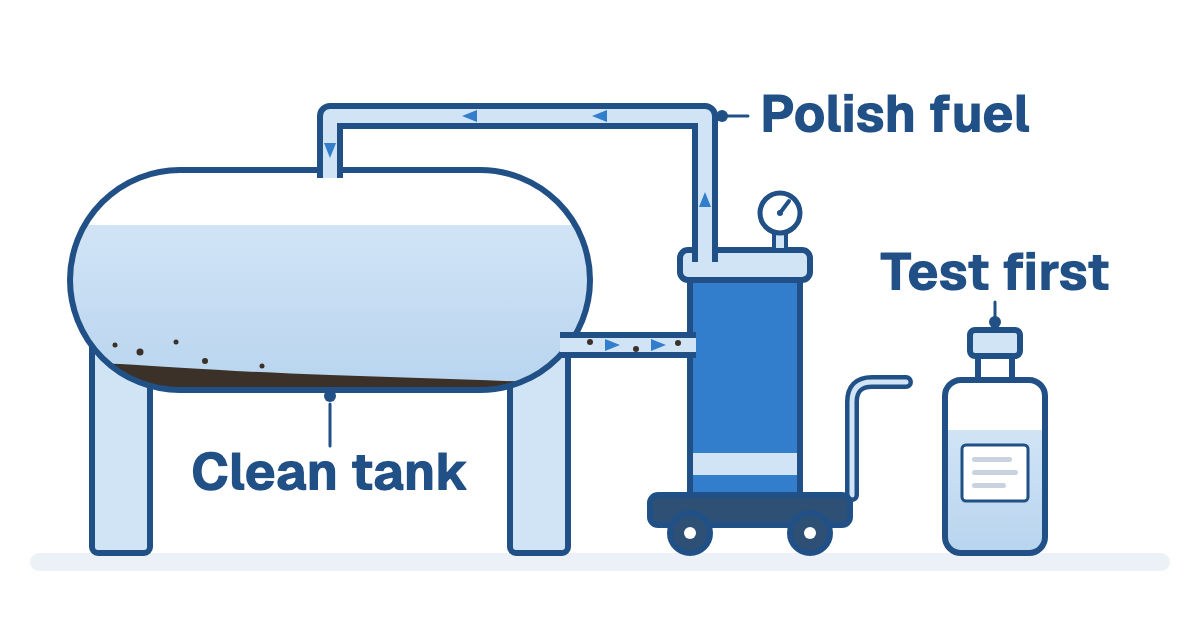
Start with available fuel results, water findings, filter history and tank condition. If retained residue requires a cleaning intervention, make sure the proposal addresses it. The choice between fixed and mobile equipment should follow that assessment.
Our guide to fuel polishing or tank cleaning explains how to separate treatment of circulating fuel from the wider tank-cleaning question. Settling that point first prevents a buyer from selecting hardware for a job it has not been specified to perform.
What changes with a fixed installation?
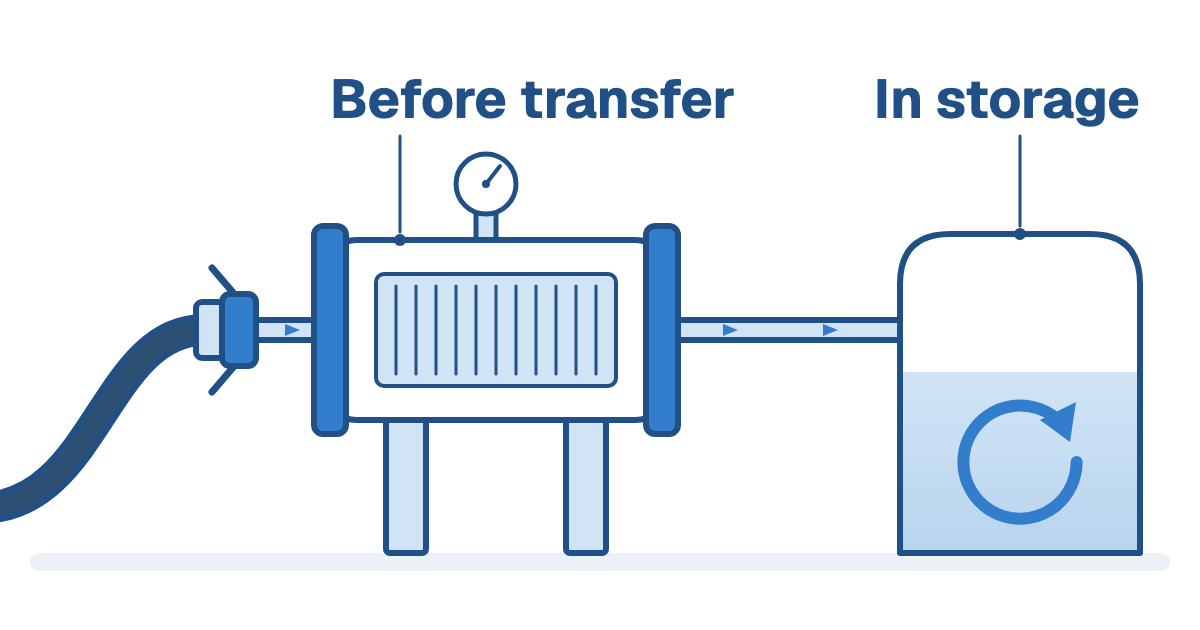
A fixed unit gives a defined location a permanent treatment connection. Filtertechnik's current fixed range includes wall-mounted equipment that circulates stored fuel through water and particle-removal stages. The installation still needs a specification for the fuel, connections, operating conditions and maintenance access.
Ask who will own it after commissioning. Someone must review its condition, arrange media changes and act on faults or water findings. If the supplier proposes automatic operation, ask which functions are automatic and which tasks remain with the site team.
The maintenance details should be visible in the proposal. Delta-Xero's compact mounted fuel-polishing hardware, for example, uses a replaceable cartridge with a specified water-holding capacity. The practical buying question is how the selected equipment's consumables and water-handling duties will be managed at your site.
An operating unit and a reviewed fuel-condition record are different things. Include both responsibilities in the maintenance plan.
What changes with mobile equipment?
A mobile unit can be brought to a tank for treatment and moved to another location when the work is complete. Filtertechnik's portable range includes equipment for particle and water removal, with different media and configurations for the intended duty.
The proposal should explain the actual route to the tank. Ask about doors, steps, working space, power supply, hose access and the proposed connections. A wheeled frame does not establish that a particular unit can reach every tank on the site.
Where one unit will serve several tanks, ask for the work sequence. Which tank has priority? What preparation does the site team need to complete? How will the equipment and connections be handled between jobs? What evidence will be provided for each tank?
These questions belong in an equipment-purchase comparison as well as a service enquiry. Owning a mobile unit does not, by itself, define the team, method or time available to use it.
Compare the proposals on the same questions
A fixed connection merits consideration when a defined tank needs recurring treatment and the site can take ownership of maintenance and response. Mobile equipment merits consideration for a discrete intervention, or for several accessible tanks where setup and movement can be planned. These are starting points for discussion, subject to the fuel findings and installation review. They are not capacity thresholds or promises about cost or performance.
A short comparison sheet can expose missing scope before a detailed commercial discussion. Ask each supplier to complete it against the actual site information.
| Selection question | Fixed proposal should explain | Mobile proposal should explain |
|---|---|---|
| What fuel and contamination are covered? | Selected treatment stages and operating limits. | Selected treatment stages and the scope of each intervention. |
| How does it connect? | Tank connections, return arrangement and any shared pipework. | Access route, temporary connections and setup requirements. |
| Who responds when attention is needed? | Site ownership, alarms and maintenance duties. | Responsibilities during the visit and after equipment leaves. |
| What proves the result? | Commissioning checks and continuing fuel-condition review. | Starting condition, completion evidence and follow-up plan. |
| What is excluded? | Tank work, repairs or tests outside the installed-system scope. | Tank work, repairs or tests outside the quoted intervention. |
Keep unresolved answers visible. "Included" is useful only when it names the work and the deliverable. For example, a promise of testing should identify the measurements and how the results will be interpreted for the equipment using the fuel.
A critical site can still have a mobile treatment scope
The type of facility does not automatically determine the equipment format. Delta-Xero's published IDE Group case describes a UK data centre preparing to rely on standby generators during planned transformer maintenance. Fuel analysis led to a corrective intervention before the work proceeded.
The vendor records a mobile filtration arrangement chosen around that site's tank size and limited use. The case shows that mobile equipment can form part of a defined intervention at a critical facility. It does not establish a rule for other data centres or prove that mobile treatment is the right long-term arrangement for every tank.
Read the standby-generator fuel case for the documented context. Its useful lesson for selection is to describe the duty and evidence first, then justify the equipment choice against them.
Specify the result beyond pump flow and runtime
A pump rating helps describe equipment. A runtime log shows that an operating period was recorded. Neither document, on its own, establishes the resulting condition of the fuel that matters to your application.
Ask the supplier how the proposed arrangement will be checked. Which sample locations will be used? Which measurements will be compared? What findings would lead to further work? If a proposal relies on treating a stated tank volume, ask how that assumption relates to the actual tank and connections.
Filtertechnik documents a field workflow that combines initial measurement, portable polishing, retesting and retained data. Its described measurements include particle cleanliness and relative water saturation. The source provides workflow evidence without a measured customer outcome, but the sequence is useful for either equipment format.
Use the diesel fuel testing guide to define the evidence alongside the equipment scope. Decide who will review that evidence before accepting a proposed result.
Account for the work around the polisher
A fuel-management proposal should also identify relevant tank and transfer-equipment work. Poorly maintained hoses, connections and seals can admit contamination. A polishing quotation should make clear whether inspection or repair of those items is included or belongs to another team.
For a fair cost comparison, request the same list of inclusions from both suppliers. Record equipment or visit scope, installation work, testing, consumables, labour, waste handling, reporting and follow-up where applicable. Ask suppliers to state the assumptions behind their prices.
Avoid converting those figures into a payback claim without evidence. The useful outcome at this stage is a comparison of defined work, with responsibilities and exclusions that the maintenance and procurement teams can understand.
A site may eventually use different arrangements for different tanks. Evaluate each duty and connection plan on its own evidence, then check that the combined plan is practical for the people who will run it.
Bring a selection brief to the discussion
Prepare the tank list, approximate volumes, fuel type, supply arrangement and available condition results. Add access photographs, a connection sketch if one exists, and the operational constraints the supplier must respect. Describe who currently performs inspections and responds to fuel problems.
Then ask NATCOM to compare the available fuel filtration systems against that information, or discuss a scoped diesel fuel polishing service. The selection should leave you with a defined job, an accountable team and evidence for judging the result.
Frequently asked questions
No universal size breakpoint is proposed here. Tank volume matters, but so do contamination, connections, access, operating duty and maintenance ownership. Ask suppliers to explain the selection against the actual application.
Automatic operation does not establish every aspect of fuel condition. Keep the equipment-maintenance plan and fuel-testing plan connected, with a named person reviewing results and responding when action is needed.
Delta-Xero documents a mobile intervention at IDE Group's UK data centre before planned transformer maintenance. That case supports the possibility, not a universal recommendation. The scope and verification still need to fit the individual site.
A site can consider different arrangements for different duties. Ask the supplier to define which tanks and tasks each arrangement covers, how they connect and who maintains and checks them. Avoid paying for overlapping scopes without a clear purpose.