Your diesel tank holds a known volume, and a supplier offers a polishing unit with a stated flow rate. Dividing one number by the other gives a circulation time. It does not, by itself, size a complete treatment system or tell you when the fuel will meet its acceptance criteria.
Choose the system around the installed duty. That includes the working fuel inventory, actual flow through the proposed circuit, available running time, contamination to be removed and the tank arrangement. Agree how the treated condition will be checked before treating a calculated number of circulations as a finished job.
This distinction matters when comparing quotations. A larger pump may move more fuel under suitable conditions, while another part of the arrangement determines whether the system reaches the contamination that concerns you.
Use the working inventory and the available window
Start with the volume normally stored and how it changes. Record deliveries, transfers to day tanks, periods of low stock and any limits on when the polishing system can operate. The nameplate tank capacity and the fuel present during a typical operating cycle may be different.
Also distinguish ongoing condition management from recovery of a known contaminated inventory. Ask the supplier to explain which duty the proposal addresses and what contamination evidence it assumes. That keeps a routine maintenance arrangement from being judged against an unspoken emergency-cleanup expectation.
The fixed-versus-mobile comparison covers the installation choice. Once that is settled, the selected arrangement still needs a defined operating duty and an acceptance plan.
Calculate circulation time, then name its limit
Suppose a tank contains 10,000 litres, and the design assumes an installed flow of 50 litres per minute. These are illustrative inputs, not a customer result or a recommended design.
Dividing 10,000 by 50 gives 200 minutes to pump a volume equal to the inventory through the circuit. With a two-hour operating window at that assumed flow, the pumped volume is 6,000 litres, equivalent to 0.6 of that inventory.
Those calculations describe volume moved. They do not prove that every litre in the tank has passed through the unit once, that settled contamination has been reached or that the required water and particle condition has been achieved. Keep the arithmetic in the proposal, with its assumptions, and verify the outcome using suitable samples and tests.
Ask for installed flow, not just a headline maximum
A manufacturer's maximum flow describes equipment capability under its stated conditions. Ask the supplier what flow it expects through your proposed arrangement, including the fuel, pipework, hoses, fittings and selected elements. Request the basis for that expectation and a commissioning check.
Filtertechnik's fixed BDU-1 description identifies a recirculation cabinet, while its portable PDT-1 datasheet also specifies operating limits, hose and connection details and filter-related provisions. Those details show why a flow number needs an installation context.
For the selected unit, ask how flow and filter condition will be observed as elements load with contamination, whether any bypass is present and how its operation affects the intended treatment. Use the current instructions for the exact configuration. A unit that remains switched on is not, by that fact alone, demonstrating the assumed filtering duty.
Review what the tank connections can reach
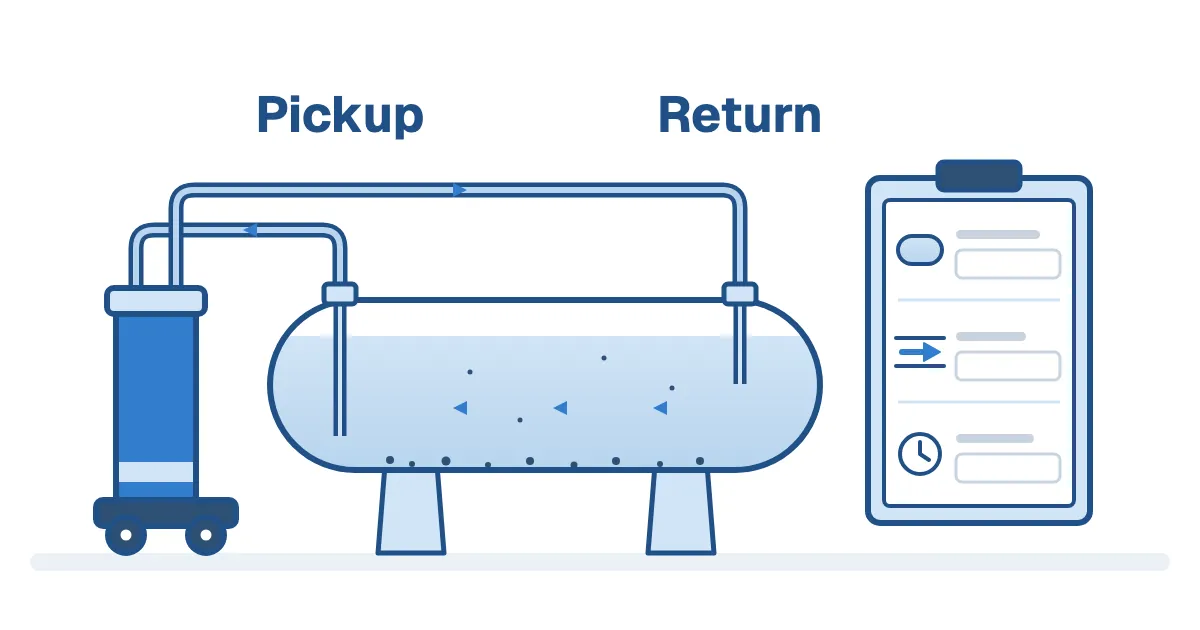
Mark the pickup and return positions on a drawing, with tank divisions, low points and other access restrictions. Have the supplier explain the proposed circulation path and identify any areas that need separate inspection, drainage or cleaning.
Filtertechnik's fixed-system presentation describes external recirculation alongside tank hygiene and contamination-entry control. These are related responsibilities. The polishing loop should not silently take the place of tank work that its access cannot accomplish.
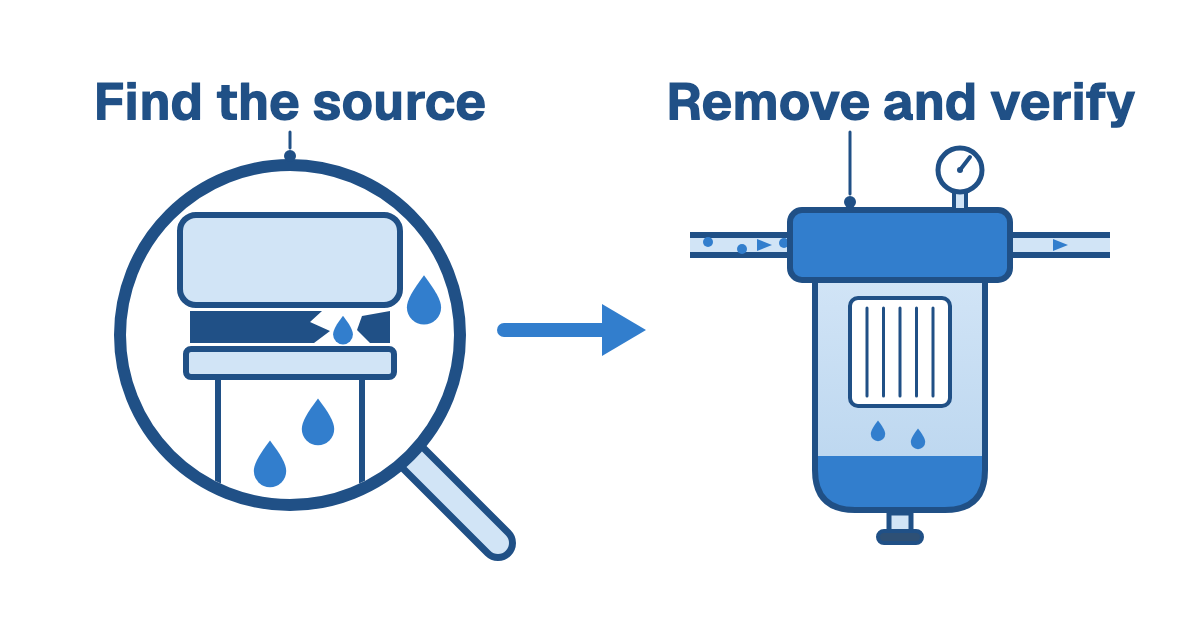
If the original problem is sediment in a low point or water that keeps returning, make that part of the design discussion. The polishing-versus-tank-cleaning guide helps decide which tasks belong together. Increasing the quoted pump capacity cannot resolve an undefined access problem on paper.
Include contamination load and servicing in the comparison
Give suppliers the available particle, water and wider fuel-quality evidence. Ask which removal stages address each finding, what element-servicing assumptions the proposal makes and how removed water or contaminated material will be handled within the agreed site arrangements.
Two systems with a similar nominal flow can have different element capacity, water-removal arrangements and maintenance needs. The diesel filter-rating guide explains why the element specification also needs its test basis.
Avoid promising a fixed cleanup duration from the initial tank volume alone. Where the quotation gives an estimated treatment period, require the assumptions and the measurements that would trigger continuing work, changing elements or escalating an unresolved concern.
Agree what commissioning and acceptance will demonstrate
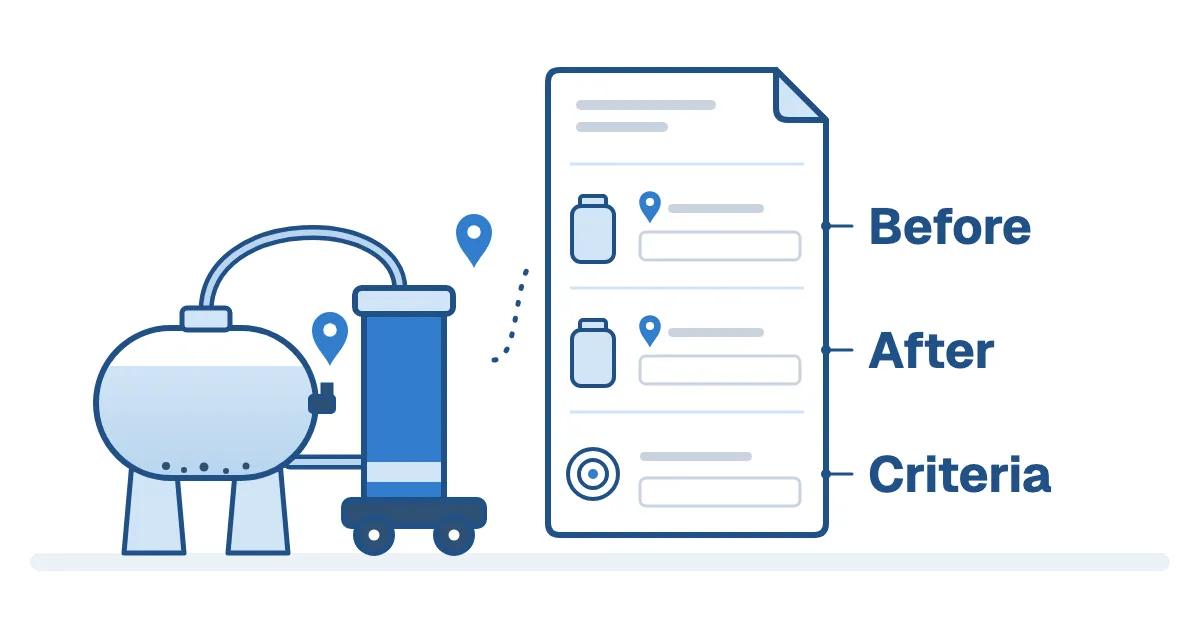
The commissioning record should confirm the installed arrangement and operating conditions relevant to the design. The acceptance record should answer the fuel-condition question, using agreed methods, locations and criteria appropriate to its intended duty.
Filtertechnik's documented field workflow combines testing, polishing and retesting. It supplies no universal time-to-clean figure. That is a useful boundary when writing your own procurement requirement: circulation arithmetic plans the work, while measurements establish what the work achieved.
Use the completion-report guide to define that evidence before purchase. Bring the tank drawing, working inventory and operating window together first, then ask for a system whose proposed duty can be explained and checked.

Adham Lotfy is an Account Manager for Oil & Fuel Care at NATCOM and a mechanical engineering graduate of the American University in Cairo. His background includes technical sales at Swagelok North Africa and industrial sales at Air Liquide.
Frequently asked questions
Divide the fuel inventory by the assumed installed flow, keeping units consistent. The result is a pumped volume-equivalent time, not a guarantee that the entire inventory is clean.
Do not use a calculated turnover as proof that every part of a recirculating tank has received equal treatment. Tank layout, access and verified fuel condition still matter.
Request the expected installed flow through the selected treatment circuit under the proposed operating conditions, then confirm it during commissioning.
Provide tank drawings, working volumes, fuel type, pickup and return locations, pipe and hose details, available operating time and relevant contamination results.